
1. Heavy-Duty Power Transmission Belts
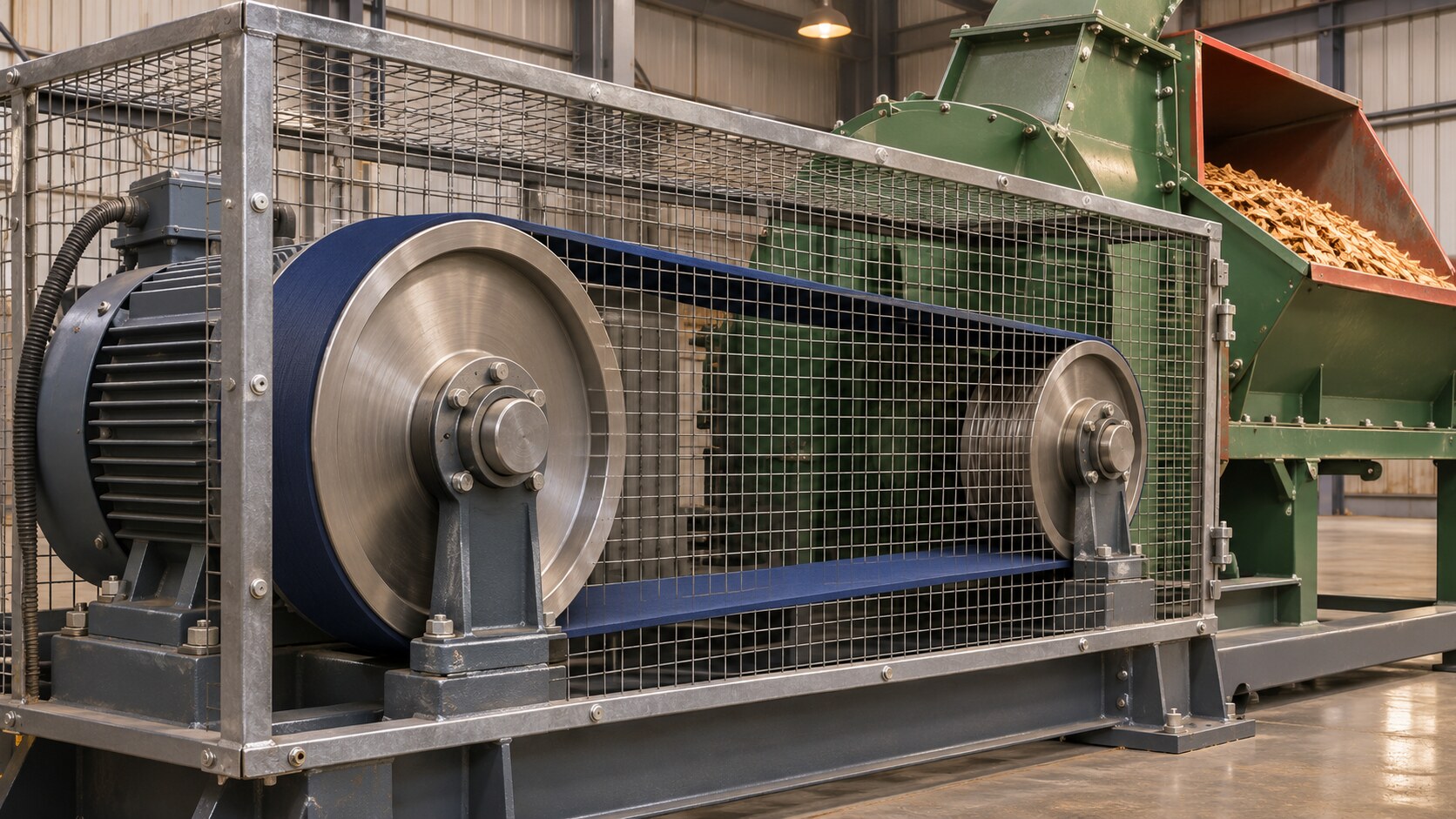
Consistent panel quality starts with controlled material preparation. Chippers and flakers depend on a stable drive to turn wood into particles suitable for the next production stage.
Application Requirements
Rapid load changes and intermittent impacts place demanding conditions on the drive. Belt selection must account for motor power, pulley geometry, operating speed and the available tensioning travel.
The Feltnova Approach
Feltnova helps specify flat drive belts around the machine and its duty cycle. The belt construction, dimensions and joining method are selected to support dependable power transfer and manageable installation.
Operating Priorities
- Stable drive response during changing loads
- vibration absorption suited to the application
- accessible inspection and maintenance
Selection Notes
Confirm drive calculations and guarding requirements before changing an existing transmission.
2. Bin Bottom Belts
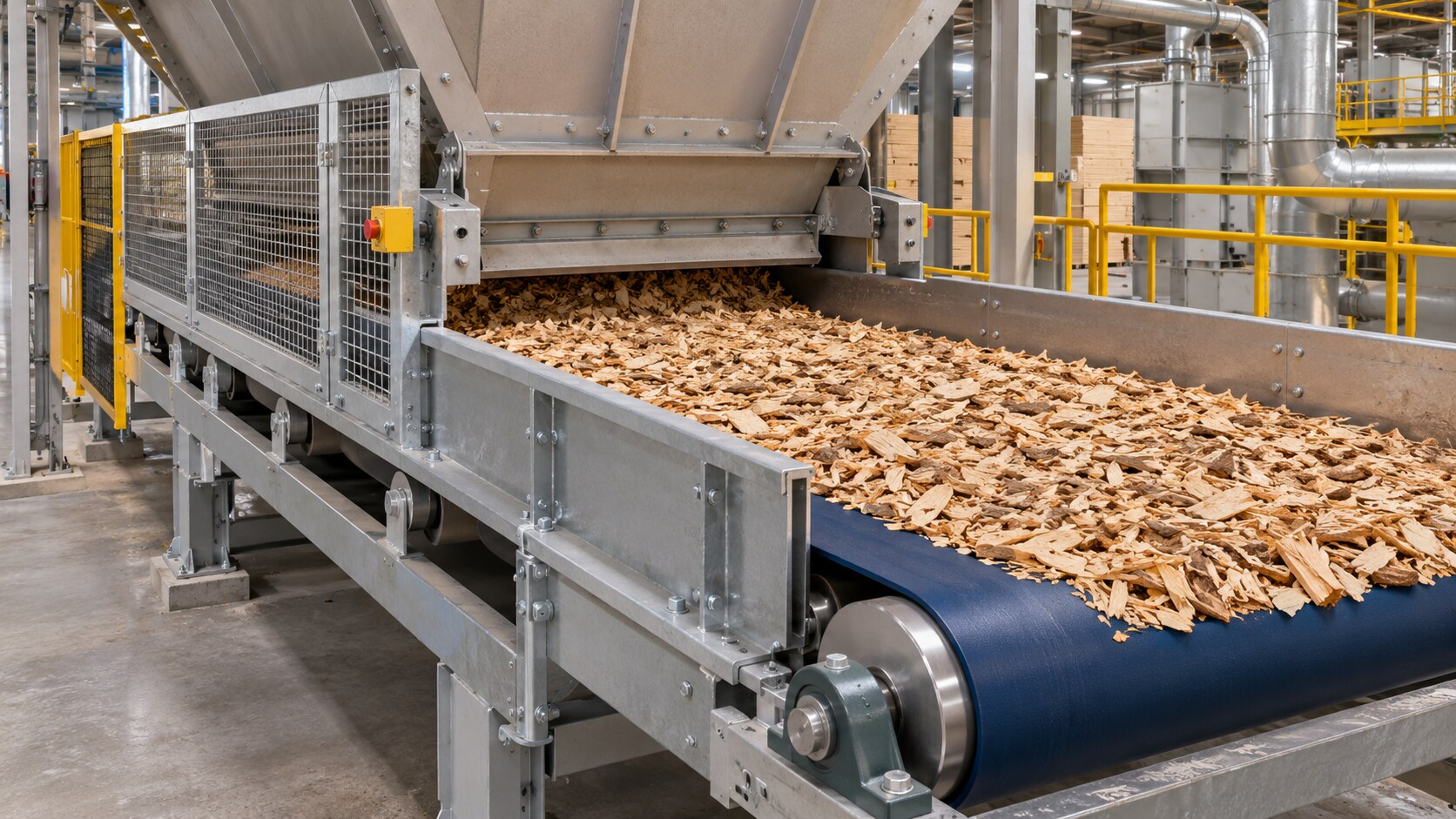
Bin bottom belts discharge and meter chips or fibres from storage into the production line. A controlled feed helps downstream drying, blending and forming equipment operate consistently.
Application Requirements
High material loads, abrasion, moisture and resin deposits all influence belt choice. Where the belt also supports weighing or dosing, thickness consistency and stable tracking deserve particular attention.
The Feltnova Approach
Feltnova matches the belt surface and reinforcement to the material and conveyor layout. Edge profiles, side sealing and the splice arrangement can be considered alongside the discharge design.
Operating Priorities
- Predictable material discharge
- surfaces selected for release and cleaning
- belt construction matched to loading and support conditions
Selection Notes
Share the bulk material, operating temperature, hopper dimensions and conveyor layout for a practical selection.
3. Forming Belts
The forming belt supports the loose furnish as it becomes a continuous mat. Smooth movement and an even supporting surface help preserve the distribution established by the forming equipment.
Application Requirements
The belt needs stable tracking, consistent thickness and a surface appropriate for resin-treated particles or fibres. Splice quality and transitions between conveyors are especially important for a fragile, unpressed mat.
The Feltnova Approach
Feltnova selects forming belt constructions to suit line width, conveyor support and the forming process. Surface finish, joint geometry and edge control are reviewed as part of the complete installation.
Operating Priorities
- Even mat support
- controlled transfer between stages
- practical cleaning and inspection access
Selection Notes
Final panel properties depend on the complete forming and pressing process, including furnish and resin settings.
4. Ventilation Belts
Where a process requires air to pass through the conveying surface, an appropriately open belt can combine material support with ventilation. The correct balance depends on the furnish and the equipment design.
Application Requirements
Air permeability, opening size and mechanical stability must be considered together. Fine particles, resin contamination and cleaning methods can affect airflow during operation.
The Feltnova Approach
Feltnova reviews the required airflow and material retention with the conveyor conditions before recommending a ventilation belt construction. Supporting surfaces and belt guidance are assessed at the same time.
Operating Priorities
- Airflow matched to the process
- support suited to the material
- accessible cleaning to help maintain permeability
Selection Notes
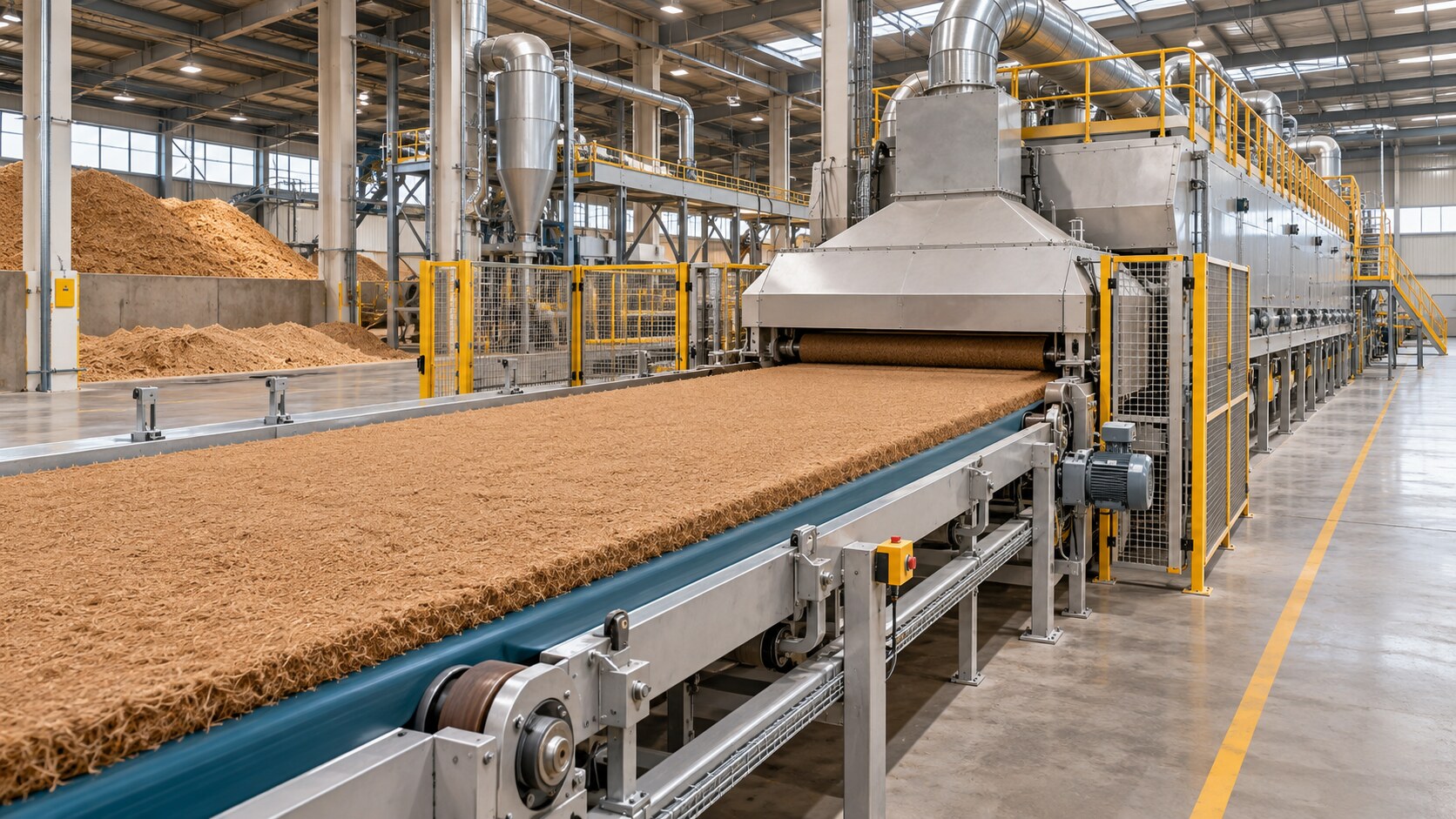
Provide the required air volume or pressure conditions and particle size distribution when available. The image illustrates the wider production process.
5. Pre-Press Belts
Pre-pressing consolidates the loose mat before the main press. The belt must guide and support the mat through compression while helping it retain its intended shape.
Application Requirements
Compression loads, resin contact, tracking stability and release behaviour all matter. The belt must also suit roller diameters, tensioning equipment and the line’s cleaning arrangements.
The Feltnova Approach
Feltnova considers the pre-press layout and operating conditions when selecting reinforcement, surface properties and joining options. Particular attention is given to transitions that could disturb the mat.
Operating Priorities
- Controlled mat support under load
- surface selection for release
- construction matched to the machine geometry
Selection Notes
Check working pressure, temperature and chemical compatibility against the selected belt specification.
6. Microwave Process Belts
Some panel lines use microwave preheating to condition the mat before pressing. Conveying components in the treatment zone must be assessed for their interaction with the microwave process.
Application Requirements
Microwave compatibility cannot be assumed from appearance or general temperature resistance. Belt materials, reinforcement, joints and any accessories require approval for the specific equipment and operating conditions.
The Feltnova Approach
Feltnova can review the conveying requirements with the equipment supplier to identify a suitable belt specification. Selection should address thermal exposure, moisture, resin contact and the permitted material construction.
Operating Priorities
- A specification based on the treatment conditions
- coordinated review of belt and joint materials
- clear inspection and replacement criteria
Selection Notes
Use only components approved for the microwave system. The image shows general panel conveying, rather than a microwave chamber.
7. Press Outfeed Belts
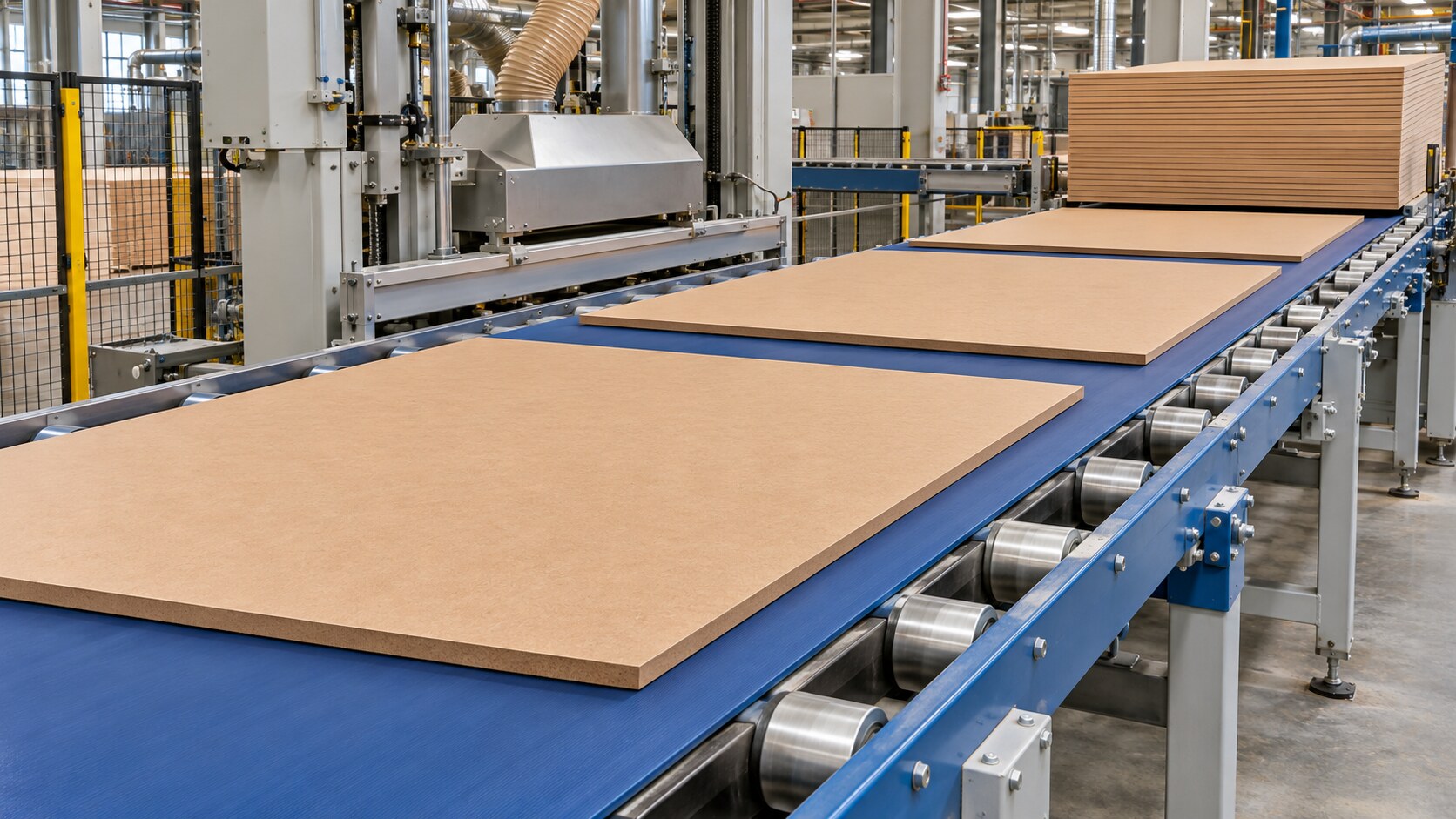
After pressing, boards need reliable support as they leave the press and move toward cooling or finishing. A well-matched outfeed belt helps keep the transfer controlled while protecting the board surface.
Application Requirements
Residual board heat, product weight, speed changes and the transfer gap determine the belt requirements. Surface grip must support movement without creating unnecessary marking.
The Feltnova Approach
Feltnova evaluates the actual board contact temperature and conveyor arrangement before selecting the surface and belt construction. Transfer geometry and the available cooling interval are considered together.
Operating Priorities
- Steady board transfer
- contact surfaces suited to the finish
- belt selection based on measured operating conditions
Selection Notes
Measure board temperature at the belt contact point, including start-up and interruption conditions.
8. Board Conveying and Stacker Belts
Between finishing, inspection and stacking, boards pass through several handling stages. Coordinated belt movement helps maintain alignment and supports orderly transfer to the next machine.
Application Requirements
The belt surface must balance traction with protection of sanded or coated boards. Board dimensions, dust, acceleration and the spacing of multiple parallel belts affect the selection.
The Feltnova Approach
Feltnova matches conveying belts to the board surface and handling sequence. For multi-belt conveyors, matched dimensions and appropriate tensioning help support consistent movement across the line.
Operating Priorities
- Controlled positioning
- surface protection appropriate to the product
- practical maintenance for repeated handling cycles
Selection Notes
Include board sizes, weights, surface finish and the stacking sequence in your application enquiry.
Specify Your Feltnova Belt
Tell us where the belt operates in your wood-based panel line. Include the panel type, material condition, belt dimensions, line speed, contact temperature and conveyor drawing if available.
Build the Specification Around Your Process
Feltnova can review surface requirements, reinforcement, tracking, splice options and installation access against the application. Confirm the final belt specification with your machine supplier before installation.
Images illustrate typical conveying applications and are not equipment drawings or product specifications.