
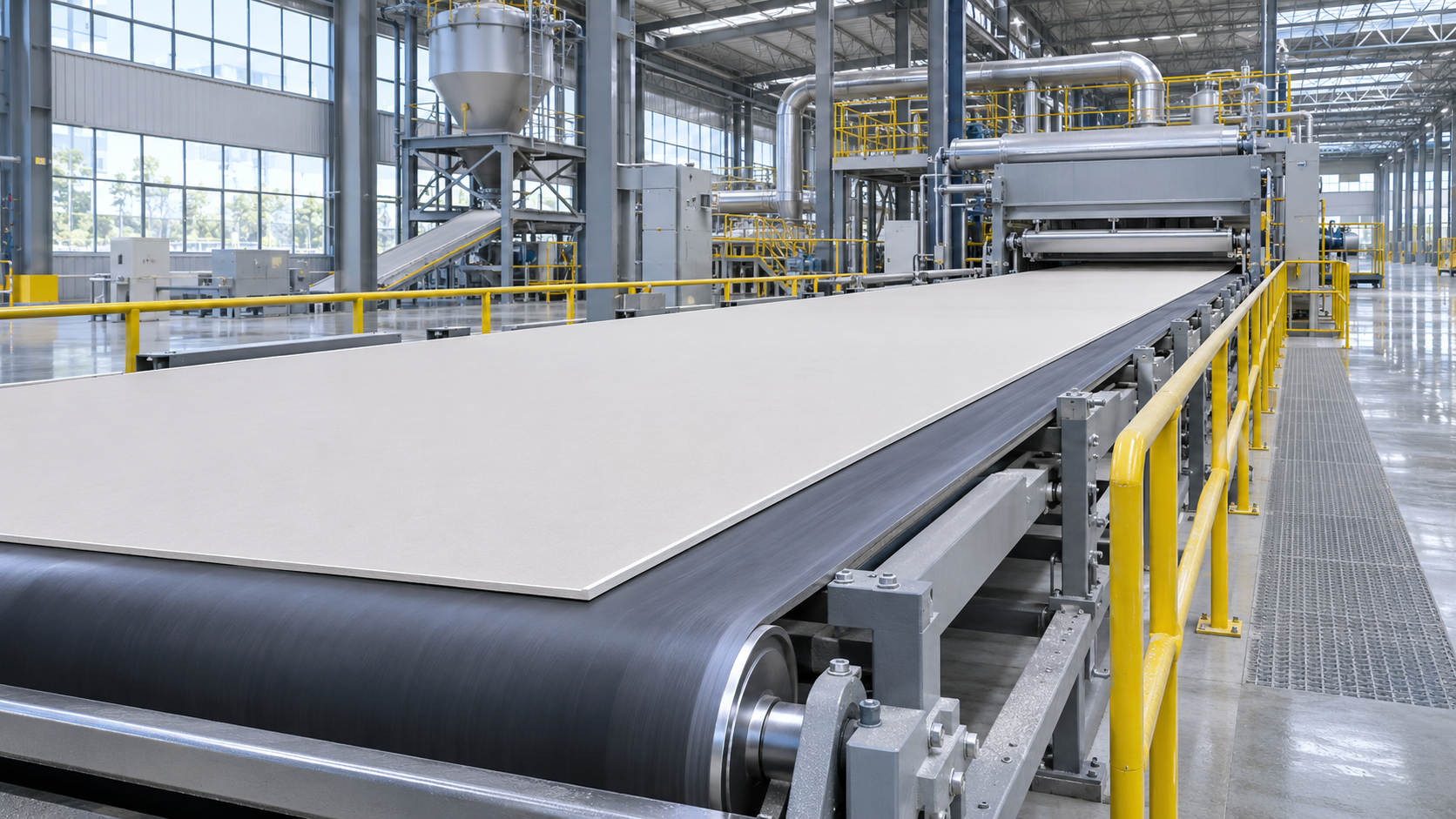
1. Forming Belt
A stable foundation for board quality
The forming belt supports the paper-faced gypsum sheet while the wet core takes shape and begins to set. Smooth, consistent movement helps maintain a uniform surface and keeps the sheet aligned as it travels towards cutting.
What the application demands
Belt thickness consistency, splice quality and straight tracking all influence the forming process. The belt must provide reliable support across its working width while remaining compatible with the conveyor bed, pulley geometry and operating tension.
Feltnova forming belt selection
Feltnova helps match the belt construction and surface to the line layout, board format and production conditions. Review dimensional stability, surface finish, cleaning requirements and splice design together, rather than selecting a belt on thickness alone.
Plan installation and care
Confirm conveyor dimensions, access for installation and the planned joining method before ordering. Routine checks for contamination, tracking changes and surface damage help operators identify issues before they affect board appearance. Any repair must follow the instructions for the selected belt.
AI-generated application illustration.
2. Taper Edge Belt
Consistent support at the board edges
Taper edge belts support the edge-forming area as the continuous sheet moves through the forming section. Stable positioning helps the line produce the edge profile needed for subsequent joint finishing.
Match the belt to the forming setup
Consider belt width, profile, surface friction and dimensional stability alongside the forming equipment. Edge belts and the main forming conveyor need compatible speeds and alignment to avoid disturbing the paper facing or wet core.
Feltnova application guidance
Share the required board profile, conveyor geometry and operating conditions with Feltnova. Selection should account for the actual machine arrangement, including tensioning, guiding and cleaning access. Check edge quality after installation and adjust the equipment according to the machine supplier’s procedure.
AI-generated application illustration.
3. Roller Drive Belts
Coordinated movement through the roller conveyor
Roller drive belts transmit motion to the rollers that carry gypsum boards between process stages. Consistent roller speed helps maintain board spacing and supports controlled travel through the line.
Balance grip and drive performance
The drive arrangement, roller load, speed and duty cycle determine the belt requirements. Suitable friction, flexibility and tension support dependable power transmission. Dust accumulation and worn drive components can change performance and should be included in maintenance checks.
Specify with Feltnova
Provide the drive layout, pulley dimensions, roller spacing and load information so that Feltnova can assess a suitable construction. Verify the operating temperature at the belt location, especially near drying equipment, and confirm compatibility before commissioning.
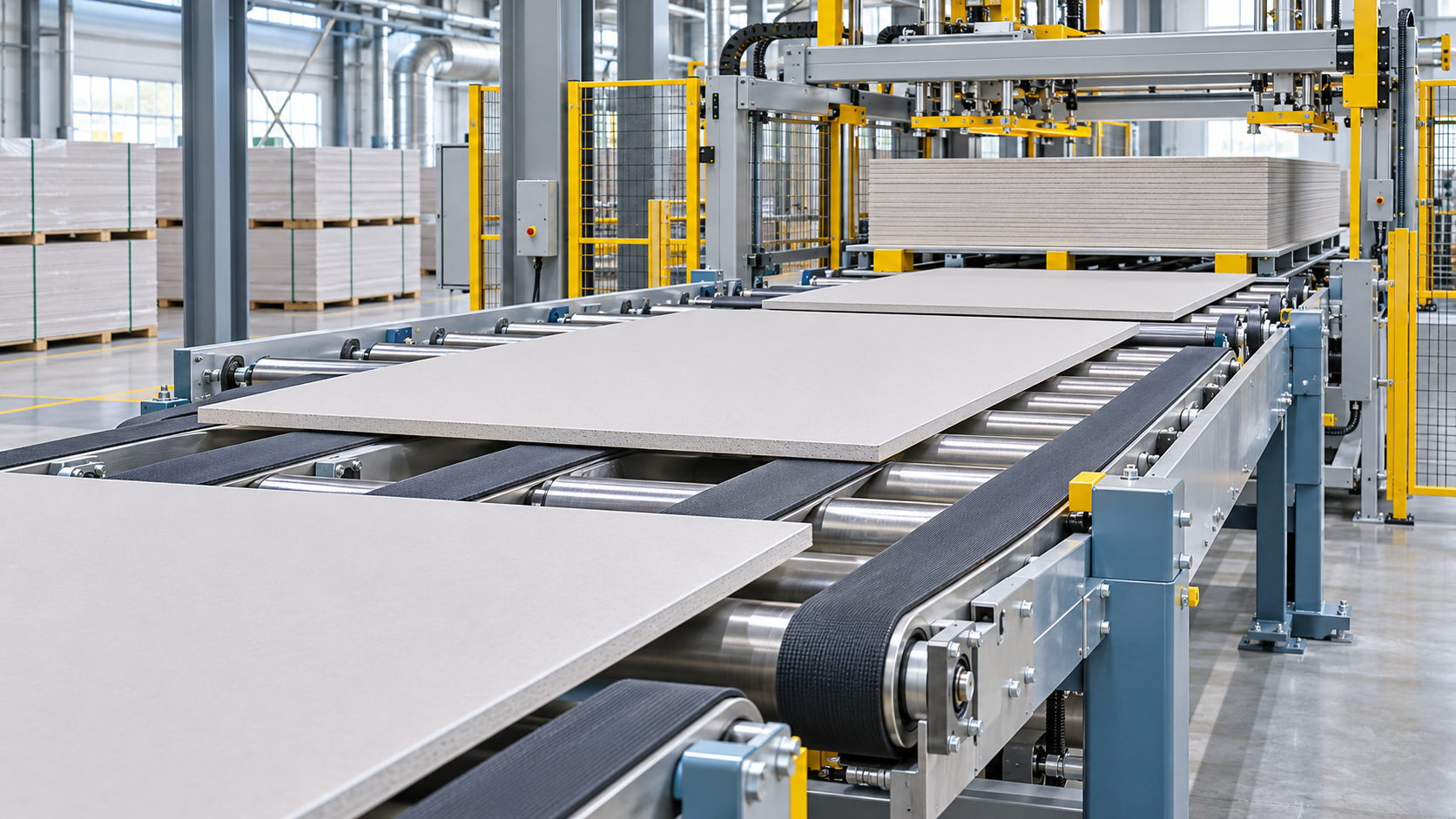
AI-generated application illustration.
4. Transfer Belts
Move boards smoothly between conveyors
Transfer belts carry cut boards across interfaces, towards drying equipment or into downstream handling. Controlled acceleration and reliable support help protect paper faces and vulnerable edges during each handover.
Design around the transfer point
A suitable belt combines the required grip with appropriate flexibility and surface properties. Transfer gaps, board dimensions, conveyor speed and pulley diameter all matter. Align adjacent conveyors and coordinate speeds to reduce impacts and unwanted sliding.
Feltnova belt options for the line
Feltnova can help evaluate belt construction for the specific transfer duty. Share board weight, contact conditions, dust exposure and any thermal requirements. Selection and validation should cover the entire transfer arrangement, including guiding, support and access for replacement.
AI-generated application illustration.
5. Stack Conveyor Belts
Controlled transport of finished boards
At the end of the line, stack conveyor belts move individual boards or prepared stacks towards packing and dispatch. Even support and predictable movement help preserve board surfaces and keep the load aligned.
Select for the actual load
Assess maximum stack weight, belt spacing, start-stop frequency and required acceleration. Belt traction must suit the load and contact surface, while the conveyor structure must provide adequate support across the travel path.
Feltnova support for downstream handling
Feltnova helps review belt width, surface and construction against the stacking system’s requirements. Confirm load distribution, tracking and tension during commissioning. Keep board debris clear of the conveyor and inspect for uneven wear as part of regular maintenance.
AI-generated application illustration.
Service
Support from specification to maintenance
Feltnova works with customers to define the application before a belt is selected. Conveyor measurements, production conditions and installation access provide the basis for a practical belt specification and maintenance plan.
Prepare the replacement
Agree the belt dimensions, joining method, inspection requirements and installation scope before delivery. Schedule the work around the plant’s shutdown plan and confirm the personnel, tools and machine access needed. Installation time depends on the belt and site conditions.
Commission and document
After installation, check tracking, tension and transfer behaviour using the procedures approved for the equipment. Record the initial settings and review belt condition during the first production runs. Request the handling and maintenance documentation applicable to the supplied belt.
Keep maintenance practical
Train operators to recognise surface damage, contamination and changes in tracking. Use approved cleaning and repair methods for the specified construction. Contact Feltnova with photographs, belt identification and operating details when troubleshooting is needed.
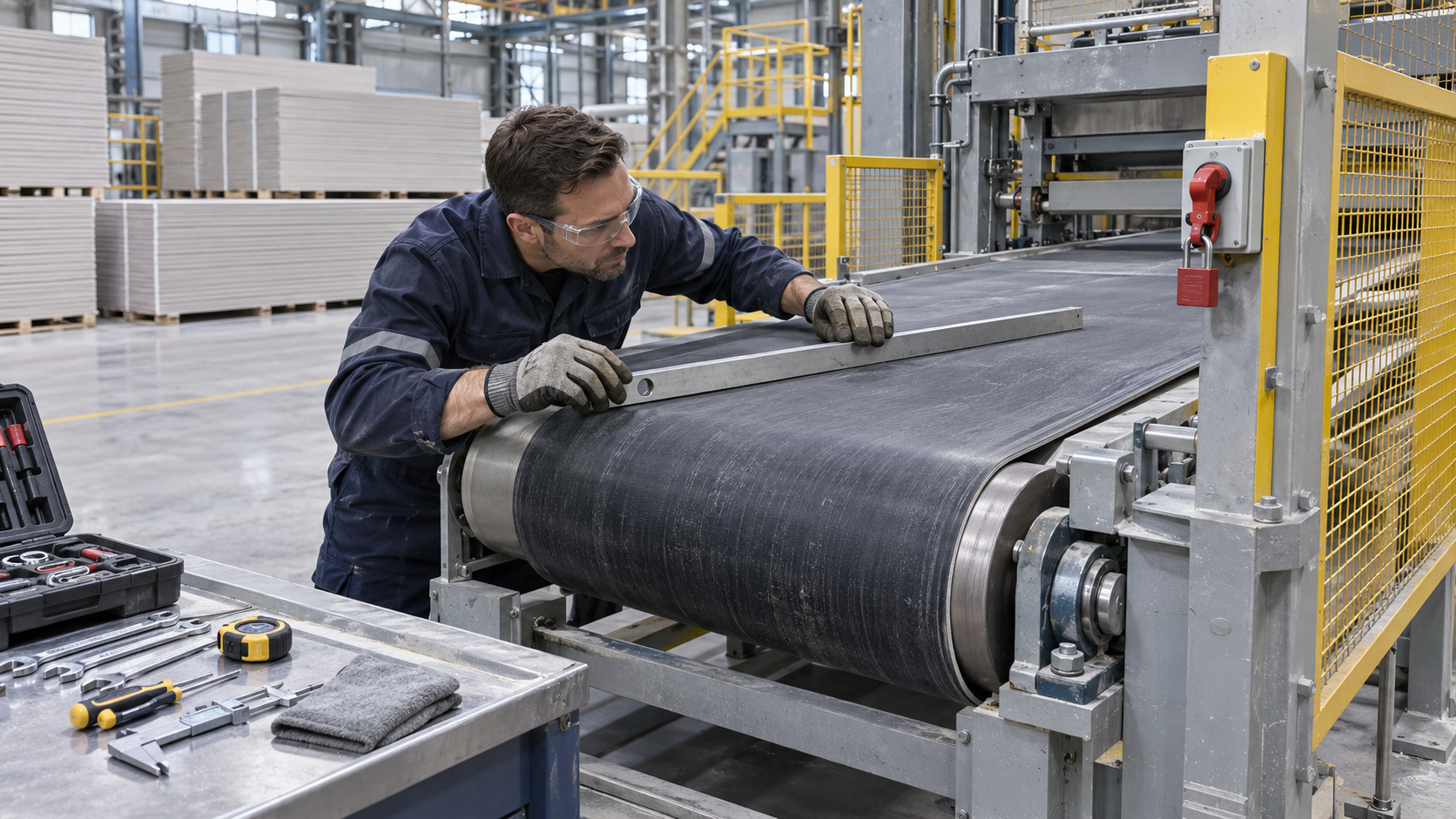
AI-generated application illustration.
Gypsum Board Applications
Explore the forming, handling and maintenance stages supported by Feltnova belting. These AI-generated illustrations show typical application concepts and do not represent a specific installation.
Discuss Your Gypsum Board Line with Feltnova
For an application review, prepare the conveyor layout, belt dimensions, board sizes, operating speed, load and temperature at the belt position. Include the current belt construction and the production issue you want to address.
Feltnova can use these details to help assess a suitable belt specification, installation requirements and maintenance approach. Final product suitability must be confirmed for the actual operating conditions.