
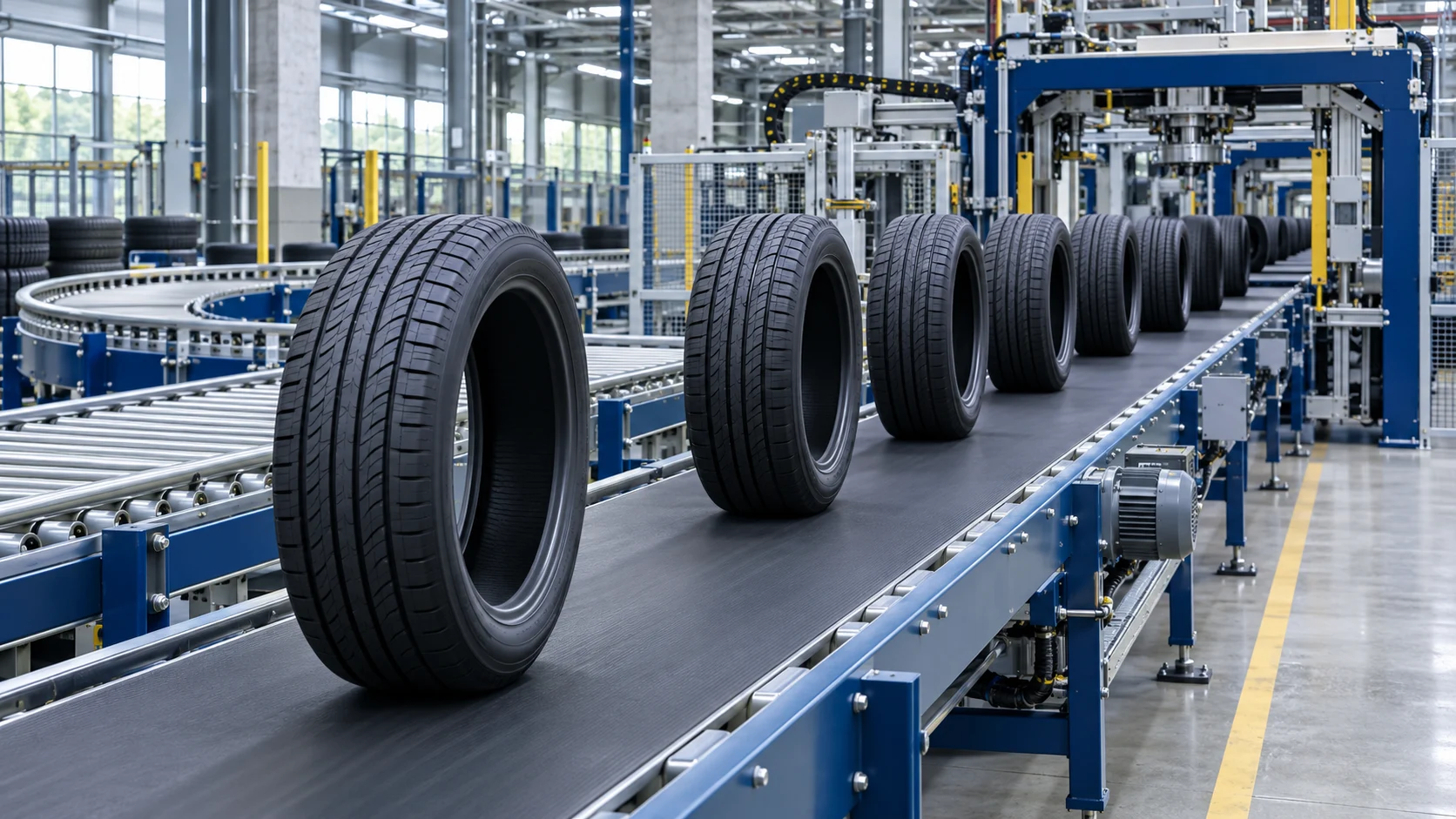
1. Blending Rubber
Reliable tire production starts with a consistent compound. Mixing brings rubber, fillers and process additives together before the warm, tacky material moves to the next stage. Stable conveying helps keep this transfer controlled and the production line flowing.
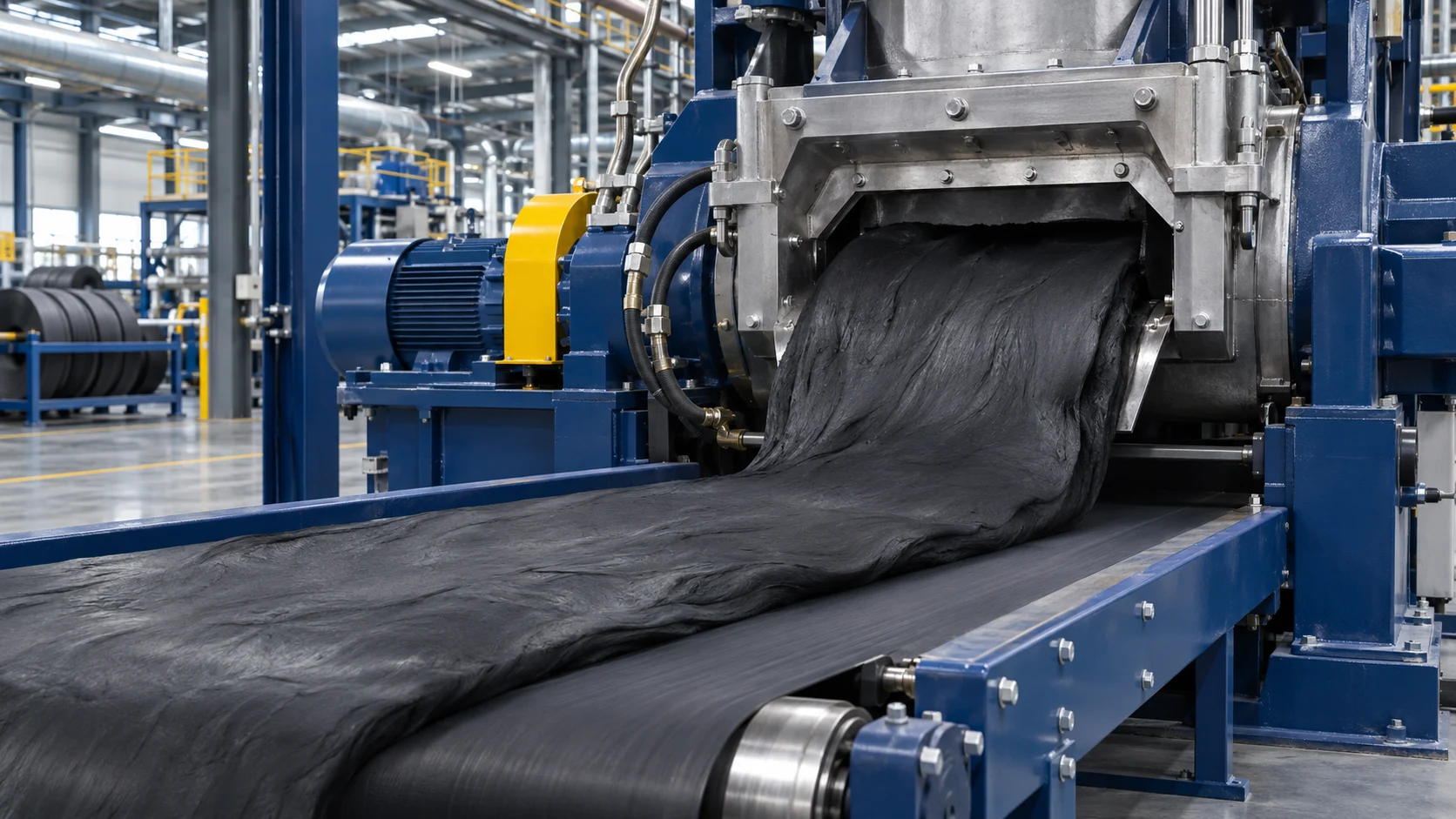
Belt Requirements
Belts in the mixing area face heat, abrasive ingredients and demanding loading conditions. Selection must balance resistance to wear and cuts with a surface that releases the compound cleanly.
Actual compound temperature, contact time and chemical exposure determine the required belt construction. Where water is used, drainage and cleaning access also need to be considered.
The Feltnova Approach
Feltnova helps match conveyor belt construction and surface texture to each transfer point. Fabric-based belts can provide continuous support, while suitable modular designs offer options for drainage and maintenance access.
The aim is controlled material flow with less sticking and carryback. Belt surface, joint design and tracking should be assessed together against the compound and the conveyor geometry.
Selection and Maintenance
Share compound temperature, belt speed, conveyor dimensions, cleaning method and any restrictions on belt materials. These details support a practical selection for your mixing line.
Discuss Your Application
Talk to Feltnova about belt selection for this stage of your tire production line.
2. Batch-off
Batch-off equipment cools the rubber sheet after mixing and prepares it for handling or storage. The sheet passes through treatment and cooling stages before being laid down in controlled batches.
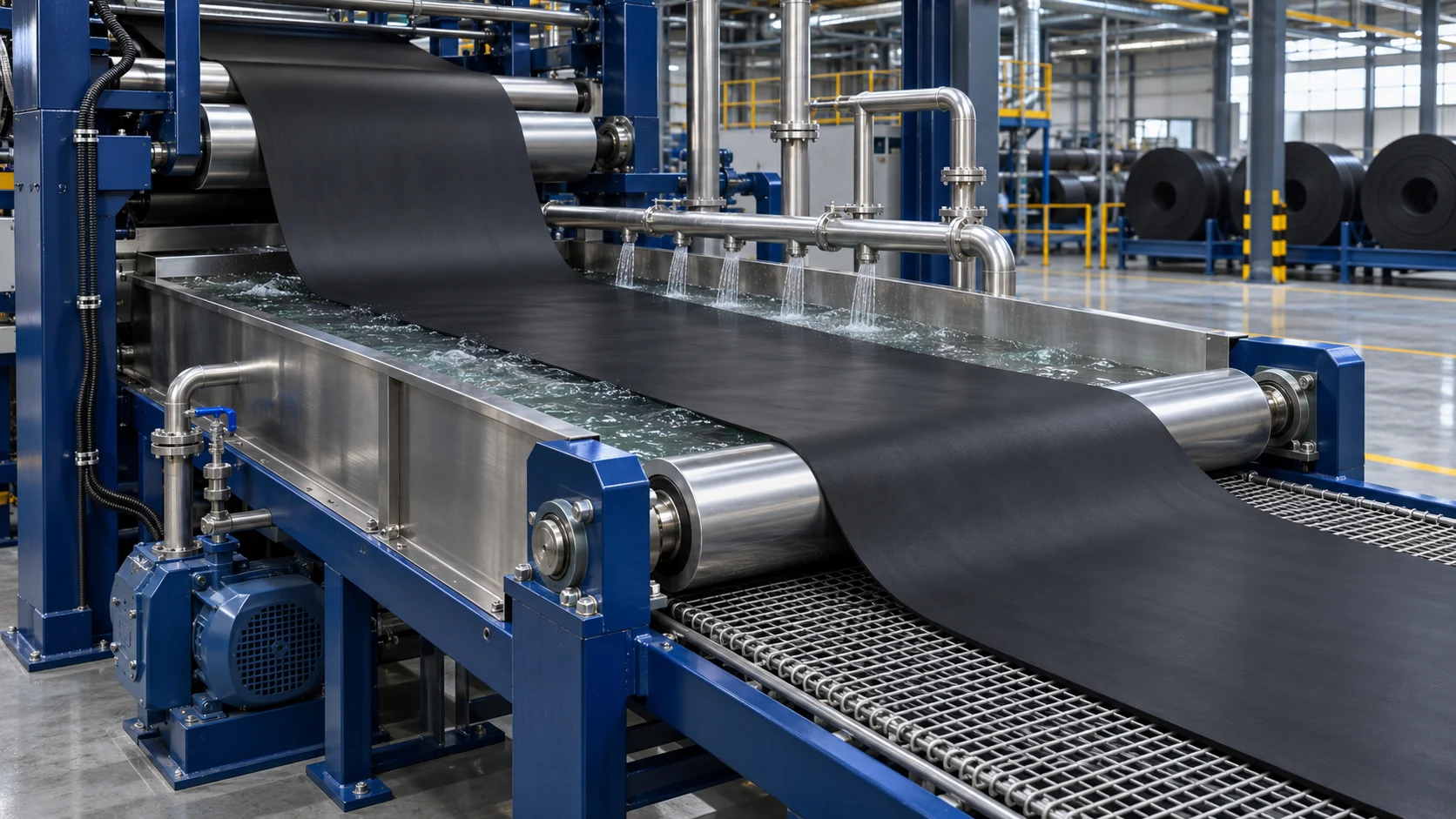
Belt Requirements
The belt must guide warm rubber through inclines and transfers without excessive slip or adhesion. Exposure to water and process chemicals makes material compatibility an essential selection factor.
Open belt areas can assist liquid flow and drainage. Surface geometry must provide the required traction while allowing the sheet to release at the discharge point.
The Feltnova Approach
Feltnova supports the selection of conveying surfaces for batch-off feeding, cooling and discharge. Modular belt configurations can be considered where drainage and access for component replacement are priorities.
Belt layout should be matched to the sheet width, roller arrangement and operating temperature. Transfer design and synchronized speeds help maintain a steady flow through the cooling section.
Selection and Maintenance
Provide the incline angle, sheet dimensions, treatment medium and temperature profile. Review accessible joints and maintenance space before finalizing the belt specification.
Discuss Your Application
Talk to Feltnova about belt selection for this stage of your tire production line.
3. Extrusion and Cooling
Extrusion forms the profiles used for tire tread and sidewalls. After leaving the die, the warm profile travels through cooling and downstream handling before cutting or winding. Consistent support helps preserve its shape throughout the line.
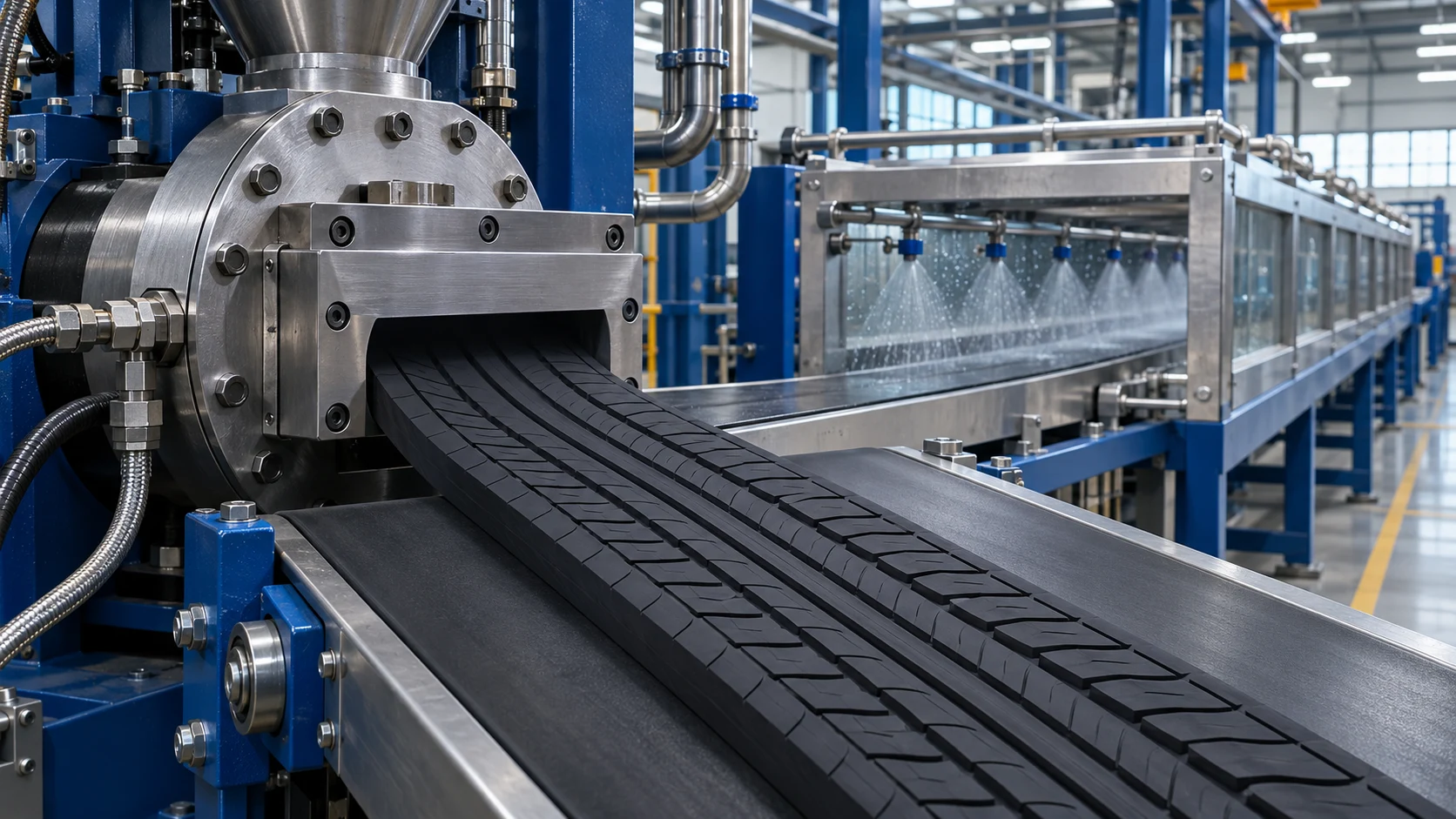
Belt Requirements
Conveying surfaces need suitable heat resistance and release characteristics at the extruder outlet. Through the cooling section, resistance to water and good drainage become equally relevant.
Speed differences and poorly designed transfers can stretch or distort an uncured profile. Where metal detection is used, the belt and joint must be compatible with the installed detector.
The Feltnova Approach
Feltnova helps assess belts for feeding, profile support, cooling and discharge as separate conveying tasks. Smooth or patterned surfaces can be evaluated according to the compound’s tack and the support it needs.
For wet sections, an appropriate open-area design can support water circulation and drainage. Coordinating belt speed, tracking and transfer clearances helps maintain profile alignment along the line.
Selection and Maintenance
Specify profile dimensions, output speed, temperature at each zone and detector requirements. Include the cooling medium and the smallest transfer diameter in the selection review.
Discuss Your Application
Talk to Feltnova about belt selection for this stage of your tire production line.
4. Calendering
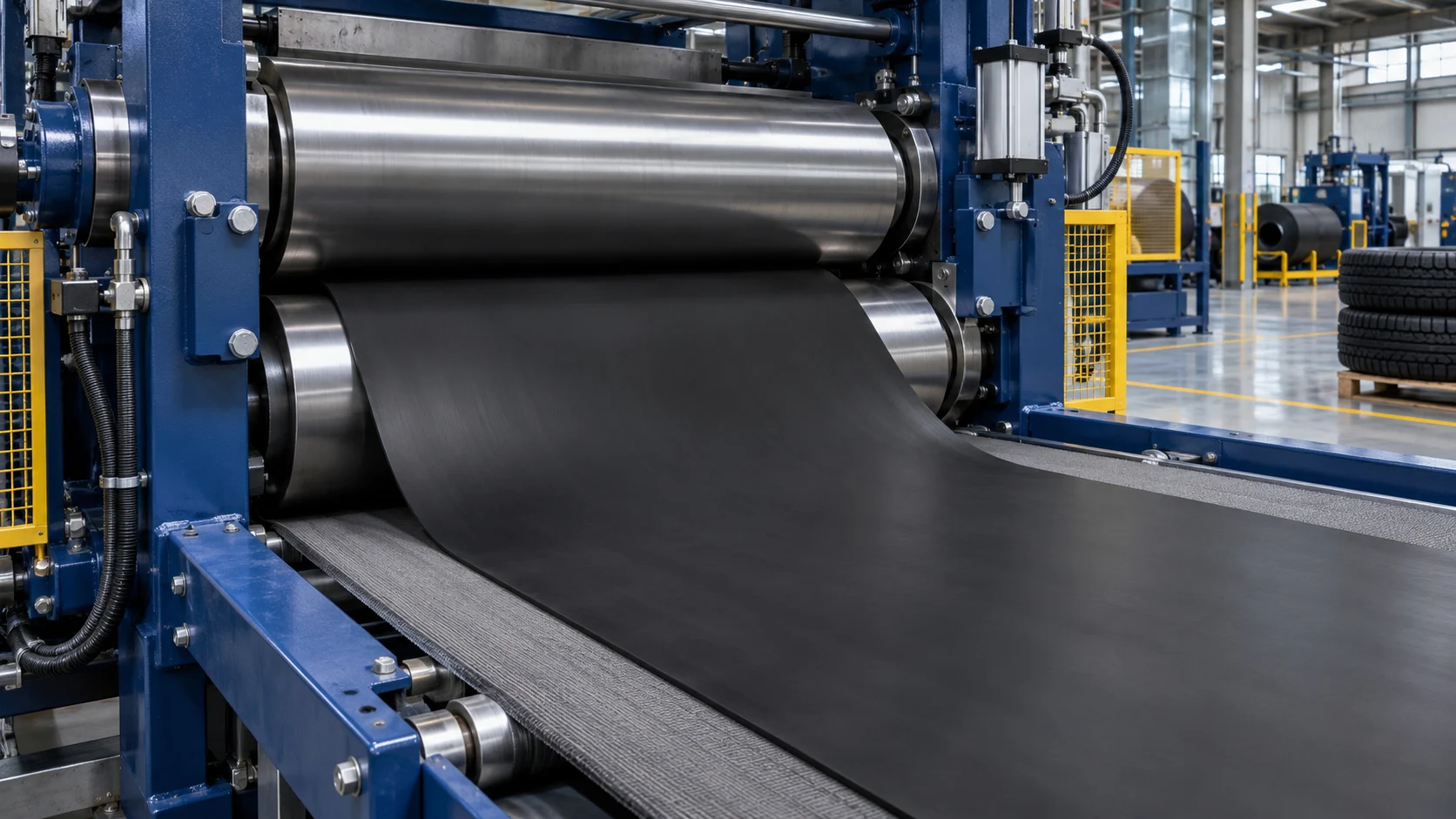
Calendering produces thin rubber layers and rubber-coated reinforcement for the tire structure. Once the material leaves the rollers, conveyors support it through cooling, cutting, stacking or winding.
Belt Requirements
A consistent conveying surface helps support the sheet without marking or unnecessary adhesion. Dimensional stability and dependable tracking are important when handling wide, thin materials.
Heat exposure, contact with uncured rubber and downstream cutting place different demands on the belt. Surface selection should take the entire transfer path into account.
The Feltnova Approach
Feltnova helps identify fabric-based and felt conveying options for calendered materials. The selection balances gentle support, release behavior and stable movement through the process.
Belt thickness, surface finish and joint quality should be considered alongside machine clearances. Where cutting occurs on the belt, the construction must be assessed for the actual cutting method and penetration.
Selection and Maintenance
Share sheet width and thickness, process temperature, winding arrangement and cutting conditions. A representative material sample can help evaluate surface contact and release behavior.
Discuss Your Application
Talk to Feltnova about belt selection for this stage of your tire production line.
5. Cord Cutting
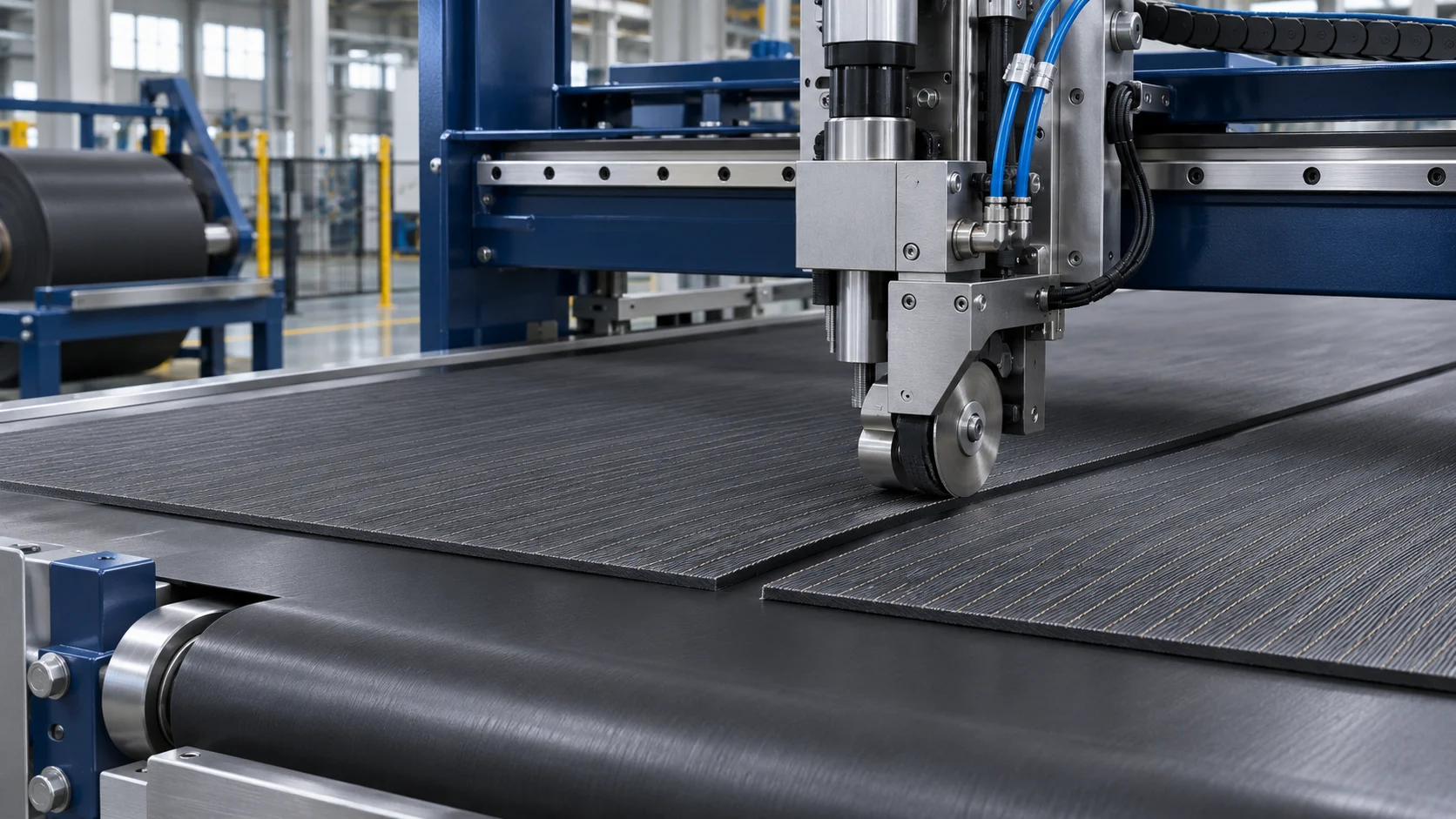
Rubber-coated textile and steel cord materials are cut into precisely sized components before tire assembly. Accurate feeding and stable support help keep the reinforcement aligned as the material moves into and away from the cutter.
Belt Requirements
Belts must combine predictable grip with clean release. Low stretch, stable tracking and a suitable supporting surface help control the position of the sheet during indexing and cutting.
The required resistance to cuts depends on the blade, cutting depth and operating cycle. Belt joints and surface transitions also need to suit the positioning accuracy of the machine.
The Feltnova Approach
Feltnova supports belt selection for cord feeding, cutting support and component discharge. Fabric reinforcement and surface construction are assessed against the movement and loading conditions of each machine.
Where positive drive or synchronized movement is needed, the complete belt and drive arrangement should be reviewed. Matching the conveying surface to the rubber compound helps balance hold and release.
Selection and Maintenance
Provide the cord type, cutting method, indexing cycle and accuracy requirement. Confirm whether the blade contacts the belt and describe any existing wear or tracking issues.
Discuss Your Application
Talk to Feltnova about belt selection for this stage of your tire production line.
6. Tire Building
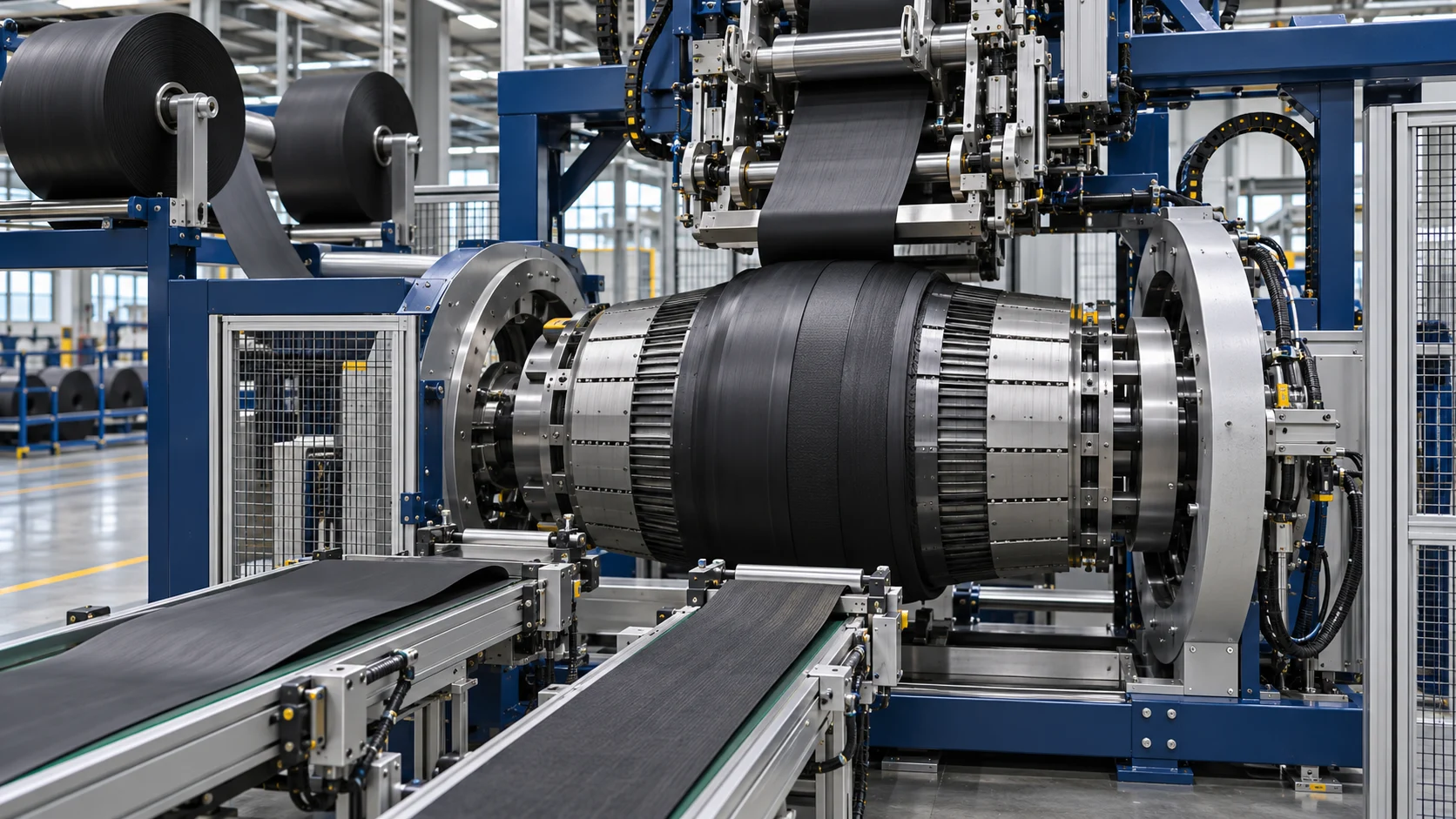
Tire building brings the prepared components together on an assembly drum. Conveyors feed the inner liner, body plies, belts and tread in a controlled sequence to form the uncured tire.
Belt Requirements
Repeatable positioning depends on stable belt movement and the right surface grip. Components need to reach the building station without stretching, shifting or sticking at the transfer point.
Compact machinery may require small transfer diameters, narrow belts or carefully positioned guides. Belt thickness, flexibility and joint quality all influence feeding behavior.
The Feltnova Approach
Feltnova helps select feeder belts around the demands of each component and building machine. Surface properties are balanced to hold the material during transport and release it at the assembly point.
Coordinated belt speeds and well-supported transfers help maintain alignment. Reviewing tracking, belt tension and joint geometry together supports consistent feeding across repeated cycles.
Selection and Maintenance
Send the feeder layout, component dimensions, smallest pulley diameter and operating cycle. Include the current belt specification and any positioning or release problems you want to address.
Discuss Your Application
Talk to Feltnova about belt selection for this stage of your tire production line.
7. Vulcanization
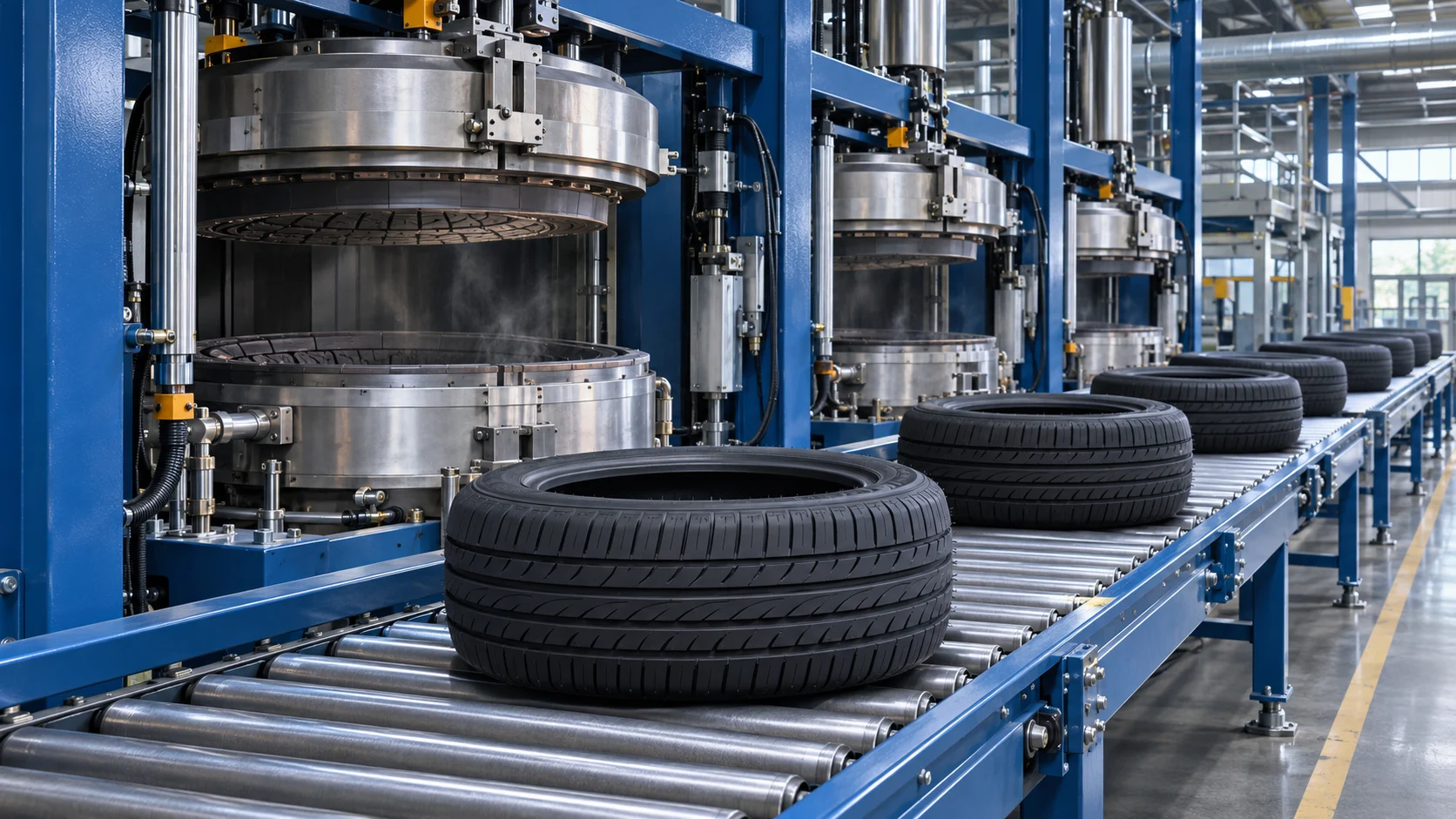
Heat and pressure in the curing press transform the uncured tire into its finished form and create the tread pattern. Conveyors handle press loading and move the cured tires onward for cooling and inspection.
Belt Requirements
Discharge belts must tolerate the actual tire contact temperature and repeated loading cycles. Robust construction, stable tracking and adequate support are important when moving heavy, warm tires.
Where cooling takes place on the conveyor, belt material and open area influence airflow and drainage. Transfer heights and impact loads must also be considered to protect both tire and conveying equipment.
The Feltnova Approach
Feltnova helps assess conveying options for press feeding and hot-tire discharge. Belt construction is selected around temperature exposure, tire size, conveyor arrangement and the cooling method.
Suitable surface geometry can support controlled movement while allowing heat to dissipate. Accessible belt joints and replaceable components can also simplify routine maintenance where the equipment permits.
Selection and Maintenance
Record the tire temperature at belt contact, tire weight, conveyor speed and cooling time. Temperature capability must be confirmed for the selected material and actual duty cycle.
Discuss Your Application
Talk to Feltnova about belt selection for this stage of your tire production line.
8. Inspection and Storage
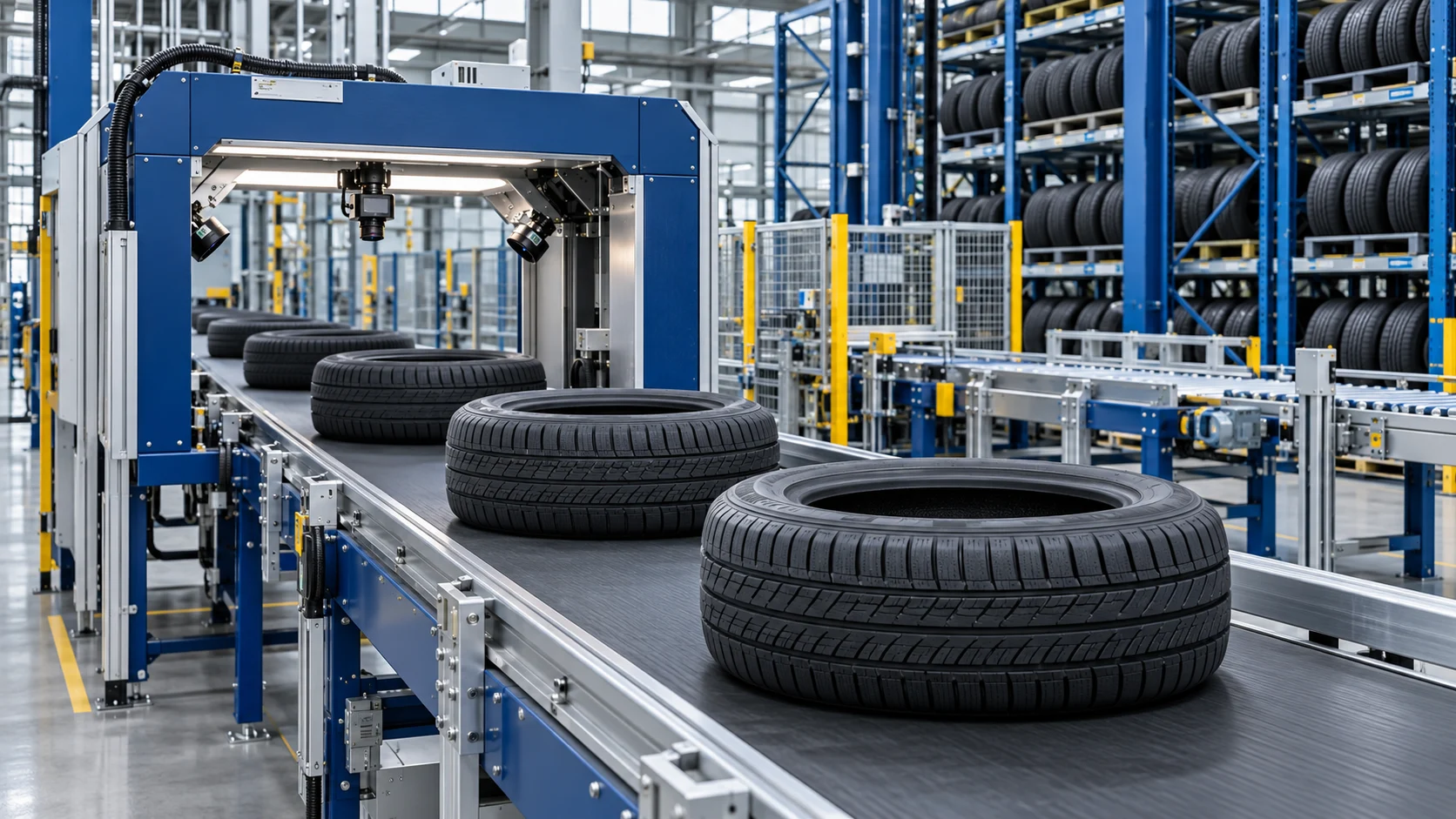
After curing, tires move through inspection, sorting and storage before dispatch. Reliable conveying connects these steps and helps maintain an orderly flow from the production line to the warehouse.
Belt Requirements
Horizontal transport, inclines, transfers and accumulation each need different friction characteristics. Tire size, orientation and loading pattern influence the surface grip and support required.
Accumulation zones need controlled movement without excessive pressure or scuffing. Routing and transfer design should also account for changes in tire dimensions and throughput.
The Feltnova Approach
Feltnova helps match conveyor belts to finished-tire inspection and handling tasks. Surface and belt construction are selected for the required balance of traction, release and wear resistance.
For sorting and warehouse interfaces, review belt speed and transfer clearances as part of the wider conveyor system. Consistent tracking and accessible maintenance points help keep material moving through the line.
Selection and Maintenance
Share tire size and weight ranges, throughput, incline angles and accumulation requirements. A conveyor layout helps identify the most demanding transfer and handling points.
Discuss Your Application
Talk to Feltnova about belt selection for this stage of your tire production line.
Plan Your Tire Conveyor Solution
From rubber mixing to finished-tire handling, Feltnova helps you assess belt surfaces, constructions and transfer requirements for each production stage.
Start with Your Process
Send your conveyor dimensions, material temperatures, speeds and operating conditions. Our team can discuss suitable options and the technical details needed to confirm a specification.