
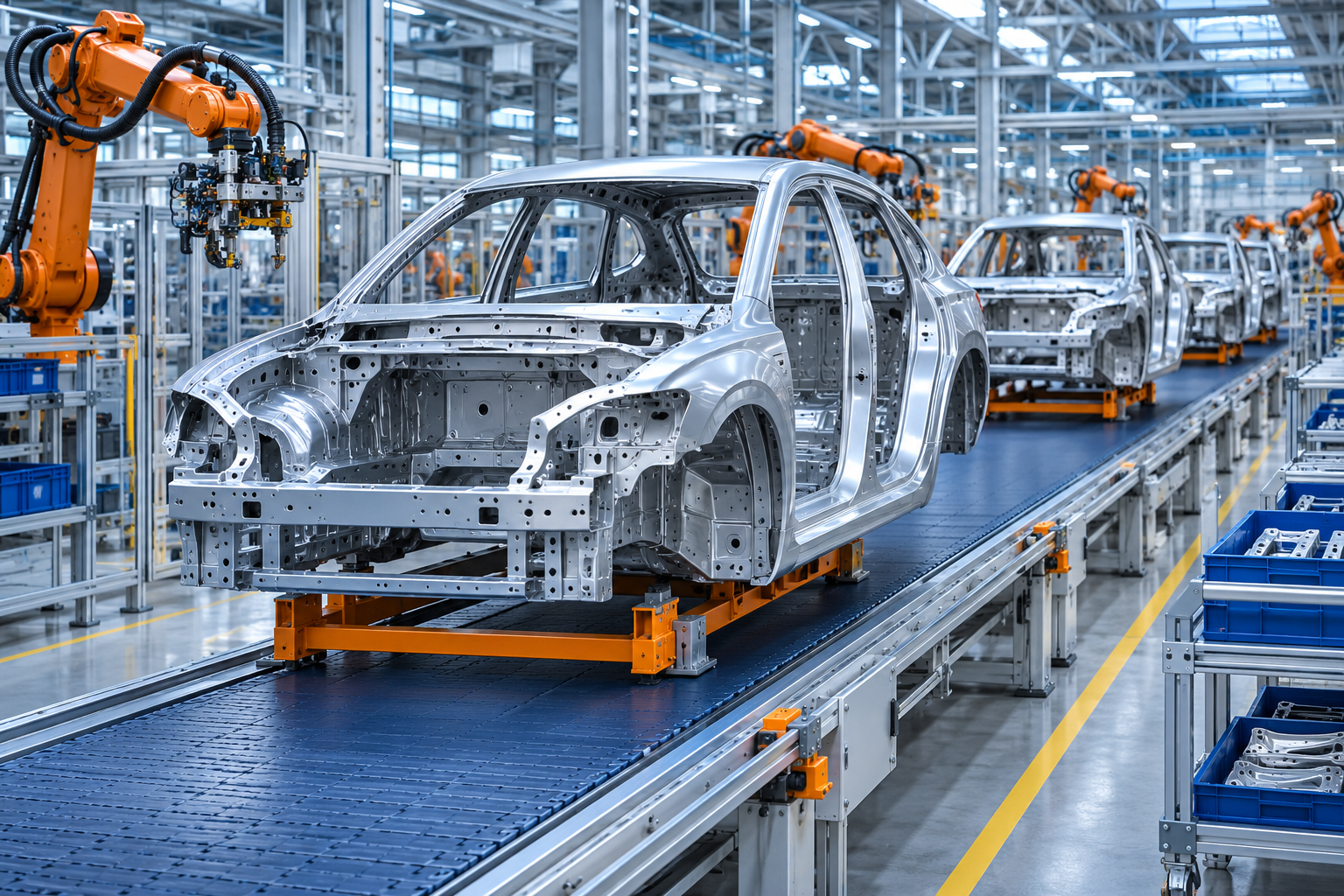
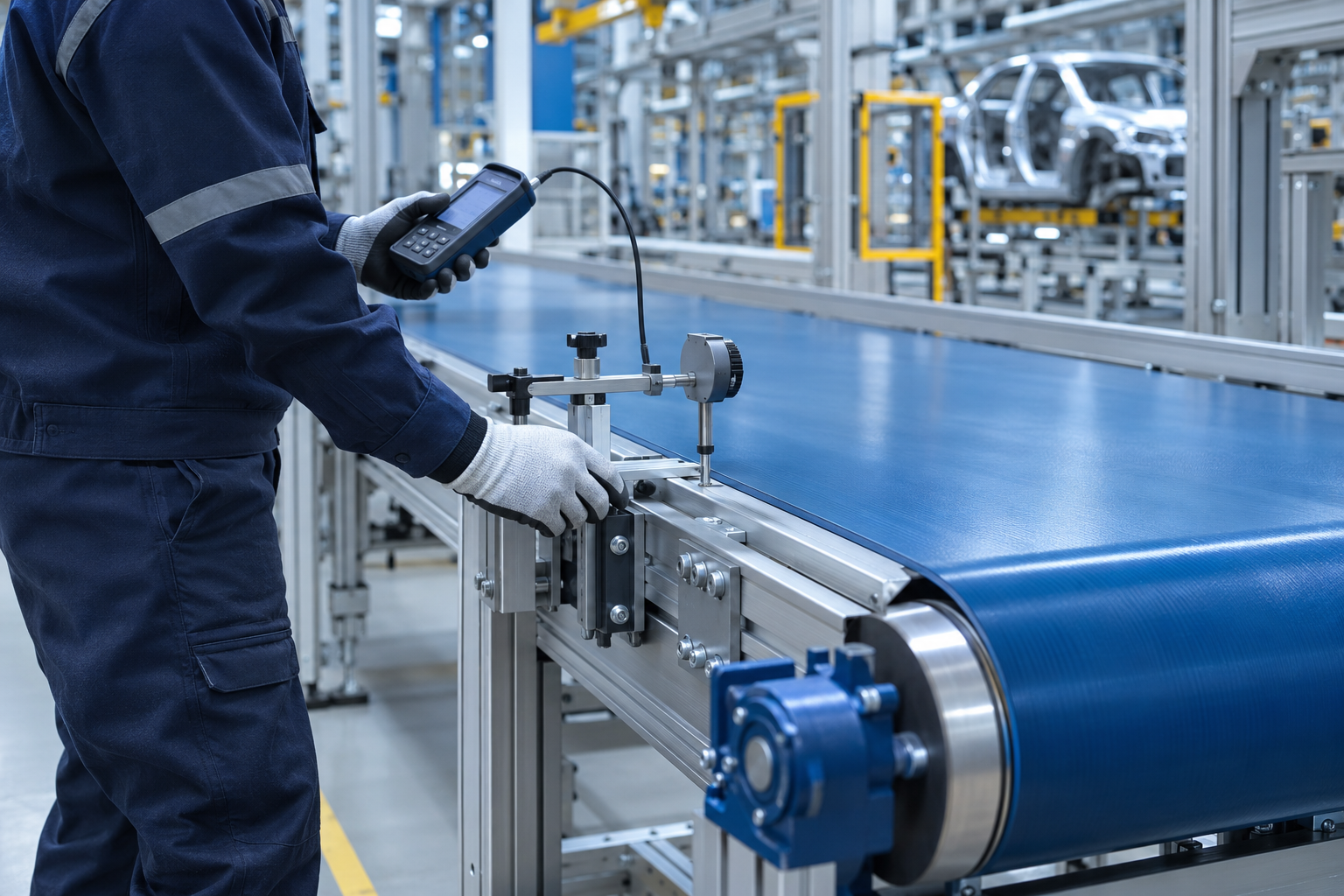
Good belt selection begins with a clear understanding of the line. Tell Feltnova what you need to move, how the conveyor is arranged and where interruptions occur. Together, we can review grip, transfer points, drive requirements and maintenance access to build a practical application brief.
Discuss your applicationCoordinate each stage of your production line
Different stages of automotive production call for different belt technologies. Fabric-based conveyor belts support the handling of components and subassemblies. Plastic modular belts offer a configurable conveying surface for suitable assembly and transfer layouts. Flat belts transmit motion between machine elements, while toothed timing belts support synchronised movement and repeatable positioning. Select each solution around the actual load, speed, environment and machine design.
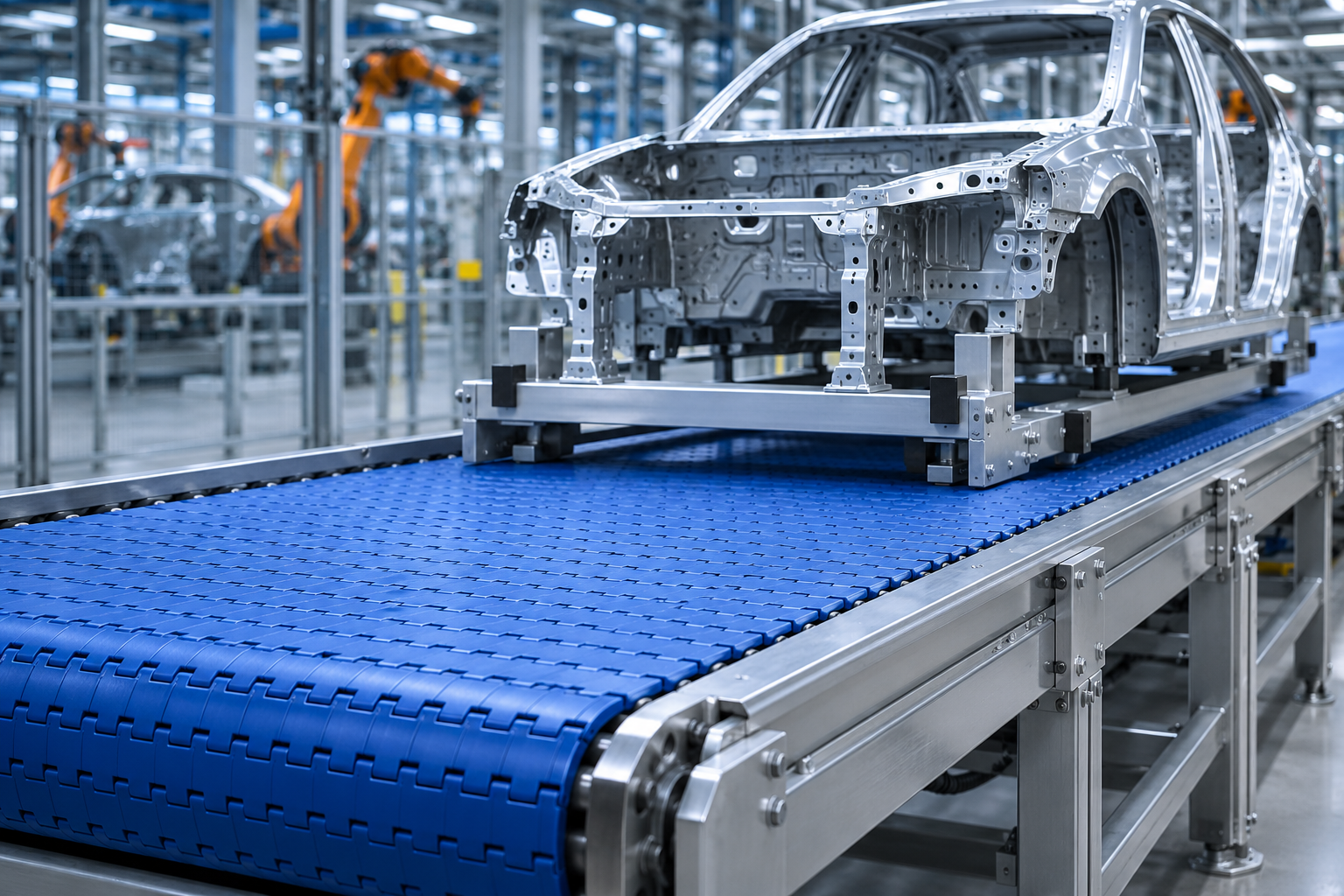
Plastic modular belts — Feltnova Prolink
- Build a conveying surface around the required width, support arrangement and product geometry.
- Consider modular construction for assembly and transfer lines with defined load requirements.
- Assess surface grip and friction against the conveyed part and conveyor support.
- Plan access for inspection and replacement of individual modules where the design permits.
- Confirm conductivity, flame behaviour and any personnel-conveying requirements for the specific belt and complete system.
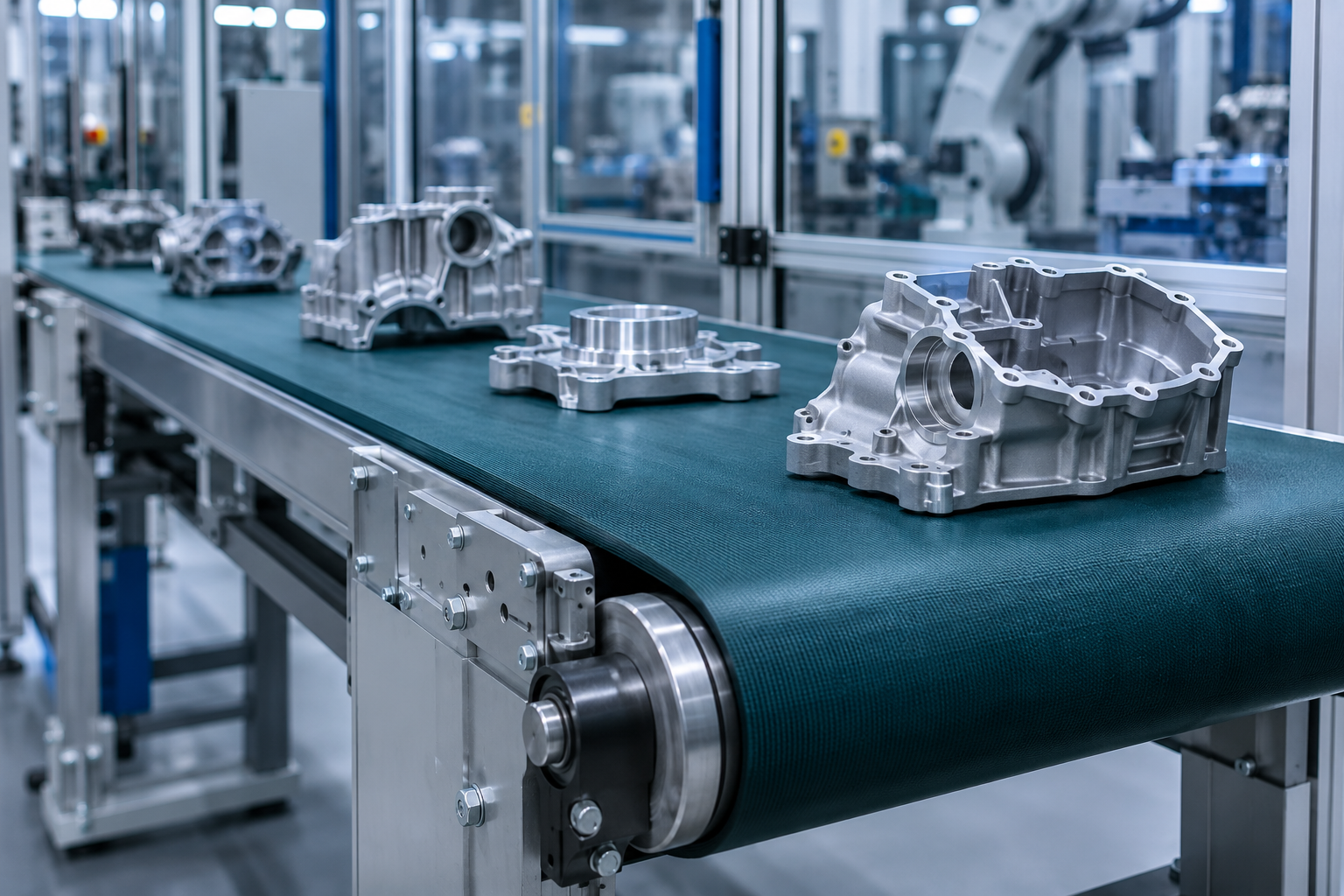
Conveyor and process belts — Feltnova Transilon
- Handle automotive components and subassemblies with a surface suited to their shape and finish.
- Choose grip and release characteristics around accumulation, transfer and positioning needs.
- Evaluate profiles or guides where the application requires additional component control.
- Match belt flexibility to the pulley diameters and available installation space.
- Confirm resistance to oils, chemicals and temperature against the actual operating environment.
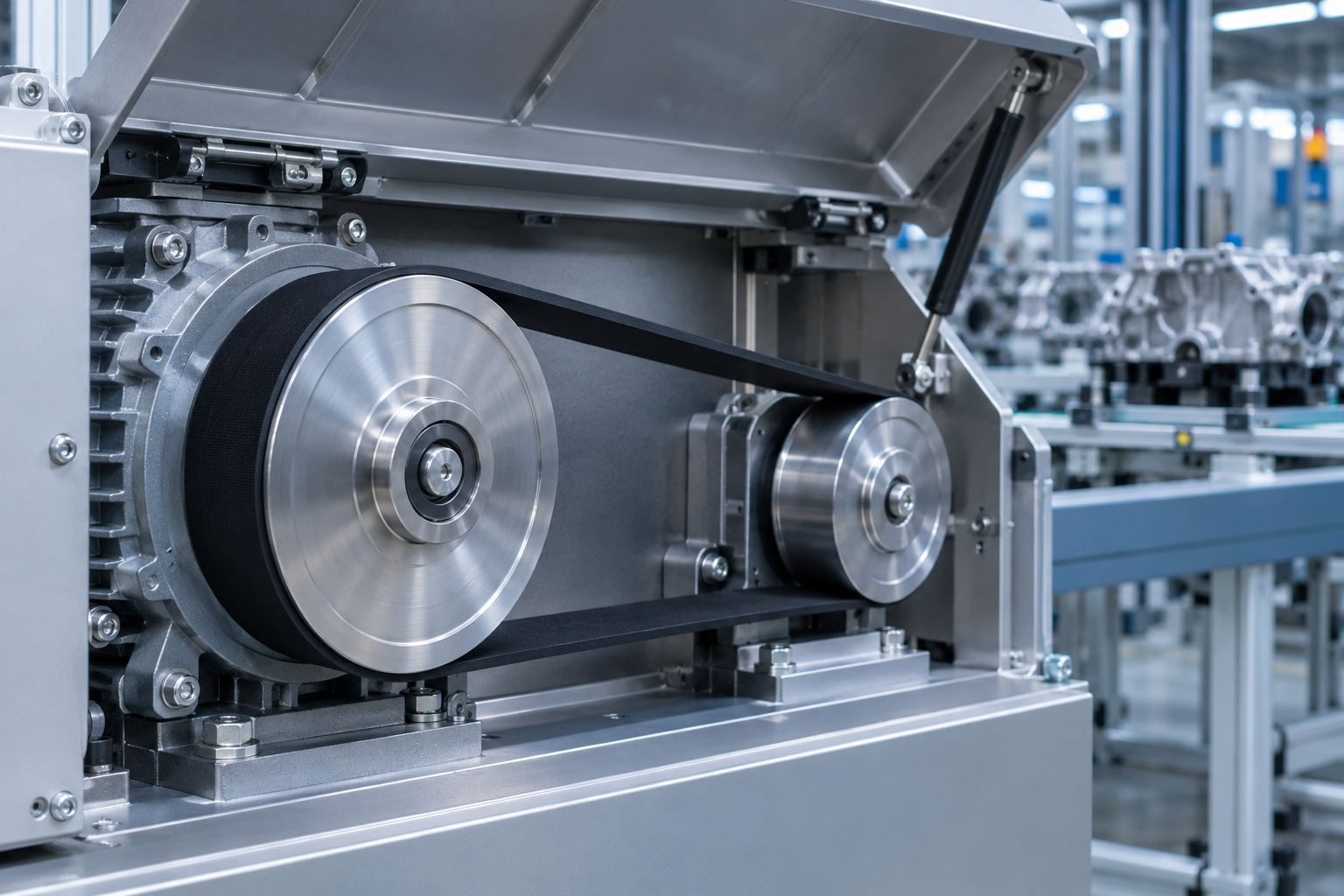
Flat drive belts — Feltnova Extremultus
- Transmit rotary motion in compatible automotive production equipment.
- Match belt construction and traction to the required power, speed and pulley arrangement.
- Review alignment and tensioning to support stable running.
- Account for oil exposure, contamination and ambient temperature during selection.
- Include inspection access and replacement procedures in the machine layout.
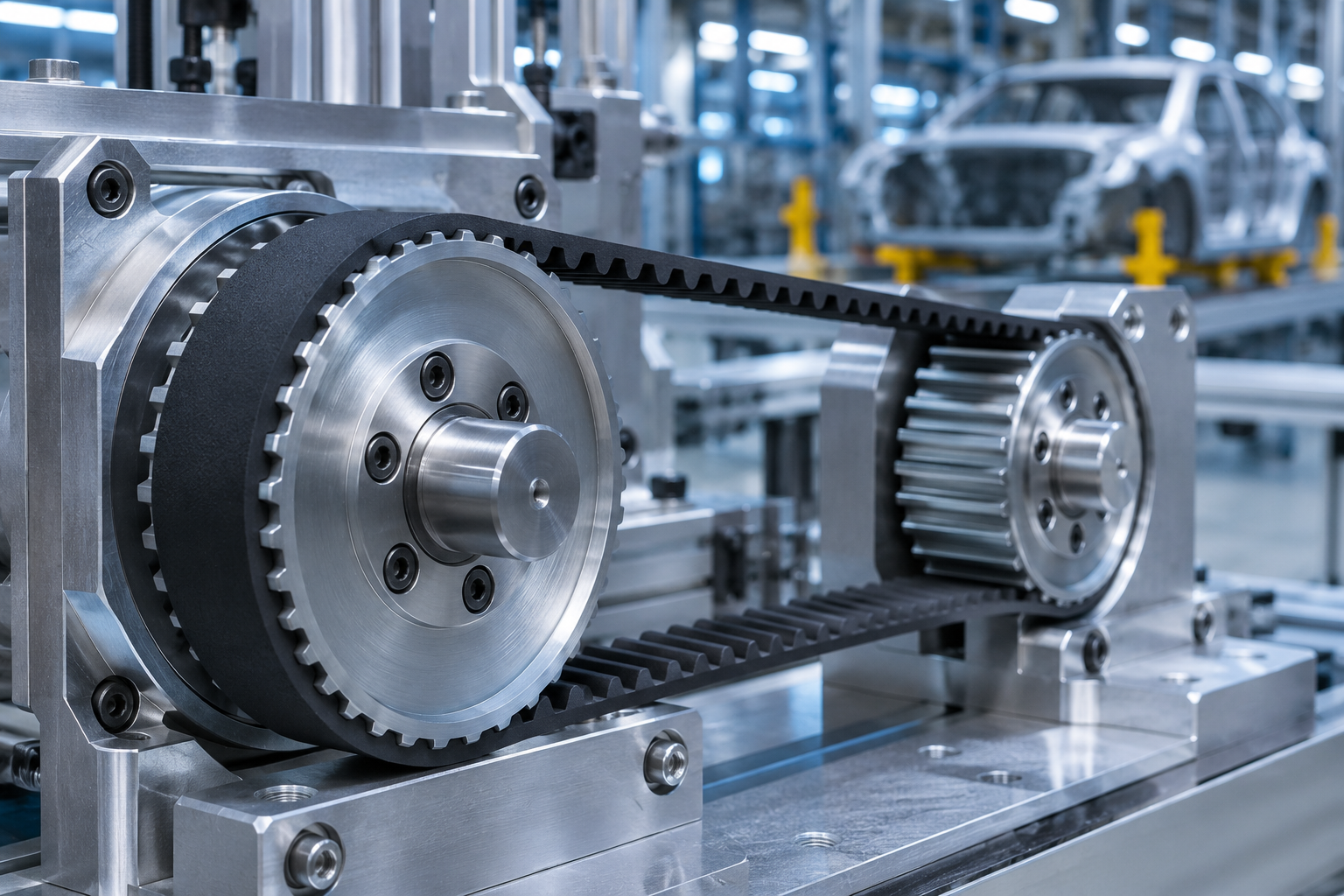
Precision timing belts — Feltnova Proposition
- Support synchronised movement through positive engagement between belt teeth and pulleys.
- Evaluate repeatable positioning needs in component handling and assembly fixtures.
- Select the tooth profile, tension member and belt width for the application load.
- Consider application-specific surface treatments or attachments where required.
- Check pulley alignment, installation tension and environmental compatibility before commissioning.
Support from specification to maintenance
Feltnova supports belt selection with a practical review of your conveyor and operating conditions. Share drawings, component details and the challenges on your line so that the application requirements can be assessed.