FELTNOVA
INTERNATIONAL
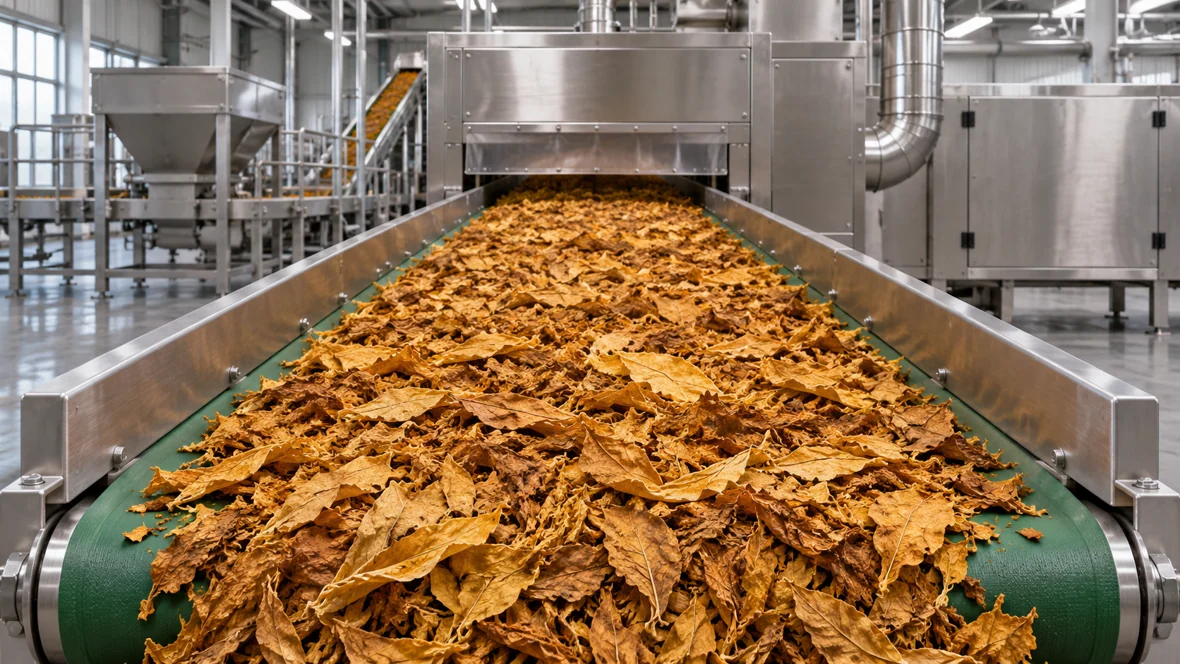
The TT designation identifies Feltnova Transilon belt types intended for tobacco processing. Select a belt construction suited to the transfer point and request its current documentation. Depending on the type, materials may include polyolefin, polyester or silicone.
Pyrolysis testing characterizes compounds released when belt materials are heated without oxygen. Ask for the test documentation for the specific belt and any welded accessories required by your line.

Review the intended contact conditions alongside any applicable FDA or EU plastics requirements. Request the current declaration for the chosen belt construction and check the materials, conditions and limitations covered.

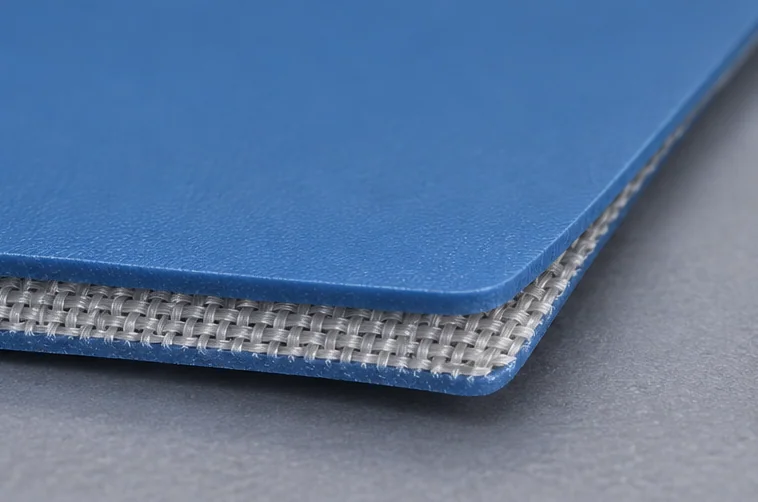
Crosswise stiffness helps a wide belt stay flat across the bed and limits creasing through swan-neck transitions. A fabric with monofilament yarns across the belt can provide this stiffness while allowing the belt to flex around pulleys.
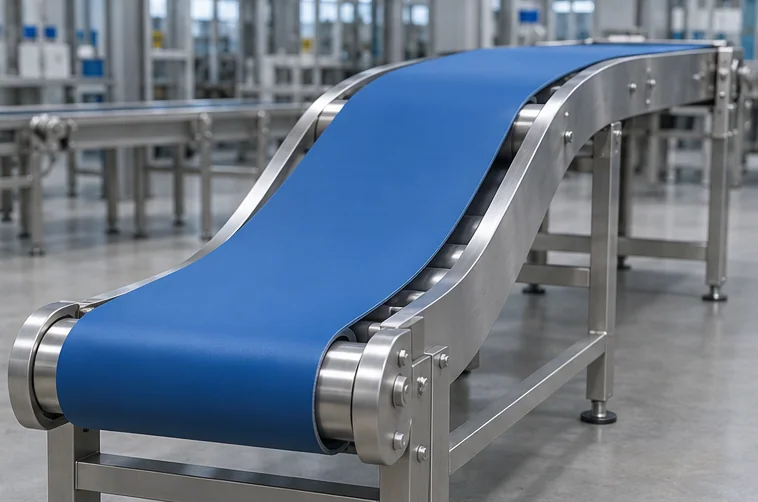
A crosswise-flexible belt follows the angled rollers of a troughed conveyor, forming a channel for loose material. Check the required trough angle and the belt’s ability to conform under both loaded and unloaded conditions.

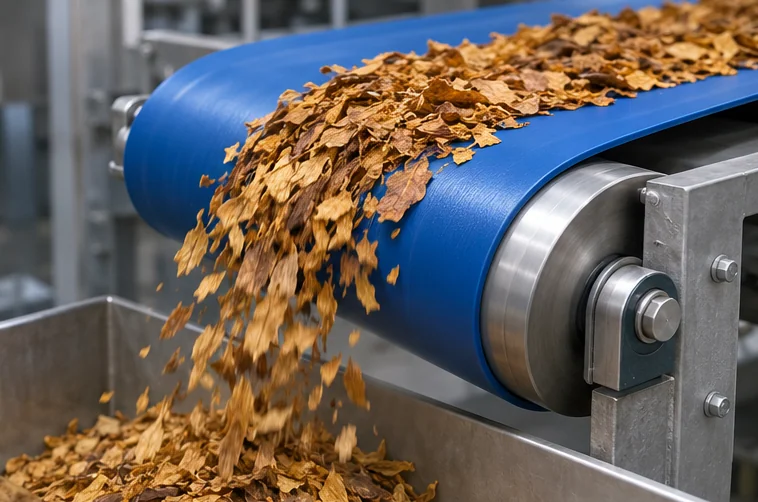
Surface material and texture affect how cleanly tobacco leaves the belt at discharge. Select the finish for the moisture and additives in the product, and check release at the actual discharge roller.
Welded polyester profiles support loose material on inclines. Choose the profile shape, height and spacing for the slope, load and discharge geometry. Some profile shapes are available in rolls.
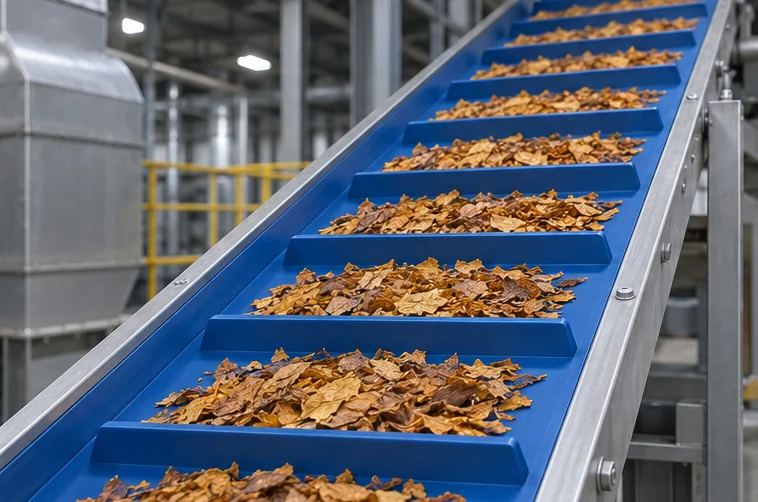
Available heights range from 10 to 17 mm.
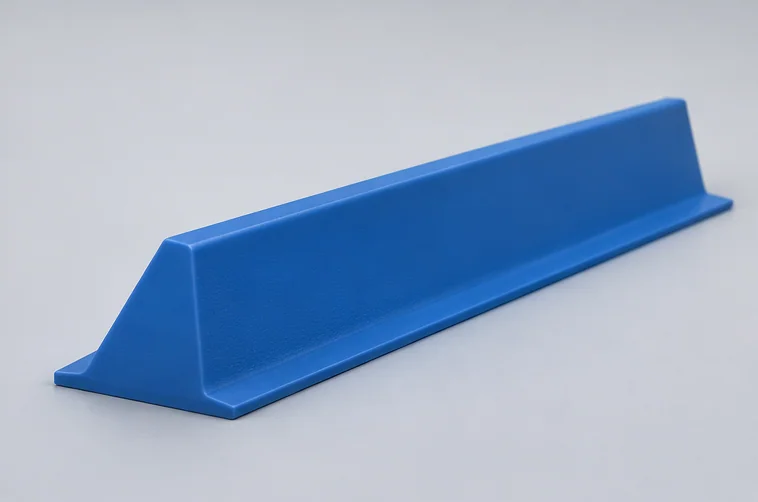
LB profiles range from 20 to 60 mm in height. T profiles are 10 mm high.
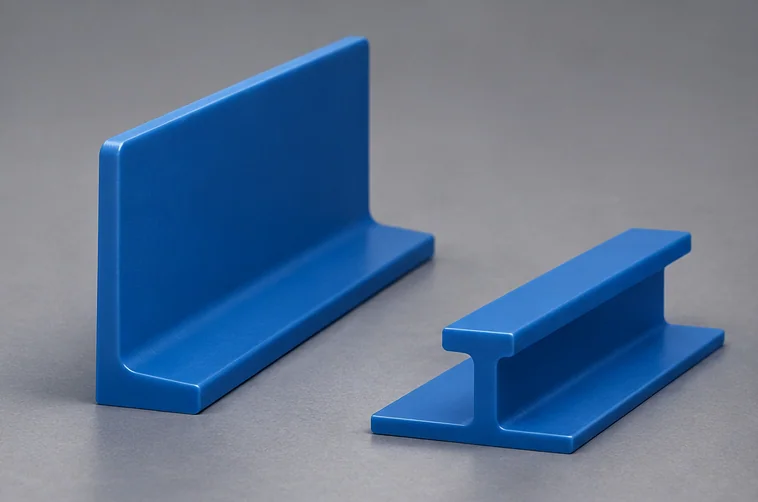
Available heights range from 20 to 100 mm.

Available heights reach up to 80 mm.
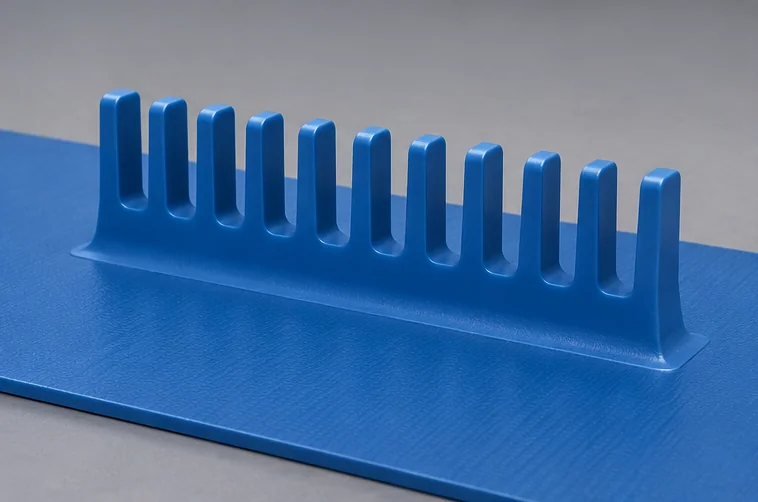
Corrugated polyester sidewalls contain loose tobacco along the edges of inclined conveyors. Available heights range from 40 to 80 mm. Check the clearance and minimum pulley diameter for the complete belt assembly.
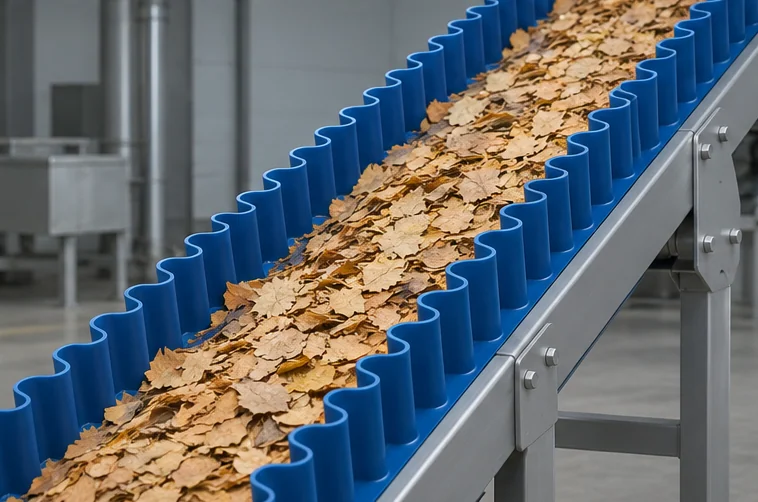
Flexible skirting keeps fine, dry tobacco from spilling at loading and transfer points. Match the skirting material and clearance to the belt surface, product and operating conditions.
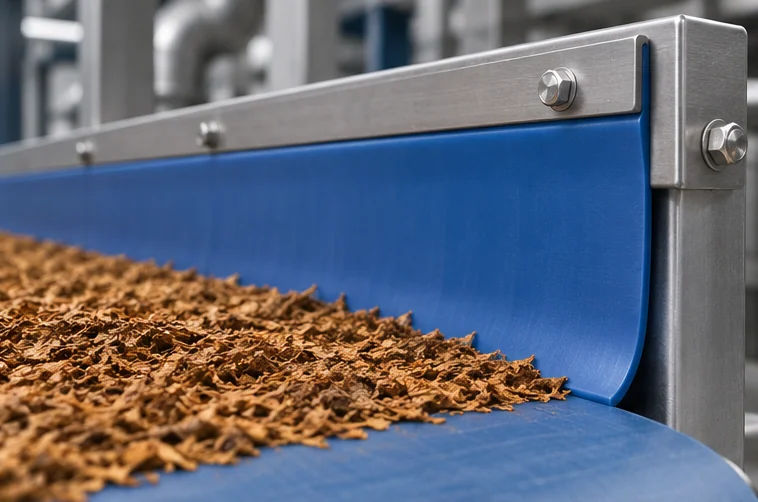
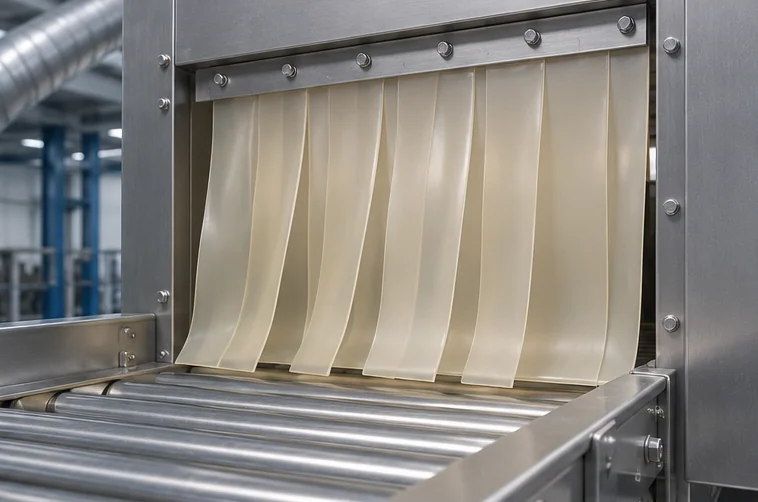
Flexible curtains can help contain dust at conveyor transfers and vapor around conditioning equipment. Choose the material and mounting arrangement for the temperature, cleaning routine and access needed at the opening.
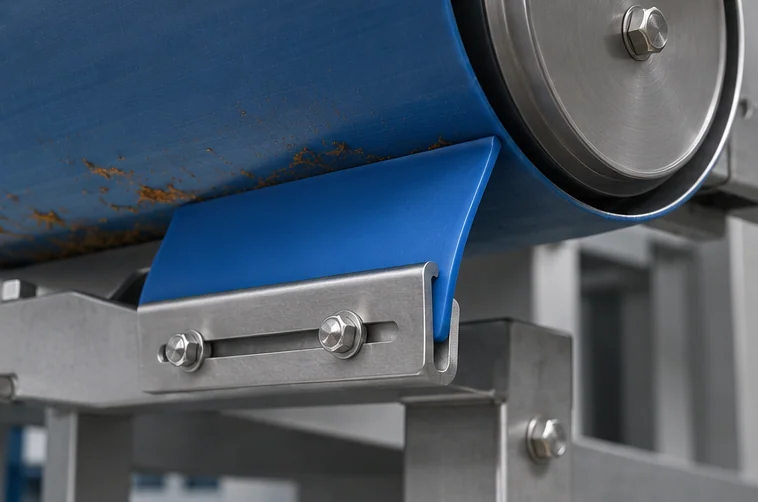
A flexible polyester scraper removes carryback from the return side of the belt. Set the contact pressure to clear buildup while limiting wear on the cover and splice.
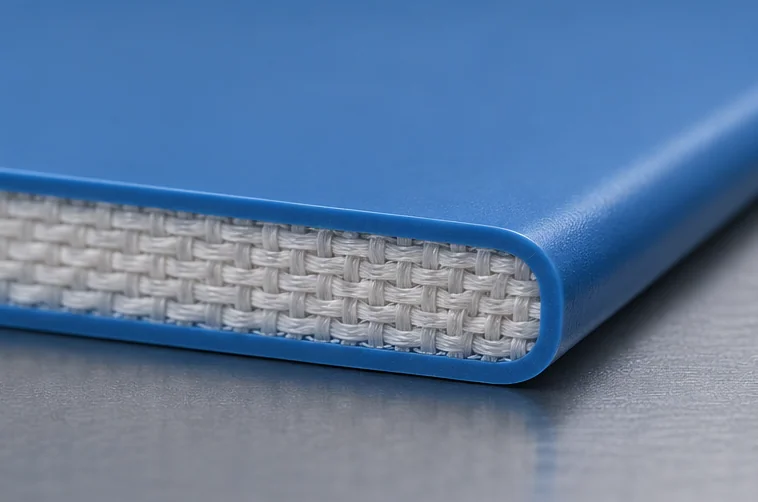
Feltnova Smartseal covers exposed fabric at the belt edges. A sealed edge helps limit fiber shedding and the ingress of moisture, oil and grease during operation and cleaning.
Repeated exposure to hot moisture or steam can weaken some belt constructions, leading to cracking or layer separation. Specify the operating temperature, exposure time and cleaning method when comparing belt types.