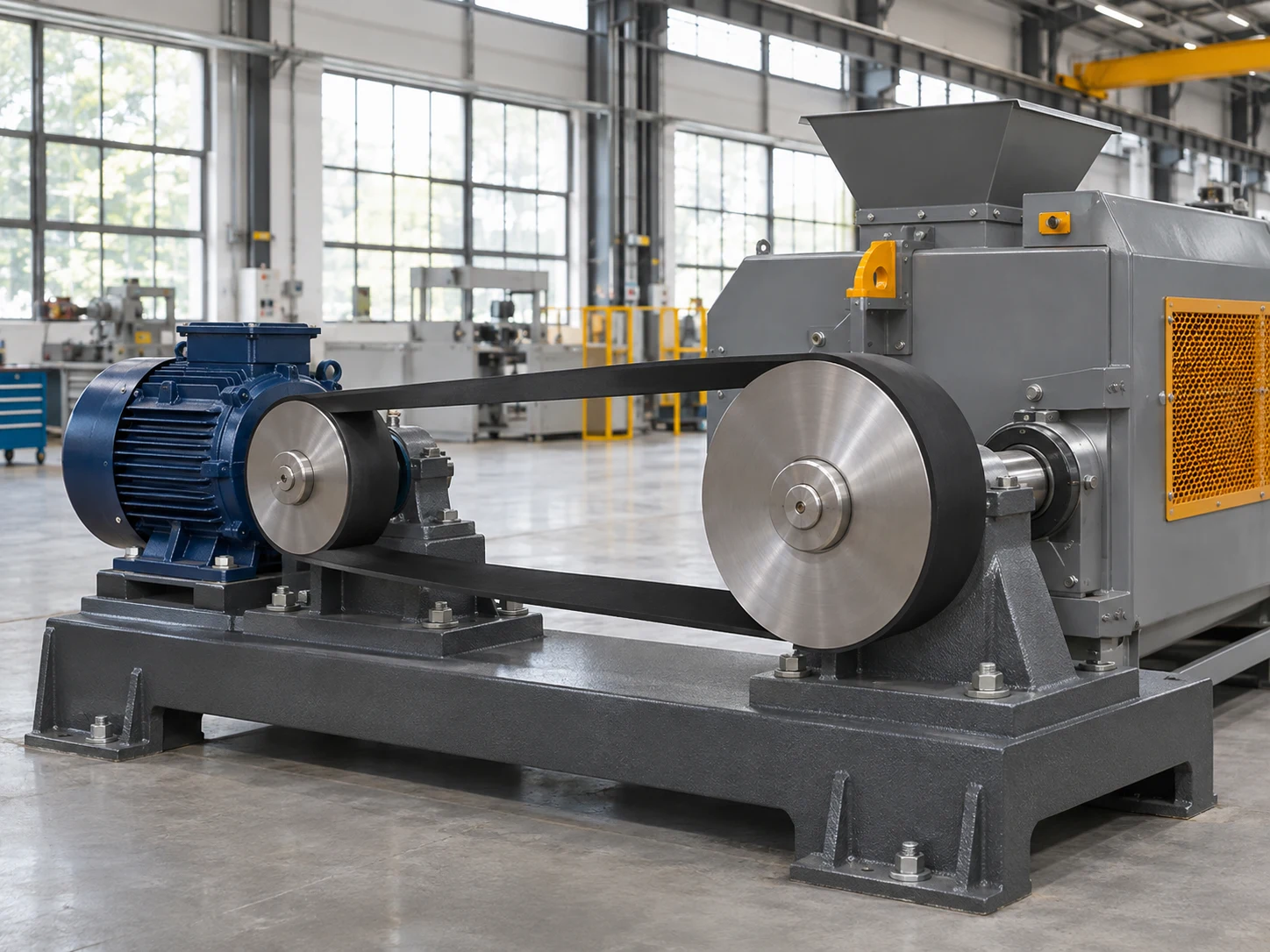
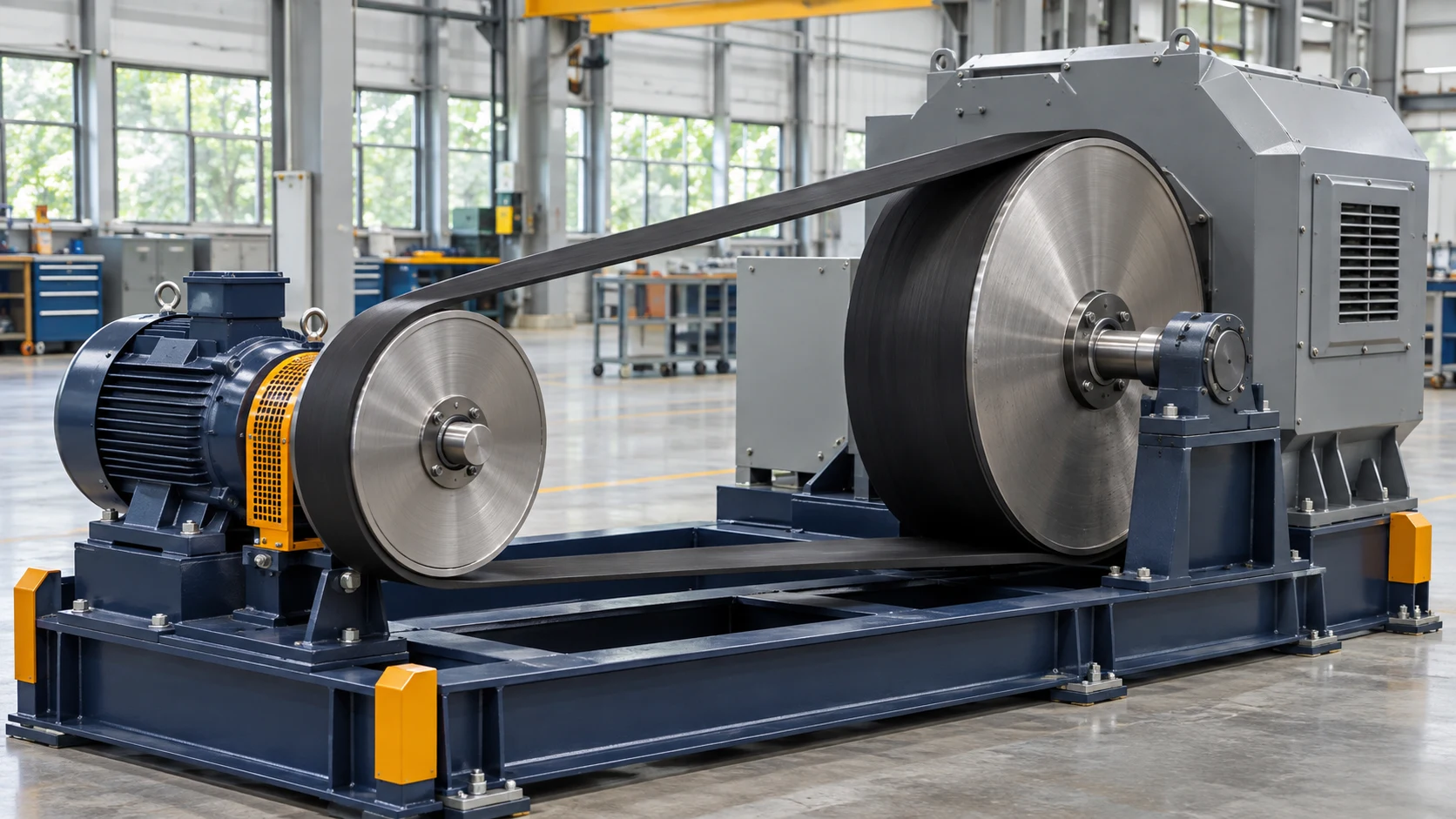
Connect the motor to the motion
A flat transmission belt carries rotary motion between pulleys through friction at the contact surface. The drive works as a complete system: belt construction, pulley geometry, alignment and working tension all affect the result.
Start your FELTNOVA selection with the machine’s duty. A continuously running drive and a machine with frequent starts may need different design considerations, even when the belt dimensions look similar.
Define the job before choosing the belt
- Motor power, operating speed and driven load
- Start-stop cycles, reversing and load changes
- Pulley diameters, shaft layout and centre distance
- Space available for tensioning and maintenance
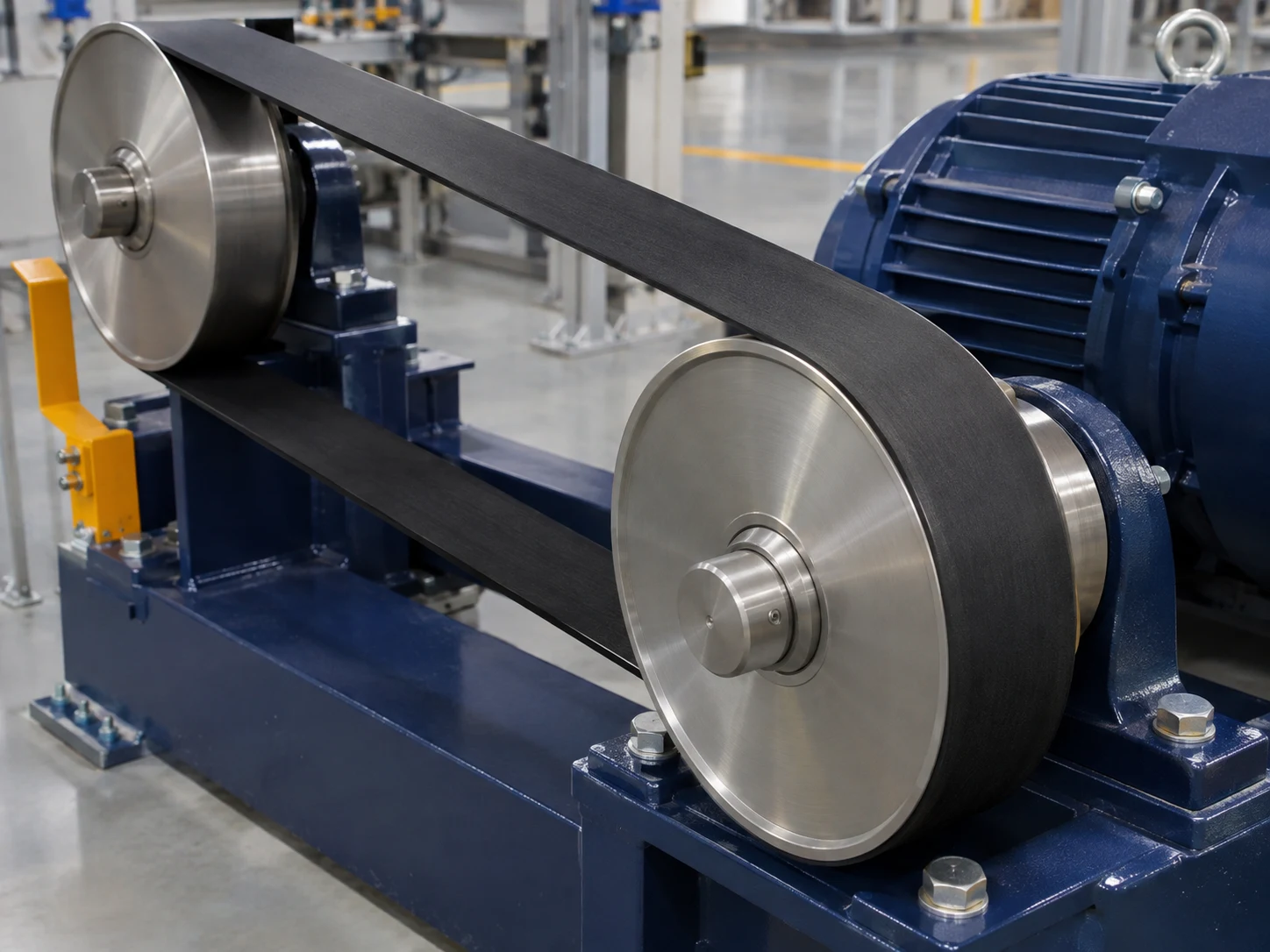
Choose the construction around the drive
The traction layer carries tensile load, while the pulley-contact surface helps transfer force. A belt’s reinforcement, thickness and surface must be considered together rather than selected from a material name alone.
Four points to review
- Reinforcement: compare working tension and elongation with the machine’s adjustment range.
- Contact surface: consider pulley material, surface condition and possible contamination.
- Flexibility: check the minimum pulley diameter and any reverse bending against the selected belt data.
- Joint and dimensions: confirm finished length, width, thickness and the joining method before ordering.
Temperature, moisture, oil exposure and cleaning chemicals should be included in the selection discussion. Performance ratings and material suitability must be confirmed for the chosen specification.