

Belting for every stage of parcel flow
From receiving and sorting to packing and dispatch, each transfer point places different demands on a conveyor belt. Feltnova helps you define the right belt construction, surface and joining method around parcel size, load, speed and conveyor geometry. Match the belt to the task to support controlled product movement throughout your distribution center.
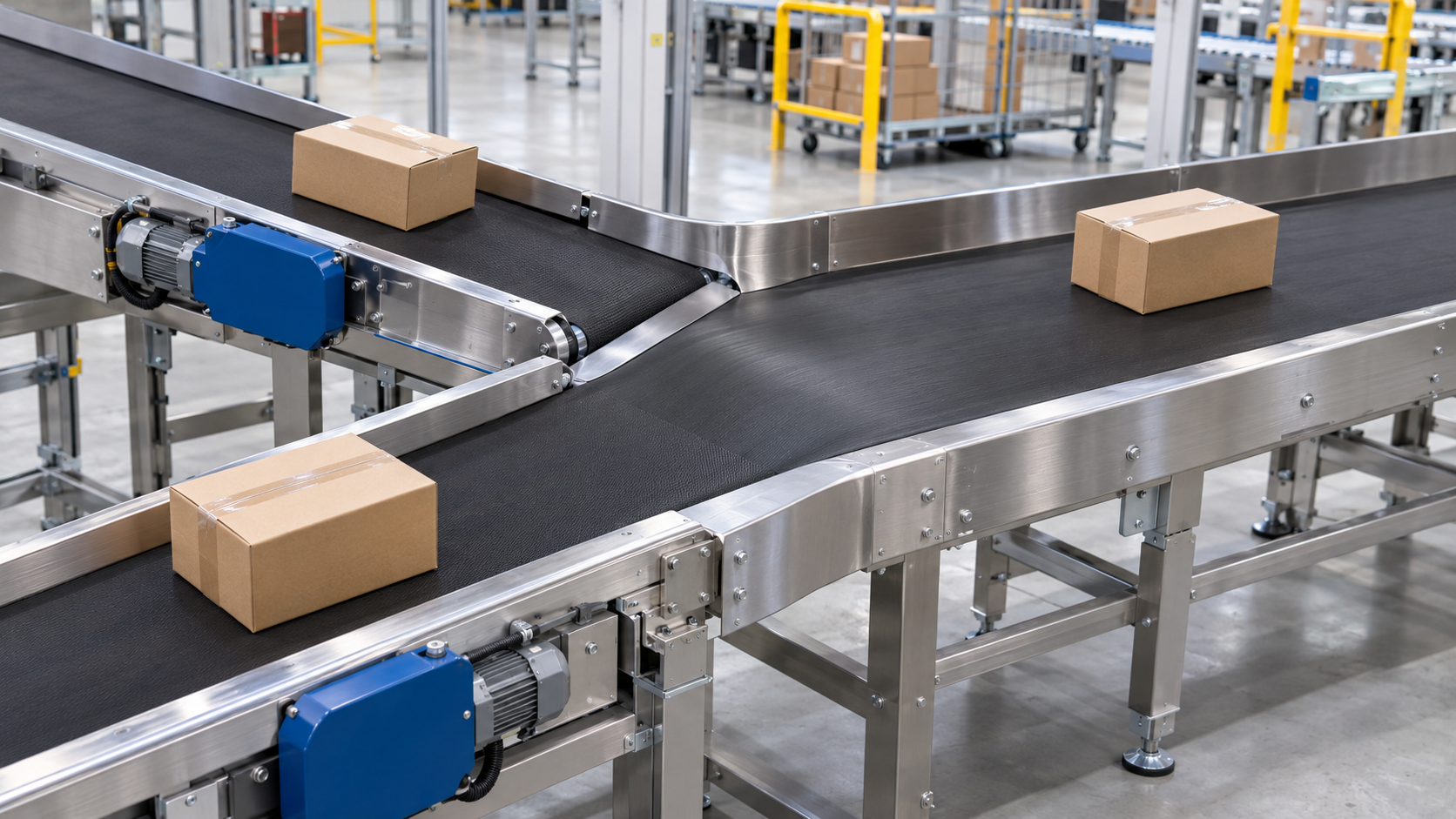
Controlled infeed and outfeed merging
Bring separate parcel streams together with belts selected for the transfer geometry and operating cycle. Surface grip, belt flexibility and dimensional stability all influence how packages enter and leave a merge. Share your transfer angles, pulley diameters and start-stop frequency with Feltnova to establish a suitable specification.
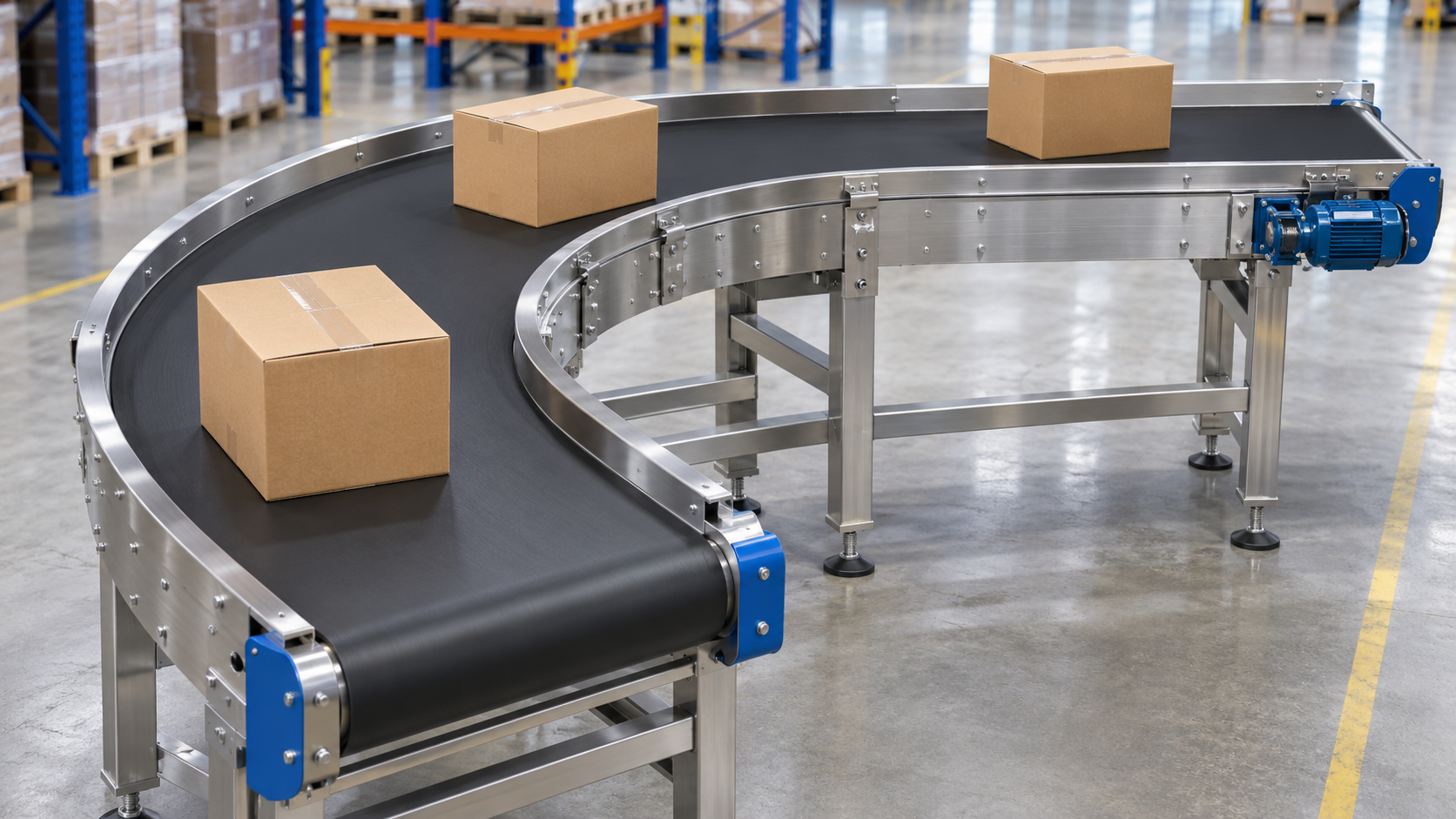
Smooth direction changes on curved conveyors
Curved conveyors connect processes where floor space and routing matter. Belt selection should account for the curve radius, conveying width, guiding arrangement and package footprint. Feltnova works with your system requirements to define a belt solution that supports consistent parcel positioning through changes of direction.
Consider energy use across the conveyor
Belt-to-bed friction, belt tension, drive alignment and loading all affect conveyor power demand. Review these factors together when specifying a replacement or a new line. Feltnova can discuss belt options for your operating conditions; any energy-saving target should be validated on the actual conveyor.