Nonwoven Belts

Feltnova nonwoven belts support gentle web transport and controlled layering from web formation through cross-lapping and downstream handling. Selecting the right belt surface, dimensional stability and electrical properties helps keep delicate fibres moving evenly while limiting unwanted stretching, slipping and static build-up.

Controlled web handling in cross-lappers

A cross-lapper turns a continuous fibre web into overlapping layers. Consistent transfer between the moving belts and the receiving apron helps maintain the laying pattern, layer distribution and edge alignment. Belt selection should consider carriage motion, operating speed, web weight and the influence of air movement.

Feltnova helps match the belt construction to the application, balancing secure web guidance with clean release. The aim is to transfer the web gently without dragging the lower layers or compressing the fleece unnecessarily.

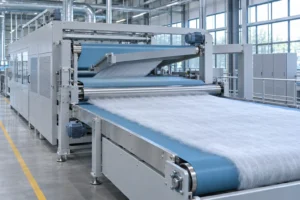
Feltnova nonwoven belt application illustration: cross-lapper web transport
Feltnova nonwoven belt application illustration: belt and roller detail
Feltnova nonwoven belt application illustration: even fleece layering

Belt surfaces matched to your process

Surface friction, coating uniformity and electrical conductivity all influence how a lightweight web travels and releases. A suitable belt should guide the fibres consistently while working with the machine’s rollers, tensioning system and cleaning arrangement.

For a Feltnova belt recommendation, provide the machine model, belt dimensions, roller diameters, line speed, fibre type, web weight and operating temperature. Include any static, tracking, fibre adhesion or wear issues. Final belt properties and operating limits should be confirmed for the selected construction.

Further Information

Feltnova nonwoven belt application illustration: cross-lapper web transport

Feltnova Nonwoven Belt Application Guide

Process considerations and belt selection checklist

DOWNLOAD