
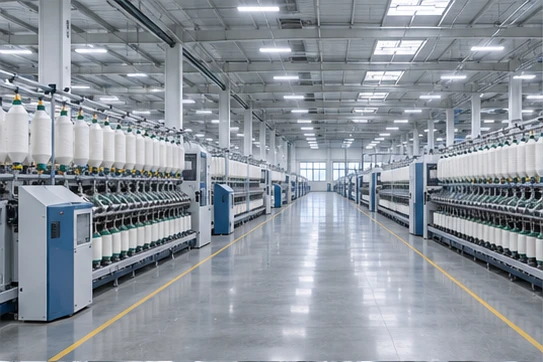
1. Bale opening and blending
Consistent yarn starts with controlled fiber preparation. Bale openers separate compacted cotton, wool or man-made fibers into smaller tufts. Cleaning stages remove unwanted material before blending balances the fiber mix for the next production step. Conveyor belts support steady feeding, while sealing belts on suitable automatic systems help maintain airflow along the suction channel.
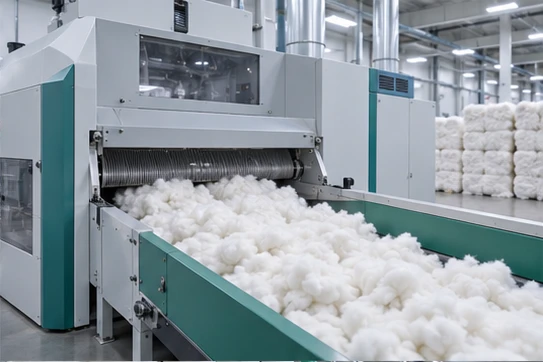
Belt requirements
Belts must combine reliable tracking with a surface that releases loose fibers cleanly. Suction-channel covers need lateral stability and flexibility in the running direction. Hopper feeders require dependable grip without excessive fiber carryback. Where spin finishes or processing oils are present, coating compatibility and static-control requirements must be checked against the actual operating conditions.
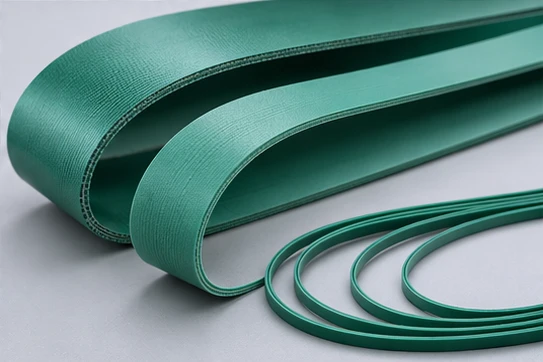
Feltnova belt solutions
Feltnova helps match conveyor and sealing belt designs to the fiber, machine geometry and working environment. Selection focuses on surface finish, transverse stiffness, pulley diameter and joining method. The aim is uniform feeding, gentle fiber handling and straightforward maintenance, with final belt specifications confirmed for each machine.
2. Carding, drawing and combing
Carding opens fiber tufts into individual fibers and forms a fine web that is gathered into sliver. Drawing combines and drafts slivers to improve evenness and fiber alignment. Where the yarn specification calls for it, combing removes short fibers and remaining impurities. Stable movement through each stage supports consistent material preparation before spinning.
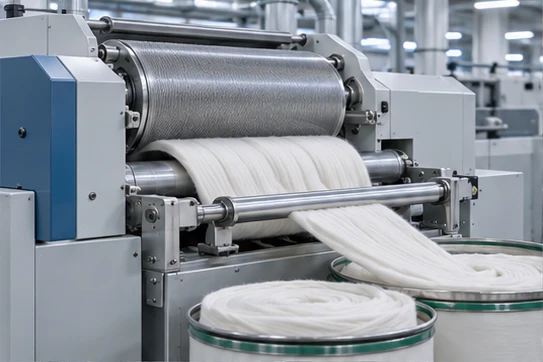
Belt requirements
Drive belts must transmit the required load smoothly while limiting vibration. Web take-off belts need a clean, consistent surface that supports fragile fibers without buildup. Draw-frame drives may involve crossed or angular belt paths, so flexibility, tracking and joint quality must be considered alongside the machine’s speed and tension settings.
Feltnova belt solutions
Feltnova offers application-based selection for flat drive belts and machine tapes used in fiber preparation. Belt construction and surface properties are matched to the drive arrangement or web-transfer task. Correct installation tension and alignment help maintain controlled movement and reduce avoidable interruptions.
3. Ring spinning
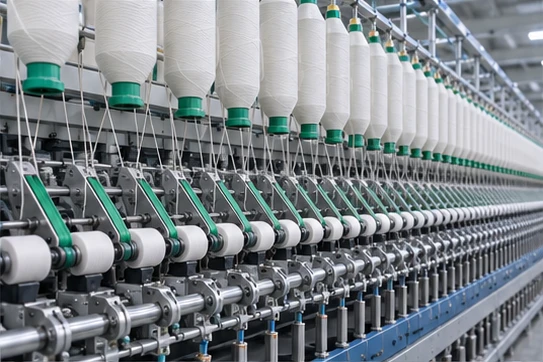
Ring frames draft roving and insert twist as yarn is wound onto rotating cops. Many spinning positions run side by side, making stable spindle speed and coordinated material movement essential. Depending on the machine design, narrow spindle tapes or tangential drives transfer power to the spindles, while auxiliary belts handle bobbin and cop transport.
Belt requirements
Spindle drives require consistent friction, flexible running over small pulleys and a uniform joint. Belt tension must suit the machine to avoid unnecessary bearing load or slip. Abrasion, airborne lint and contact with textile finishes also influence belt selection and maintenance intervals.
Feltnova belt solutions
Feltnova spindle tapes and flat drive belt options are selected around the spindle system, pulley size and operating conditions. Attention to surface grip, dimensional consistency and installation supports steady running across the frame. Compatibility and tension settings should be confirmed before commissioning a replacement.
4. Open-end rotor spinning
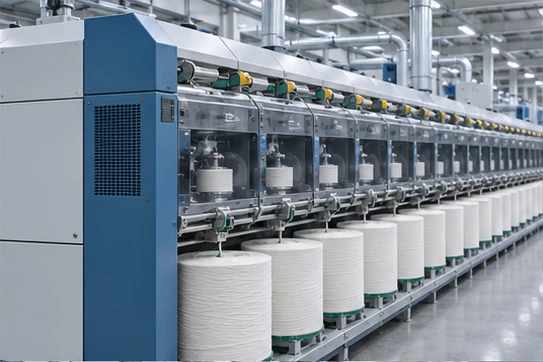
Rotor spinning feeds prepared sliver to an opening roller, separates the fibers and guides them into a spinning rotor. The rotor collects and twists the fibers into yarn, which is drawn off and wound onto a package. Coordinated drive performance helps keep the spinning units and package-handling equipment running steadily.
Belt requirements
High-speed drives demand smooth power transmission and reliable grip. Belts must suit the available pulley diameters, tensioning travel and machine layout. Resistance to repeated flexing, wear and the site’s textile-processing environment is important; static-control needs should be evaluated for the complete installation.
Feltnova belt solutions
Feltnova supports belt selection for rotor-spinning drives and associated conveying tasks. The assessment considers belt strength, flexibility, friction and joining quality rather than relying on a generic replacement size. Machine-specific checks help establish an appropriate belt and installation procedure.
5. Cone winding and package handling
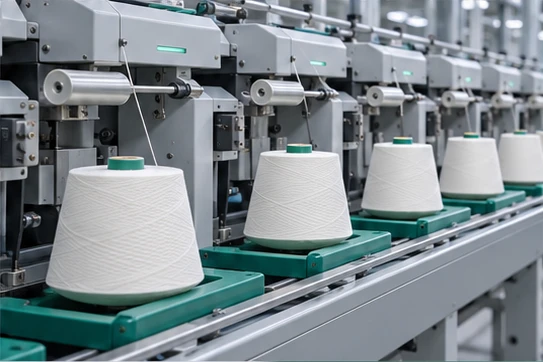
Automatic winding transfers yarn from spinning cops onto larger cross-wound packages for subsequent weaving, knitting or twisting. Trays and conveyor sections move cops between stations, while finished cones are discharged for collection and packing. Reliable transport keeps the winding positions supplied and helps protect the yarn packages during transfer.
Belt requirements
Tray conveyors need a controlled balance of grip and release, particularly around transfers, stops and accumulation zones. Stable tracking and consistent belt tension support accurate positioning. Package-discharge belts should carry cones gently, with surface texture and belt support matched to package weight and conveyor geometry.
Feltnova belt solutions
Feltnova conveyor belt selection focuses on the actual conveying duty: feeding trays, transferring cops or removing finished packages. Surface finish, flexibility and dimensional stability are matched to the handling system. Correct joints and tracking adjustments help provide repeatable movement through the winding line.
6. Yarn twisting
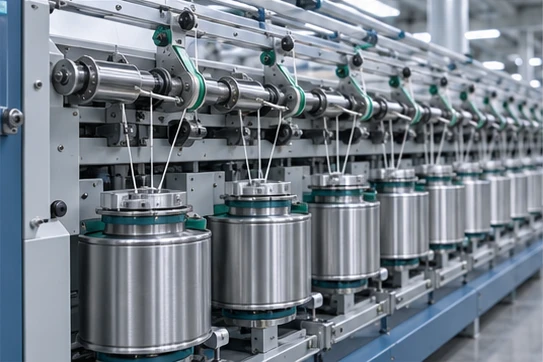
Twisting combines yarn strands or adds further twist to achieve the required yarn structure. In two-for-one twisting, the yarn path creates two turns of twist for each spindle revolution. Consistent drive performance helps maintain the relationship between spindle speed and yarn delivery across the machine.
Belt requirements
Tangential drives need dependable friction and stable tension over long running lengths. Repeated flexing and abrasion place demands on both the belt body and its joint. Where lubricants or spin finishes contact the belt, material compatibility must be checked to help avoid surface changes and uneven grip.
Feltnova belt solutions
Feltnova tangential belt options are assessed against the twister’s drive layout, load and operating environment. Selection considers the tension member, surface coating, joint and required flexibility. Final specification and fitting tension are agreed for the machine, supporting consistent power transfer and maintainable operation.