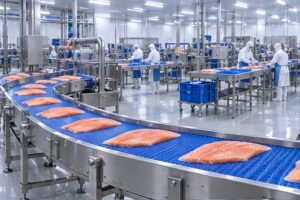
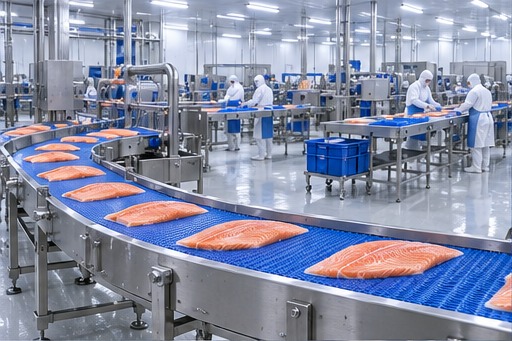
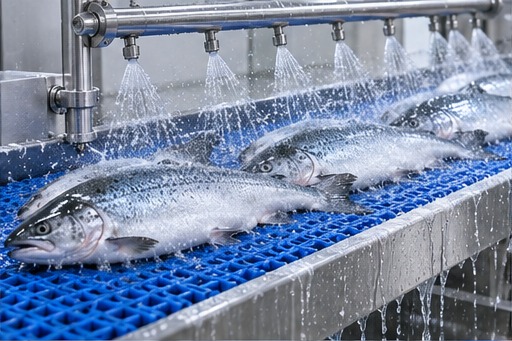
From receiving and washing to grading and gutting, the first stages of fish processing combine wet products, frequent rinsing and variable loads. The conveyor layout must suit the species, product size and available space, whether the line is installed ashore or on a vessel.
Technical requirements
Drainage, product control and access for cleaning are the main priorities. Open belt surfaces can help water pass through, while suitable flights support inclined transfers. Belt strength, hinge design and wear resistance must be matched to the actual load and cleaning routine.
The Feltnova approach
Feltnova helps define modular or homogeneous belt configurations around your receiving and preparation equipment. Open-area modules suit drainage tasks; smooth, closed surfaces can support controlled transfers where water removal is handled separately. Curves, side guards and flights should be selected with both product flow and sanitation access in mind.
Share the fish size, loading rate, incline, conveyor width and cleaning conditions so the belt and drive arrangement can be reviewed together.
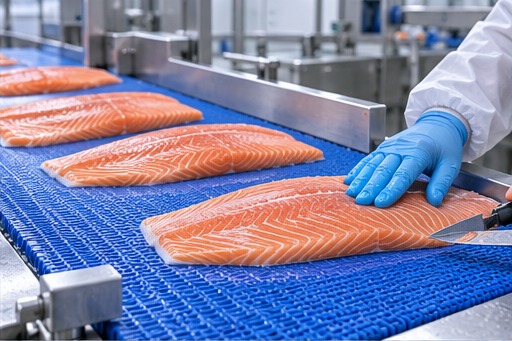
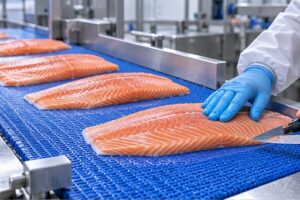
Filleting and trimming lines move delicate products between cutters, workstations and rinse zones. Consistent presentation helps operators and downstream equipment handle each fillet with less unnecessary repositioning.
Technical requirements
The belt surface should balance grip with gentle release. Transfers need to support thin or uneven fillets, and the underside, edges and return path must remain accessible for inspection and cleaning. Positioning requirements depend on the cutting equipment and its controls.
The Feltnova approach
Feltnova can help compare smooth homogeneous belts, coated fabric belts and modular designs for each transfer. Positive-drive arrangements may suit synchronized movement, while an appropriate surface profile can improve handling on wet or inclined sections. Select the configuration against the machine geometry rather than using one belt throughout the line.
Confirm minimum pulley size, transfer gaps, belt speed and the contact conditions at each cutting or trimming station.
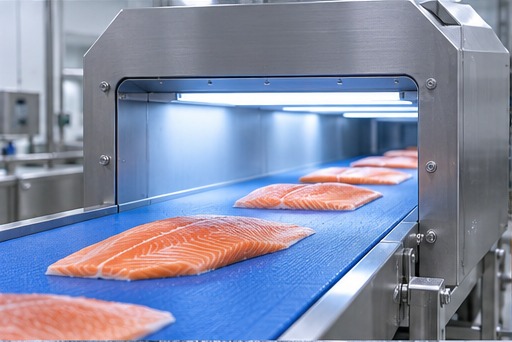
Quality inspection checks fish products before they continue to portioning or packaging. Depending on the process, this may involve visual assessment, optical equipment or X-ray inspection to identify defects and foreign material.
Technical requirements
A stable product position and repeatable belt movement help the inspection system work consistently. Optical transmission, material composition and belt thickness may also affect performance. The right choice depends on the inspection technology and must be tested with representative products.
The Feltnova approach
Feltnova supports belt selection around the equipment supplier’s requirements. Smooth surfaces can help keep fillets level; suitable homogeneous or coated constructions can be assessed where thickness uniformity matters. For light-based systems, confirm transmission and colour requirements before specifying a belt.
Validate the complete combination of product, belt, speed and inspection settings. Belt selection alone cannot guarantee detection performance.
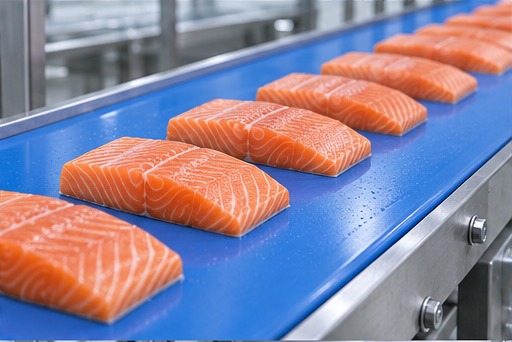
Portioning turns prepared fillets into pieces matched to the intended pack size. Controlled feeding between weighing, cutting and separating stations helps maintain a steady flow of products with different shapes and weights.
Technical requirements
The infeed belt must present the product consistently and release it cleanly at the next transfer. Surface friction, belt tracking, splice quality and small-pulley flexibility can all affect handling. Cutting directly onto a belt requires a construction specifically approved for that duty.
The Feltnova approach
Feltnova helps assess belt surfaces and drive options for the infeed, cutting transfer and discharge sections. A smooth homogeneous belt can support gentle handling, while modular constructions may suit wider conveying sections. The final choice should reflect the portion size, machine design and sanitation procedure.
Provide the smallest portion dimensions, desired spacing, transfer arrangement and whether blades can contact the belt.
Inline check-weighers monitor individual portions or finished packs and help control weight variation. Stable transfers onto and off the weighing section are essential to obtaining useful, repeatable measurements.
Technical requirements
Belt thickness, splice consistency, tracking and vibration can influence the weighing process. The belt must also suit the product contact conditions and the cleaning method. A short, lightweight weighing conveyor can have different needs from the surrounding transport line.
The Feltnova approach
Feltnova can help review lightweight coated or elastic belt options against the check-weigher manufacturer’s specification. Consistent belt construction and carefully prepared joints support smooth running, while suitable surface friction helps limit movement during transfer.
Check the belt with the installed weighing system at operating speed and across the intended product range. Recalibrate and verify accuracy after belt changes as required by the equipment procedure.
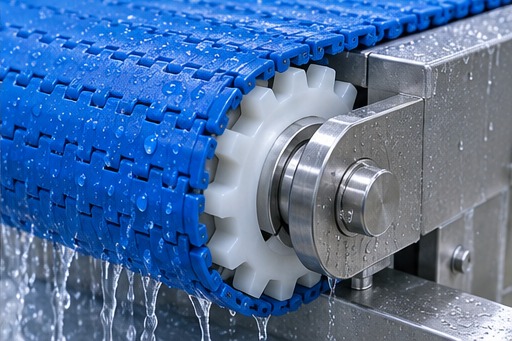
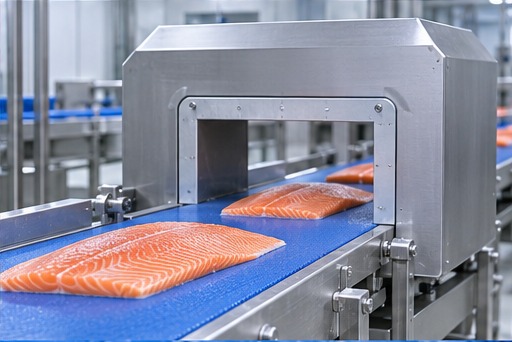
Metal detection is commonly positioned before dispatch or near packaging to help identify metallic contamination. The belt forms part of the inspection environment, so its material and fittings need to be compatible with the detector.
Technical requirements
Review conductivity, antistatic properties, pigments, joints and any metallic components with the detector manufacturer. Product moisture, salt content, temperature and pack format can also affect detection settings. A belt that works in one installation may not be suitable for another.
The Feltnova approach
Feltnova helps assess belt constructions for the specific detector aperture and conveying task. Where modular belts are used, hinge pins and accessories must also be reviewed. Select a stable, cleanable belt that supports consistent product presentation and does not conflict with the detector’s requirements.
Validate detection and rejection using the equipment manufacturer’s test procedure. Confirm sensitivity under actual production conditions rather than relying on a generic belt claim.
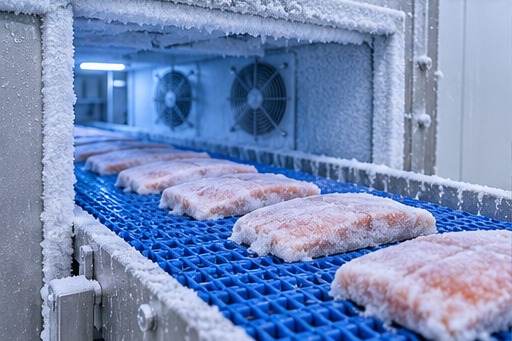
Linear and spiral freezers move fish products through controlled cooling zones. Belt choice affects product support, airflow, transfer behaviour and the ability to maintain reliable movement during cold operation and defrost cycles.
Technical requirements
Assess the full temperature range, including cleaning and defrosting, alongside load and belt tension. Open-area constructions can support airflow, while the material must retain suitable mechanical properties at the actual operating temperature. Spiral applications require an appropriate side-flexing design.
The Feltnova approach
Feltnova helps review cold-service modular belt materials, open areas and drive arrangements for the freezer design. The selection should account for thermal expansion, turning geometry and the way frozen products release at discharge. Temperature capability must be confirmed for the exact belt grade.
Share minimum operating temperature, defrost conditions, spiral dimensions, dwell time and loading pattern before finalizing the specification.
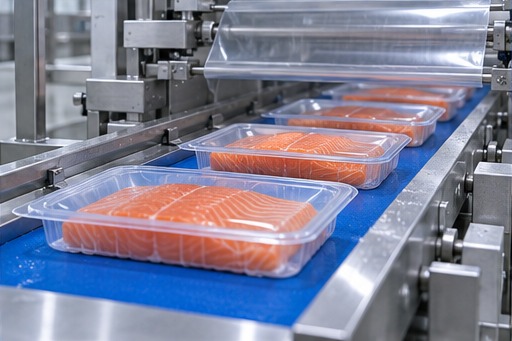
Packaging lines transfer fish portions into trays, bags or cartons before case handling and palletizing. Each section has a different balance of direct food contact, product spacing, grip and load requirements.
Technical requirements
Small transfers may require flexible belts and controlled release. Inclines may need more grip, while carton handling places different demands on belt strength and wear. Cleaning access is particularly important where unpackaged fish reaches the packaging equipment.
The Feltnova approach
Feltnova helps select coated fabric, homogeneous or modular belt configurations for the relevant packaging stages. Match the belt to the contact surface, conveyor geometry and speed so products can move smoothly between filling, sealing and downstream handling.
Confirm pack dimensions, total load, incline, line speed and cleaning method. Review direct-contact and secondary-packaging sections separately.