

Move dough steadily into the production line
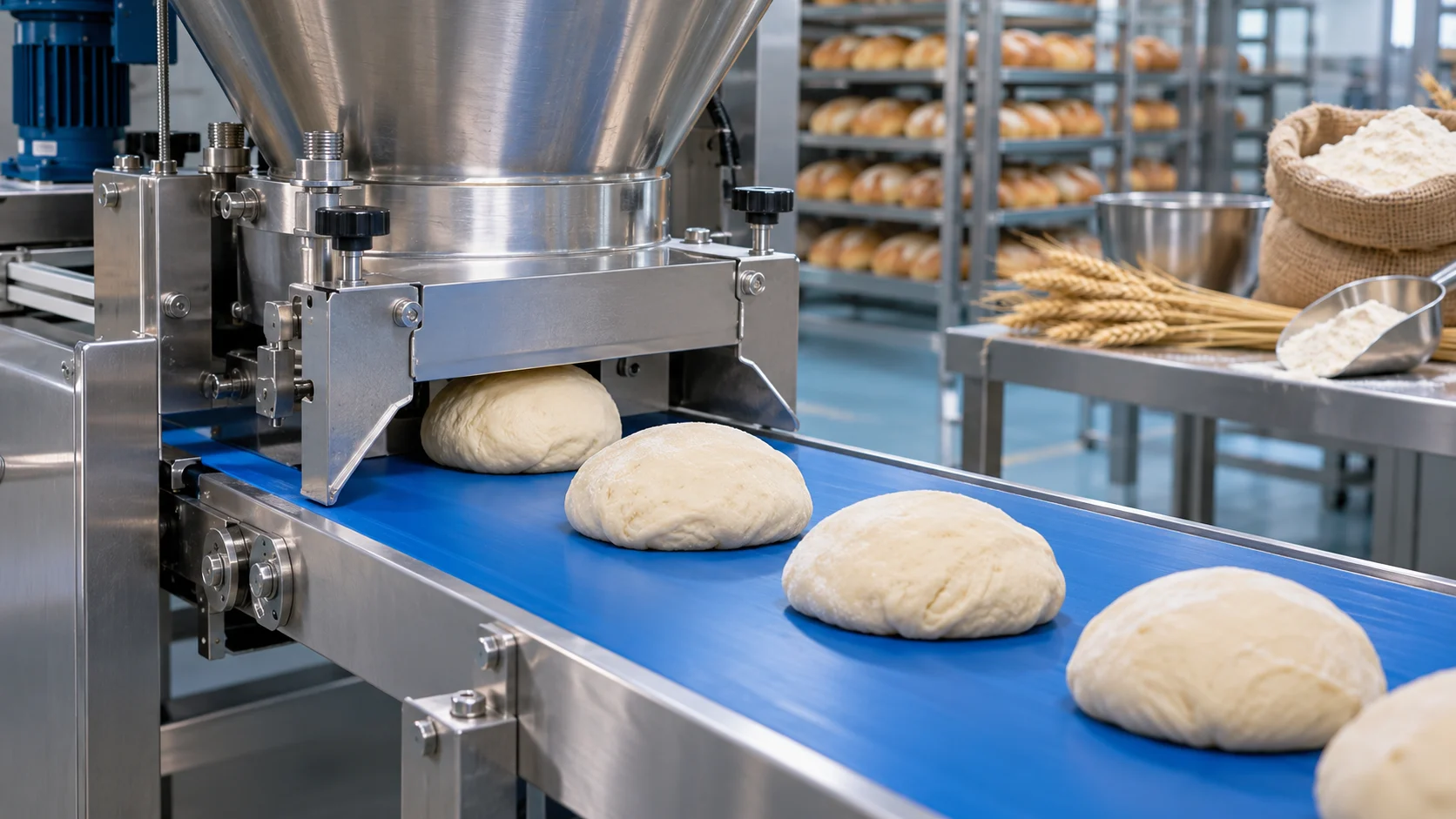
After mixing, dough needs a controlled route from the hopper to the divider. A stable feed helps downstream equipment work evenly while limiting unnecessary stretching and sticking.
Belt selection priorities
Balance traction with clean release. Consider dough moisture, feed angle, scraper design and the minimum pulley diameter. The belt surface and edges should suit the cleaning method used on the line.
The Feltnova approach
Feltnova can help select fabric-based or homogeneous belting for the feed conveyor. Share your dough recipe, load and conveyor layout so the surface, construction and edge finish can be matched to the task.
Support consistent portions and gentle rounding
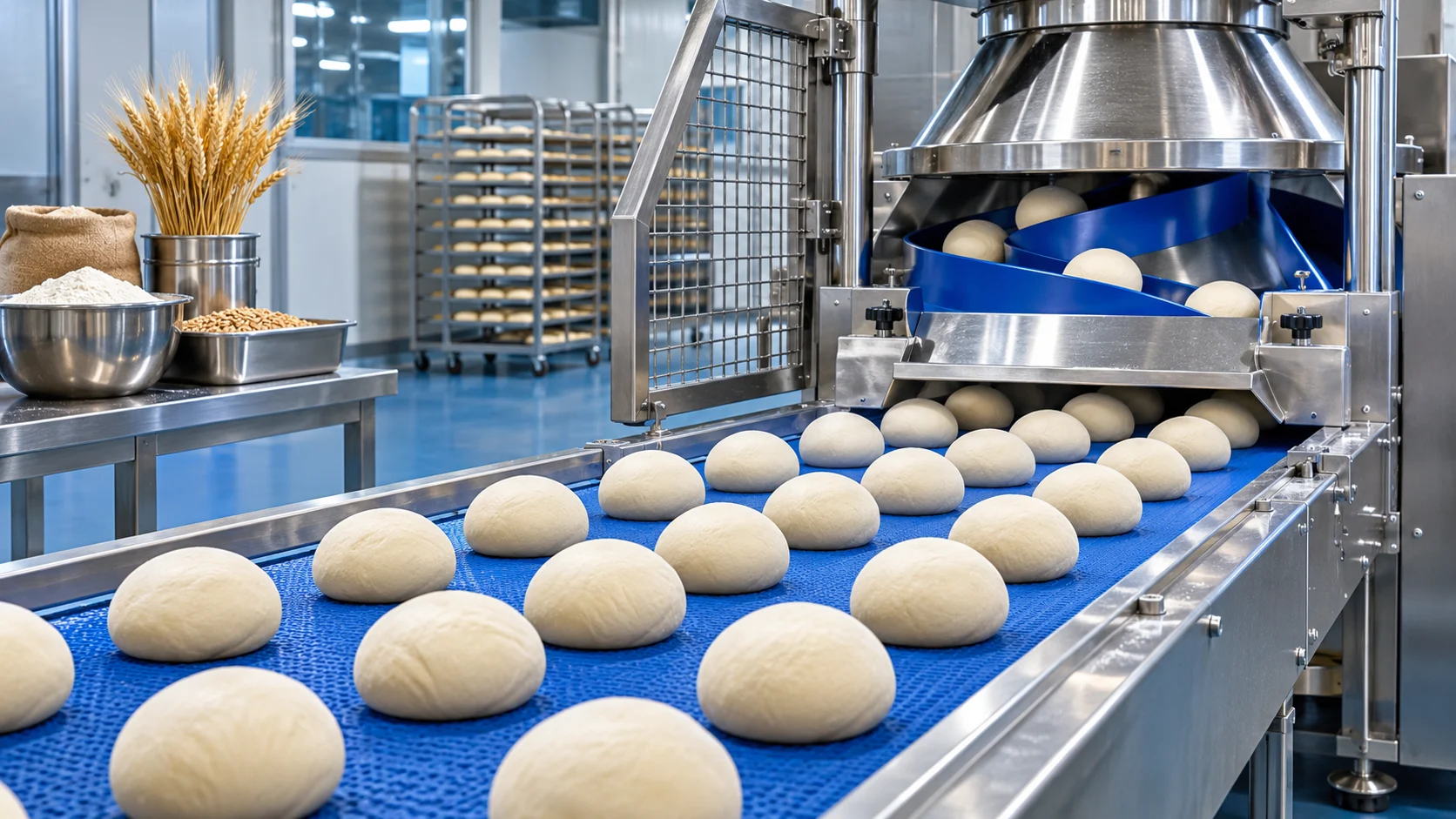
Divided dough is rounded, spaced and transferred for resting or final proofing. Controlled belt movement helps preserve the shape of each portion and keeps products aligned for the next machine.
Belt selection priorities
Forming needs predictable grip, while transfers need dependable release. Check belt tension, elasticity, tracking and how the dough behaves with the intended flour or release-agent level.
The Feltnova approach
Discuss rounding, spreading and transfer duties with Feltnova. The choice of surface and belt construction should reflect the forming action, product spacing and cleaning requirements.
Shape loaves with controlled belt contact
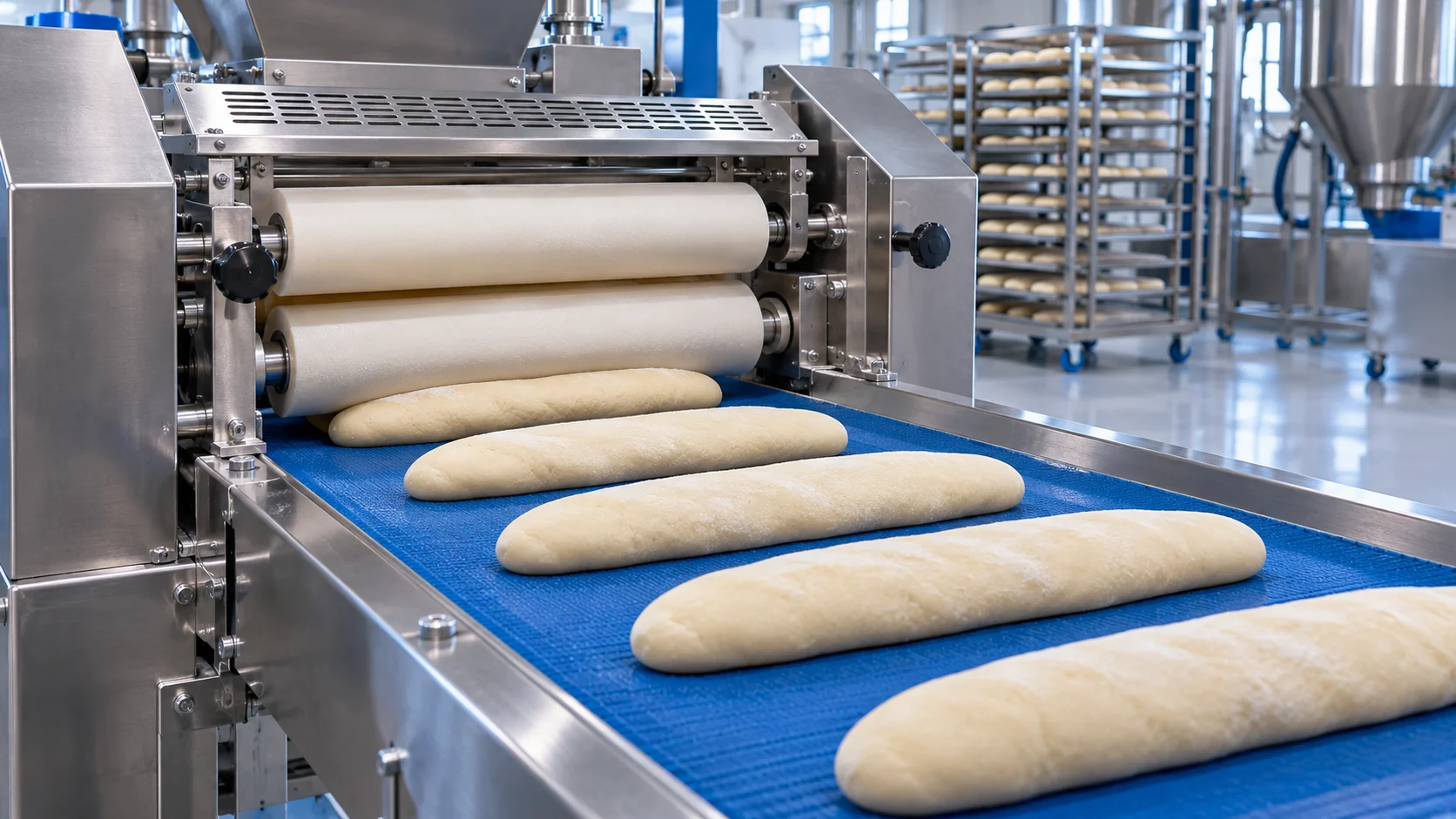
Dough pieces are rolled or moulded into the required loaf profile before entering tins or continuing as free-standing products. Stable conveying helps maintain shape between forming operations.
Belt selection priorities
Assess working tension, surface friction and resistance to wear. Transfer geometry is especially important where soft dough crosses a small nose bar or moves between belts running at different speeds.
The Feltnova approach
Feltnova supports belt selection around the moulding process and conveyor geometry. Review the required release characteristics, splice design and minimum bend radius before specifying the belt.
Keep delicate dough moving through the proofing stage
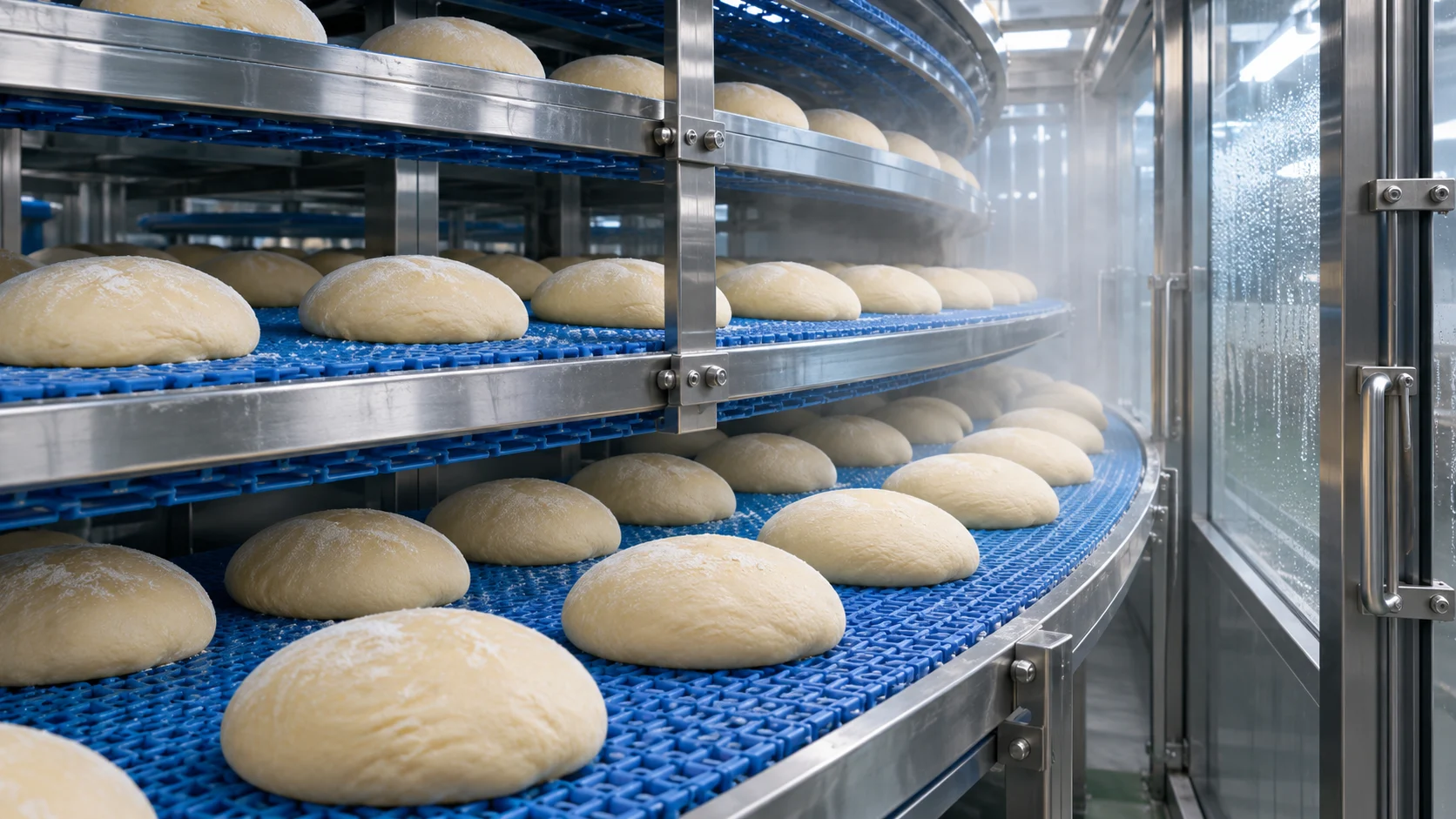
During proofing, dough develops volume under controlled temperature and humidity. Smooth, steady transport helps protect the structure that has formed and supports consistent residence time.
Belt selection priorities
Review the actual chamber temperature, humidity, cleaning cycle and product contact conditions. Tracking stability, accessible cleaning and compatibility with straight, tiered or spiral conveyors all matter.
The Feltnova approach
Feltnova can review belt options for your proofer layout. Material suitability and hygiene documentation should be confirmed for the selected belt and operating conditions.
Transfer products reliably at the oven boundary
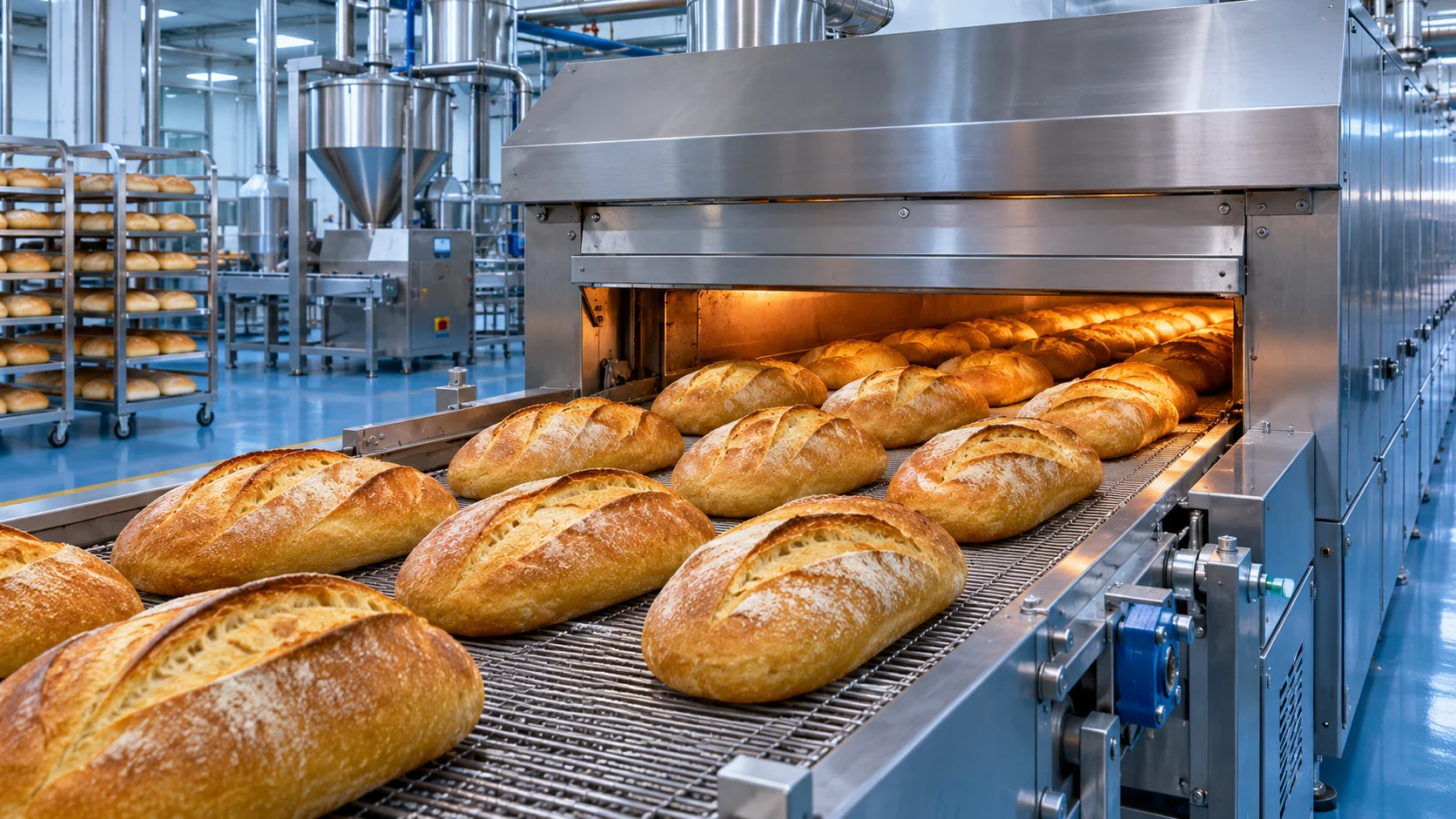
At oven entry, proofed dough must be transferred without losing its shape. At discharge, hot baked products need stable support as they move toward depanning or cooling.
Belt selection priorities
Measure the belt temperature and exposure time, including stoppages. Heat tolerance, release, transfer radius and resistance to crumbs and abrasion should be checked for each position.
The Feltnova approach
Ask Feltnova to assess the in-feed and out-feed duties separately. Specify the real thermal load and contact conditions; a belt selected for oven transfer should not be assumed suitable for continuous use inside the baking chamber.
Lift baked loaves cleanly from their tins
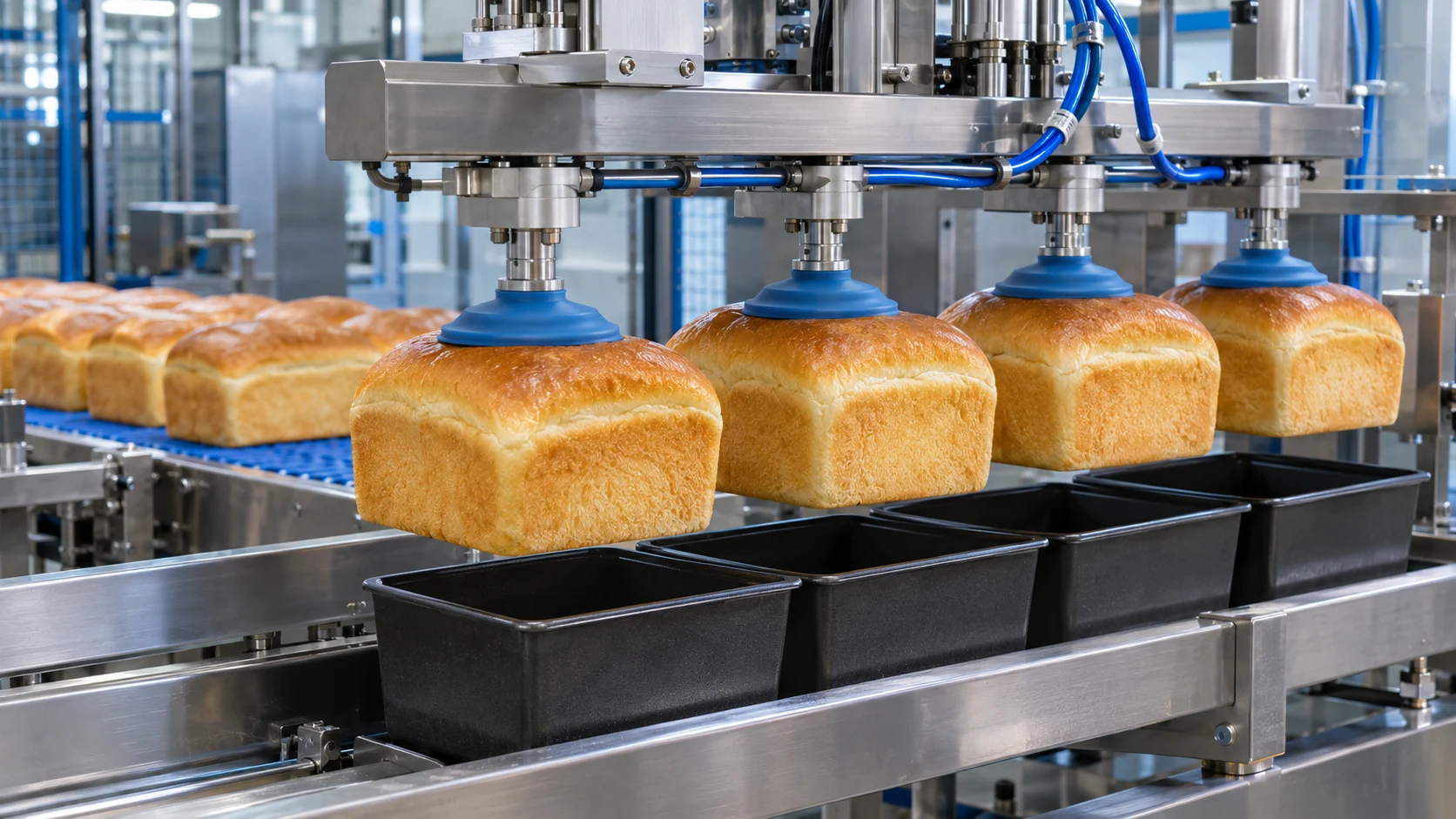
Automated depanning separates baked loaves from tins and places them onto the next conveyor. Accurate timing between the tin conveyor, lifting system and receiving belt helps avoid product damage.
Belt selection priorities
Check loaf weight, vacuum-system design, belt tension and the location of perforations or attachments. The receiving belt also needs suitable heat tolerance and a transfer surface that protects the crust.
The Feltnova approach
Feltnova can discuss customized belting for depanning equipment. Confirm the perforation pattern, attachment method and mechanical loads with the machine design before production.
Create a stable path from baking to packaging
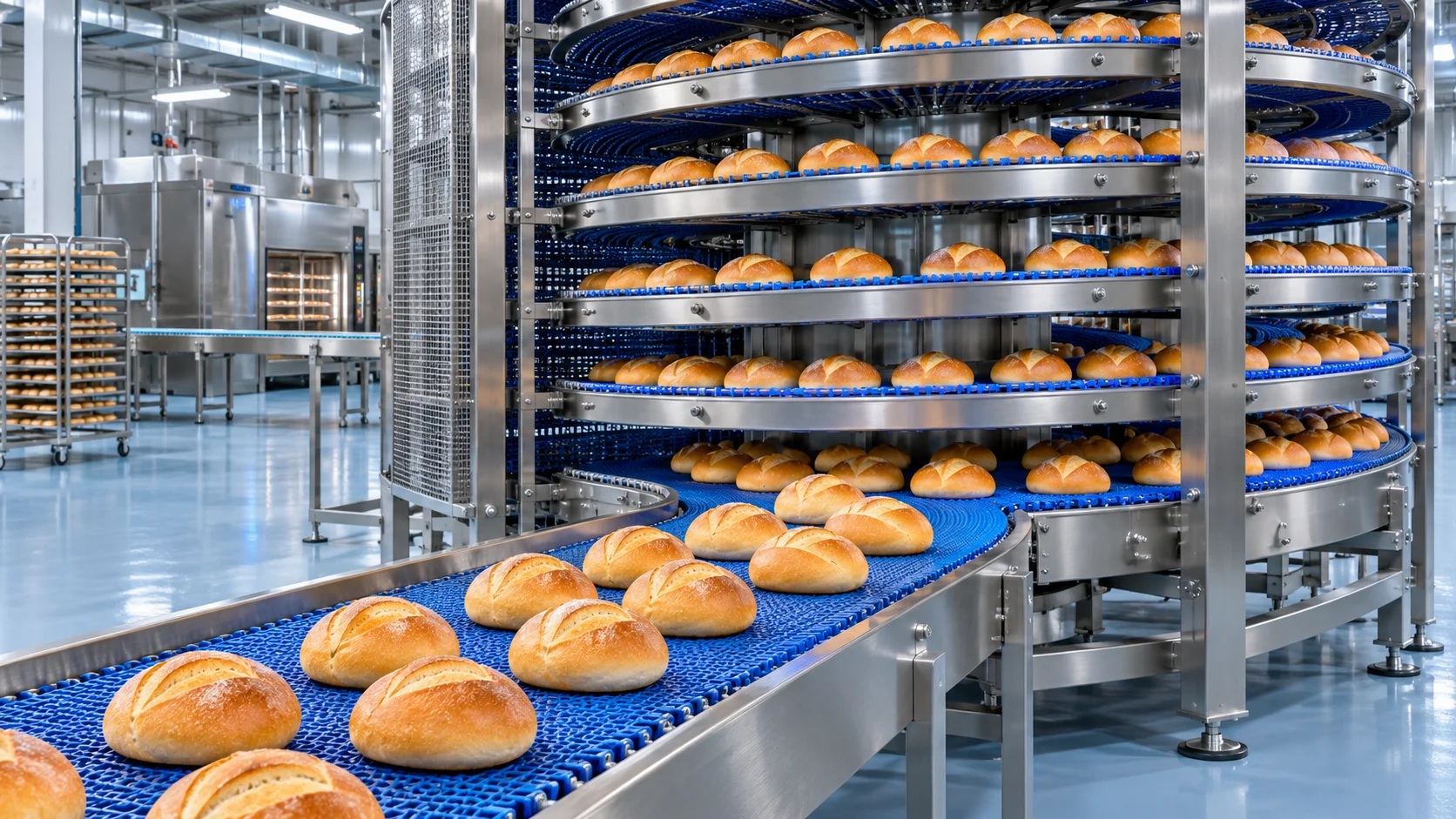
Baked bread and rolls release heat and moisture as they travel through the cooling section. Conveyor length, airflow and product spacing work together to prepare products for slicing and wrapping.
Belt selection priorities
Select for the entry temperature, abrasion, cleaning access and conveyor route. Open-area modular belts can support airflow, while curved and spiral systems require careful checks of guidance and working tension.
The Feltnova approach
Feltnova can help compare fabric-based and modular belt constructions for the cooling layout. Match the belt to the curve geometry, airflow needs and expected product load.
Maintain product control through the final checks
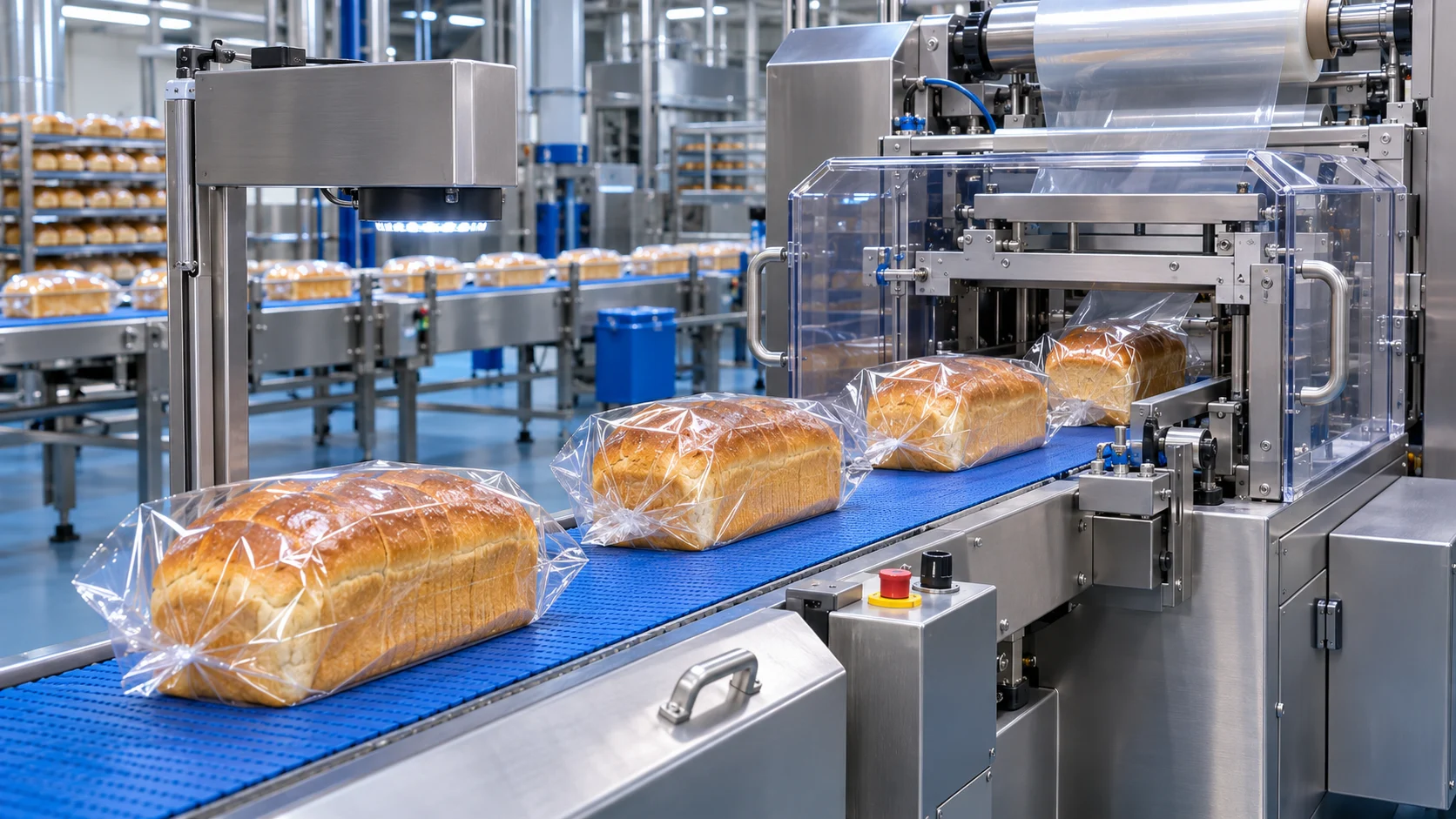
Cooled products move through inspection, weighing, slicing and packaging. Repeatable spacing and stable transfers help the inspection and wrapping equipment operate consistently.
Belt selection priorities
Check uniform belt thickness for weighing, compatibility with detection equipment and the grip needed at transfers. Any chilled or frozen section requires a separate review of low-temperature flexibility.
The Feltnova approach
Feltnova can review the requirements of each conveyor position with your equipment supplier. Confirm detector compatibility, splice accuracy and product positioning during commissioning.