1. Mixing & Feeding Dough
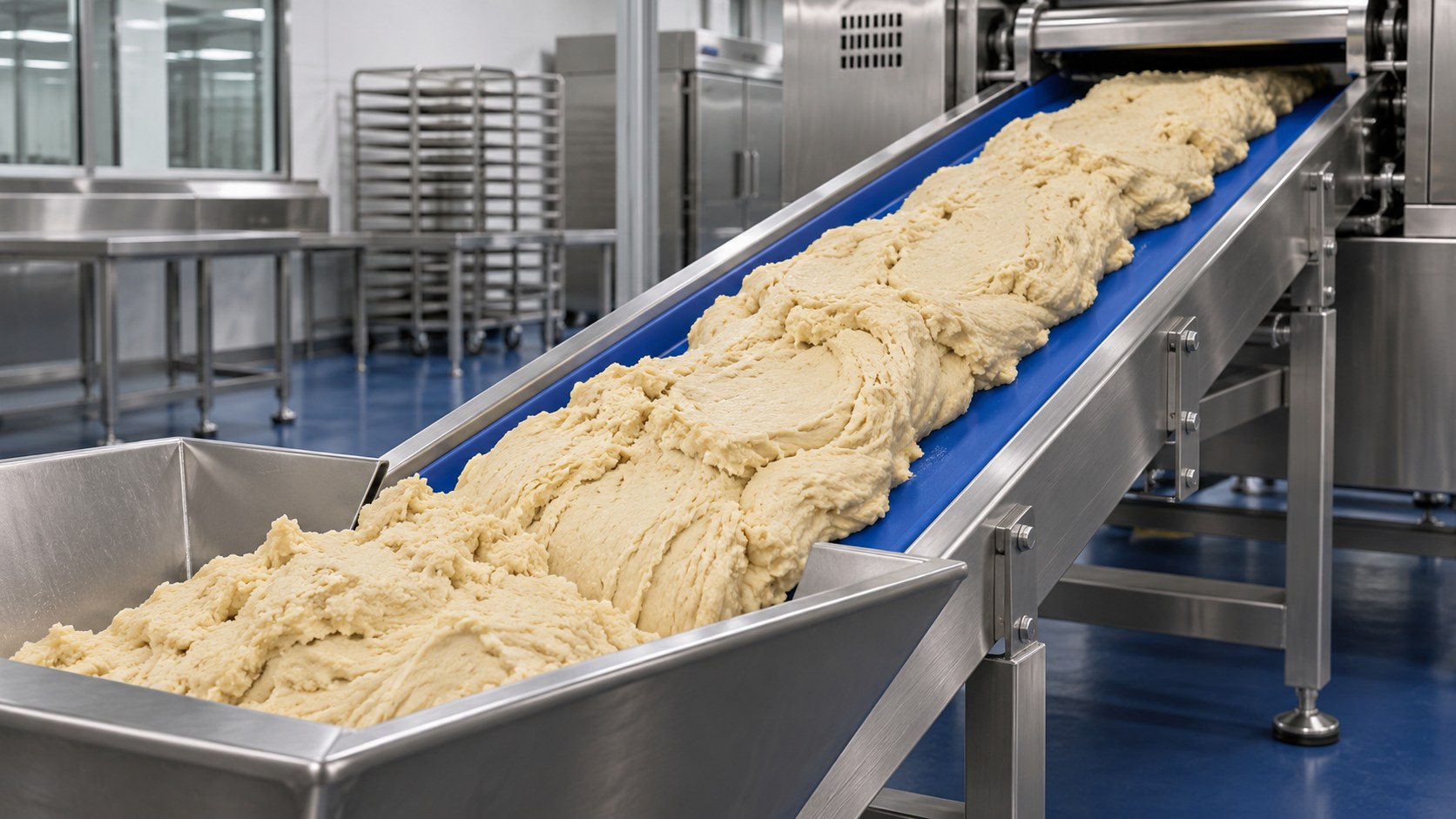
Mixed dough must reach the forming equipment at a steady rate. A correctly selected in-feed belt supports the dough through horizontal and inclined sections while helping avoid sticking, slipping and uneven feed.
What the Belt Needs to Do
Balance traction with release. Assess dough moisture and fat content, conveyor incline, scraper arrangement and transfer radius. Surface patterns or profiles may be useful where a smooth belt cannot provide sufficient grip.
The Feltnova Approach
Feltnova can help compare PU-coated, polyolefin-coated and homogeneous belt constructions for your feeding conditions. Specify the surface finish, edge treatment and splice together with your hygiene team, and confirm performance with the actual dough.
2A. Dough Sheeting & Cutting
Sheeting and cutting depend on a stable belt surface and controlled transfer between machines. The belt carries dough through reduction rollers and cutters, while the remaining dough can be returned through a suitable recovery conveyor.
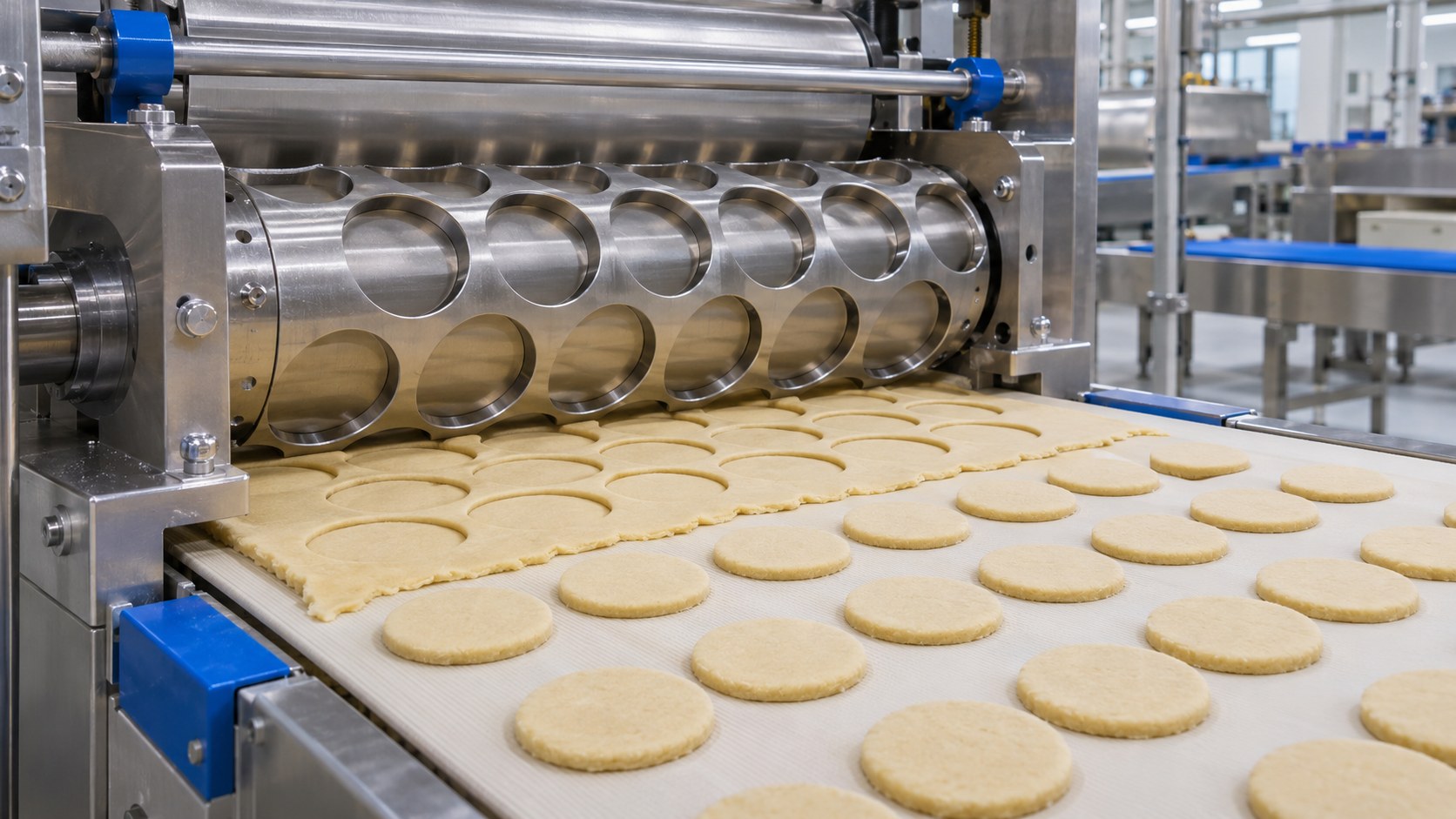
What the Belt Needs to Do
Prioritize consistent tracking, dimensional stability and a surface suited to the cutter. Check the allowable cutting contact, minimum pulley diameter and knife-edge compatibility against the selected belt specification.
The Feltnova Approach
Feltnova helps match belt construction and surface texture to dough release and forming accuracy. Select a suitable splice to reduce product impressions, and validate belt speed, cutter pressure and dough pickup during trials.
2B. Rotary Molding
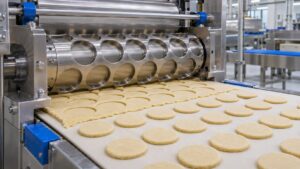
In rotary molding, an engraved roller forms the biscuit and an extraction belt draws the shaped dough from the mold. Consistent pickup helps preserve the pattern and carry each piece to the next conveyor.
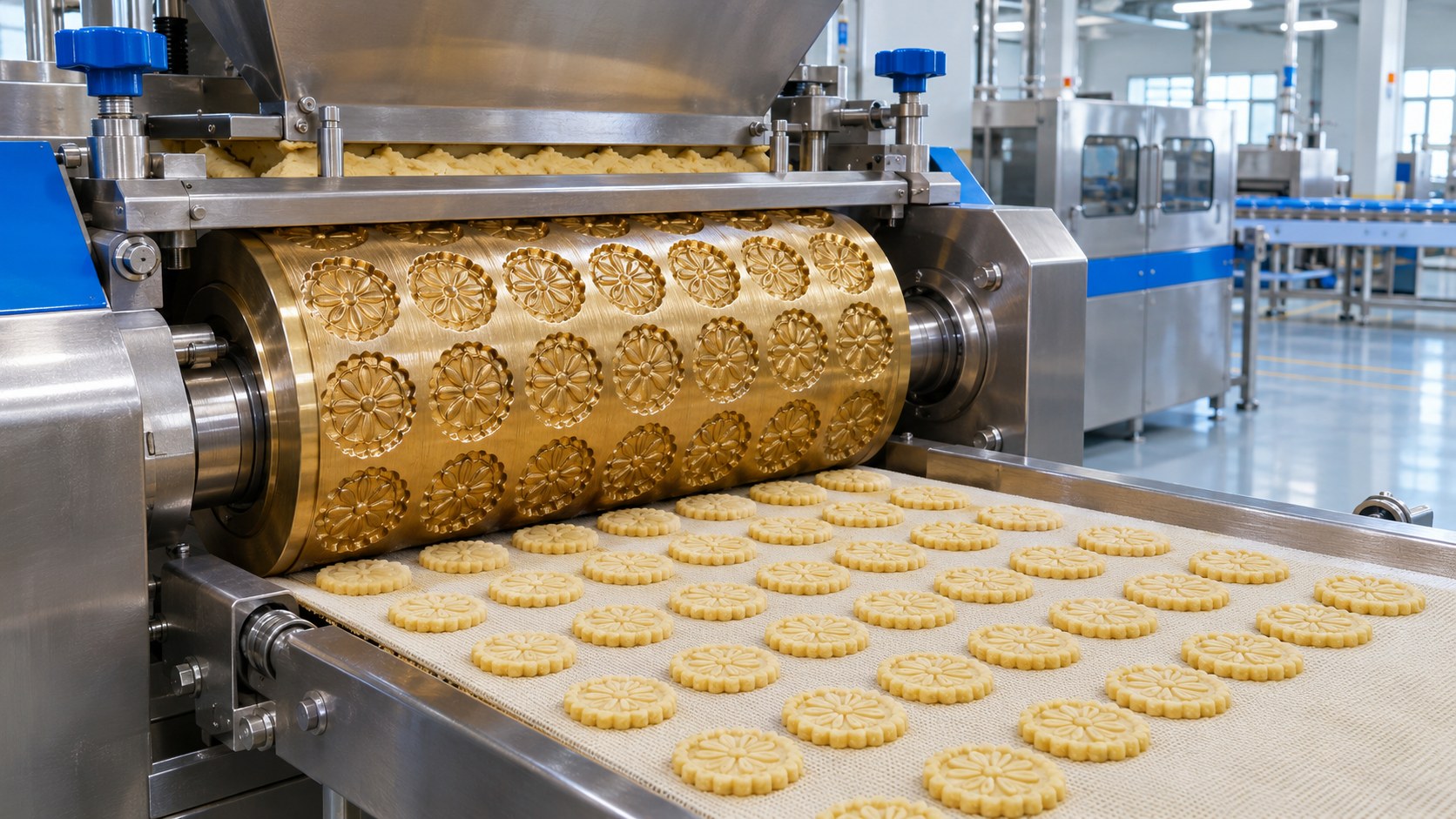
What the Belt Needs to Do
Extraction performance depends on the belt surface, dough recipe, roller pressure and tension. Consider fabric texture, dimensional stability, scraper compatibility and the transfer radius as one system.
The Feltnova Approach
Feltnova can support the selection of textile extraction belts and suitable conveying surfaces for rotary molders. Confirm extraction and release in a production trial, then define cleaning, scraper settings and splice requirements for the machine.
3. Baking & Oven Transfers
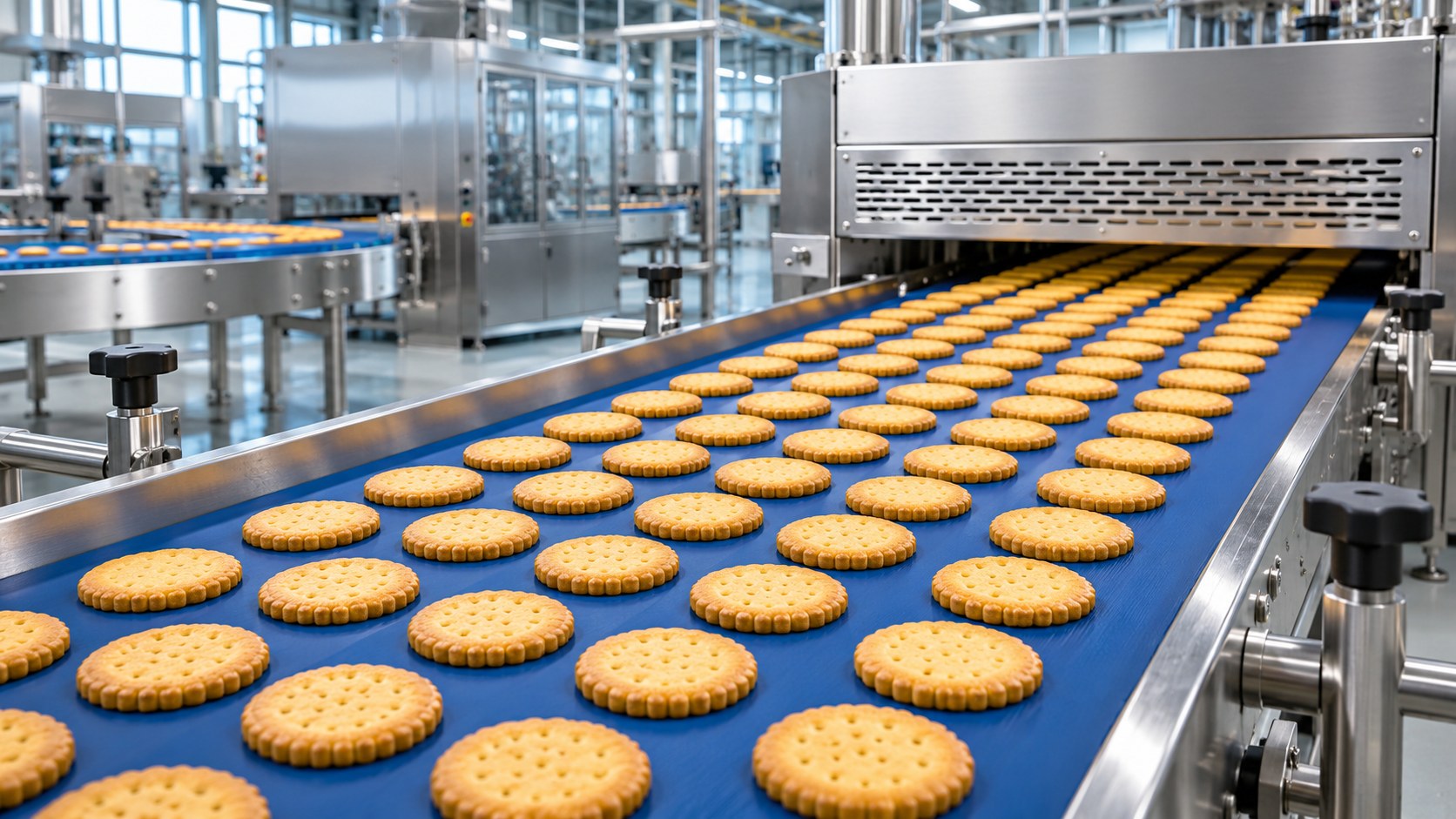
Formed dough enters the baking oven, then leaves as a fragile hot biscuit. Controlled in-feed and out-feed transfers help preserve spacing and guide the product into the cooling section.
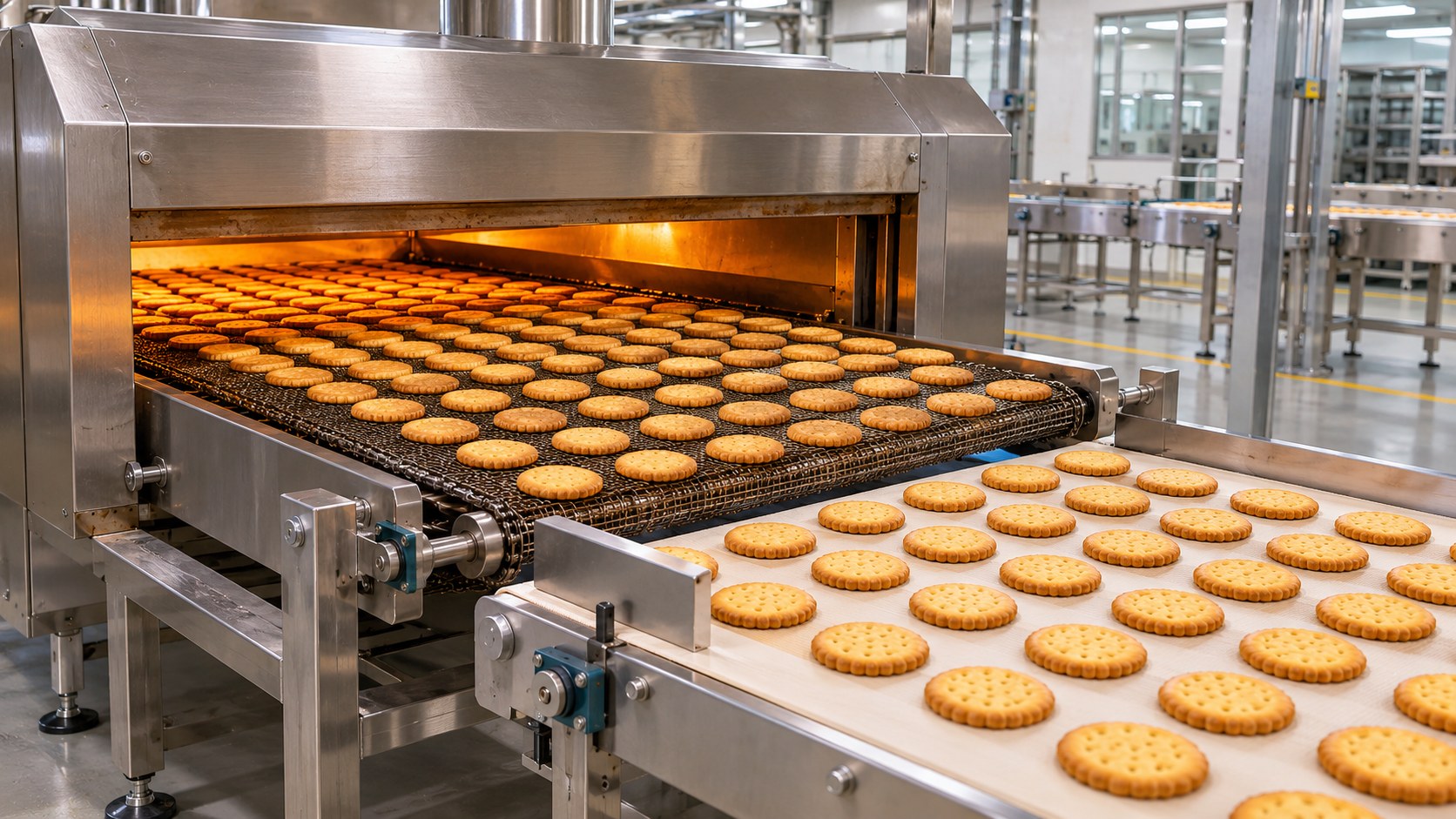
What the Belt Needs to Do
Distinguish the oven belt from the conveyors outside it. Measure actual belt and product temperatures, radiant heat, exposure time and transfer geometry. The oven itself requires a dedicated belt designed for its operating conditions.
The Feltnova Approach
Feltnova helps evaluate heat-resistant belt options for oven approach and discharge conveyors. Verify the continuous and short-term temperature limits for the complete belt and splice; select the transfer radius and surface with the equipment supplier.
4. Cooling & Product Handling
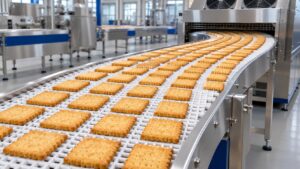
After baking, biscuits need controlled cooling before stacking or wrapping. Straight, curved or spiral conveyors can create the residence time required within the available factory space.
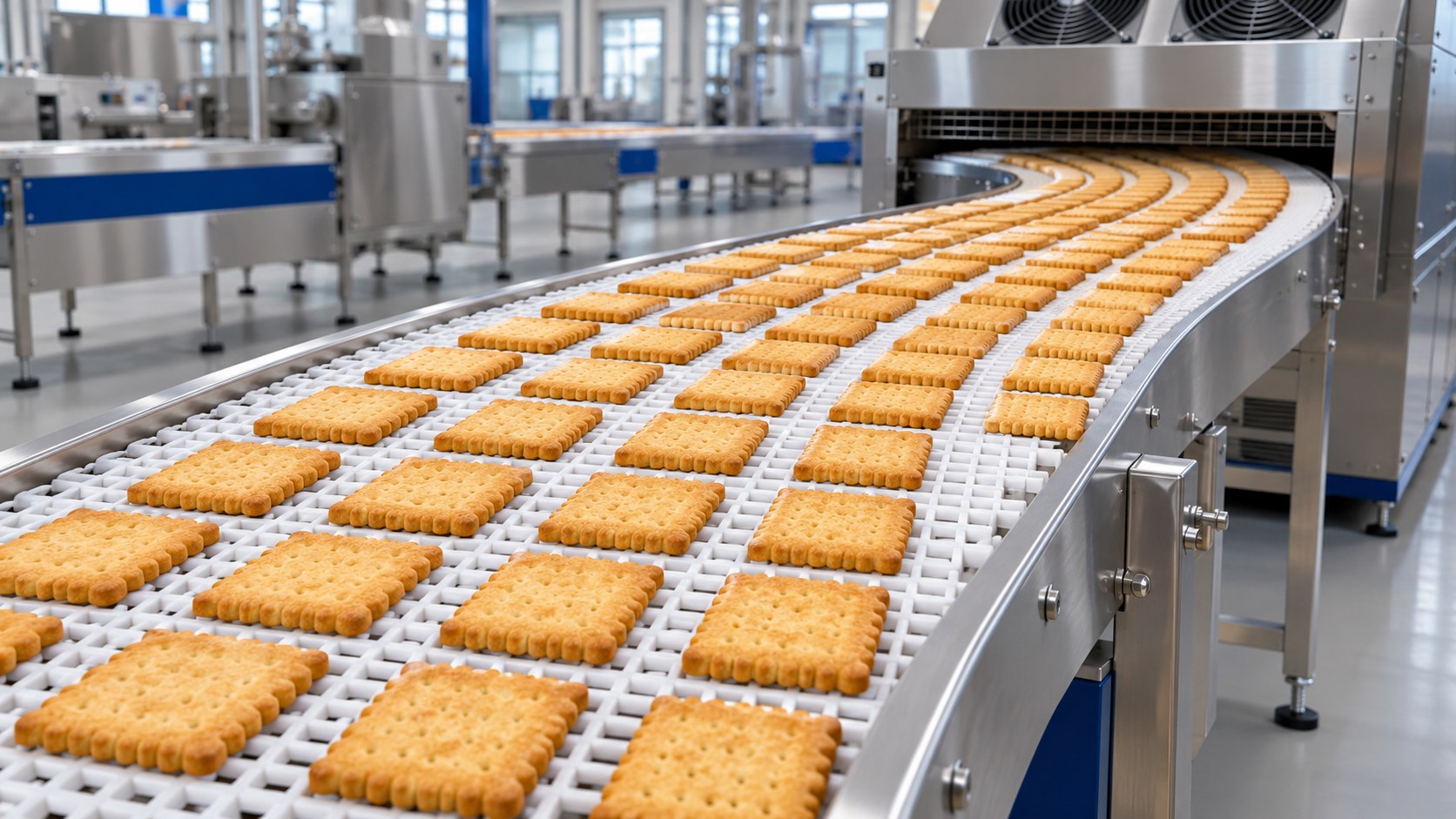
What the Belt Needs to Do
Consider airflow, product support, residual heat and line speed. Open-grid belts can support airflow, while flatter surfaces may better suit small or delicate products. Curve geometry and cleaning access also influence the choice.
The Feltnova Approach
Feltnova helps compare fabric-based and modular belt options for your cooling layout. Match belt openings to biscuit size, check curve and drive requirements, and set transfer gaps to protect edges and reduce product loss.
5. Inspection & Packaging
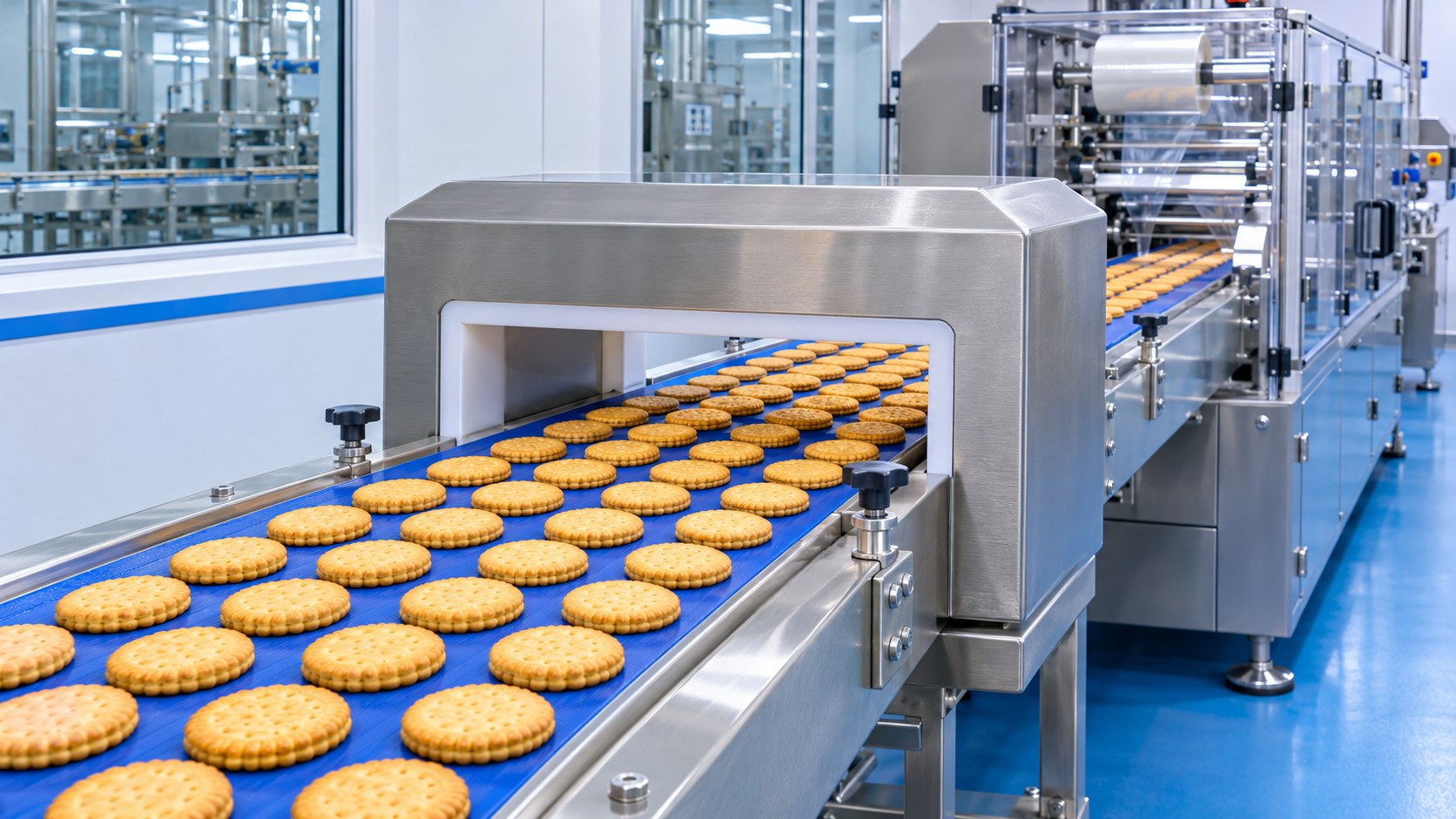
Cooling is followed by alignment, inspection, checkweighing and packaging. Stable conveying helps present each biscuit or pack consistently to the detector, weighing platform and wrapping equipment.
What the Belt Needs to Do
Check belt thickness, splice uniformity, grip and tracking against the machine requirements. Detector and X-ray compatibility must be confirmed with the inspection equipment supplier. Low-temperature service needs a separately verified belt specification.
The Feltnova Approach
Feltnova supports the selection of belts for inspection in-feeds, checkweighers and packaging transfers. Define surface friction, electrical properties and cleaning requirements for each machine, then verify accuracy and product handling under production conditions.